The Gift Perch earns a commission when you buy through our links, at no extra cost to you. We are an Amazon Associate. We accept no free products, no sponsored placements and no paid inclusion, and the commission rate plays no part in what we recommend. Full disclosure.
A bird bath should be no more than two inches deep at its deepest point, with the basin sloping gradually from the rim so birds can wade to their own comfort depth. Place it in dappled shade — full sun grows algae and heats the water — and a few feet from shrubs: close enough to reach cover, far enough that a cat cannot spring from it.
There are only three decisions here, and every one of them is about the bird's sense of safety rather than about the object.
Depth: two inches, sloping
Audubon's guidance is a maximum of two inches at the deepest point, with a gradual slope from the rim inward. A bird that cannot feel the bottom or cannot get out quickly is exposed, so it does not land. The slope matters as much as the maximum: it lets a chickadee and a robin use the same bath at different depths.
Size: wider is better than deeper
A wide, shallow basin serves more birds at once and lets larger species bathe without crowding the small ones out. If you are choosing between two baths, take the wider one at the same depth every time.
Sun or shade: dappled
Where to put it, and why
Where to put it, and why
Position
Result
Full sun
Algae grows fast, water warms and evaporates, and cleaning becomes a chore. Birds still use it, but you will not keep up.
Dappled shade
The right answer. Cooler water, slower algae, and enough light that the bird can see what is around it.
Deep shade under dense cover
Predators can approach unseen. Birds are noticeably more reluctant.
Directly under a feeder
Avoid. Seed hulls and droppings foul the water within a day.
Directly under a tree
Leaf litter and droppings, plus a branch a cat can use.
Distance from cover
A few feet from shrubs is the compromise. Birds want an escape route within a short flight, but a bath pressed against dense cover gives a cat somewhere to hide within pouncing distance. Ten feet is a common rule of thumb for feeders and works well for baths too.
Moving water gets it found
The single most effective addition to a bird bath is a dripper, a bubbler or a small fountain. Moving water is audible from a distance and visible as motion, and it finds birds that would never notice a still basin. It also slows algae and discourages mosquito larvae.
Cleaning
Change the water every couple of days. More often in hot weather.
Scrub when the basin feels slippery. That film is algae, and standing water can spread disease between birds.
Rinse thoroughly if you use anything stronger than water and a brush.
Empty it before a hard freeze unless it is heated — concrete and ceramic crack when water freezes inside them.
The picks
Ranked picks with what each is best for, our score out of ten, the budget band it falls in, and a link to check its current price on Amazon.
#
Pick
Best for
Score
Price
01
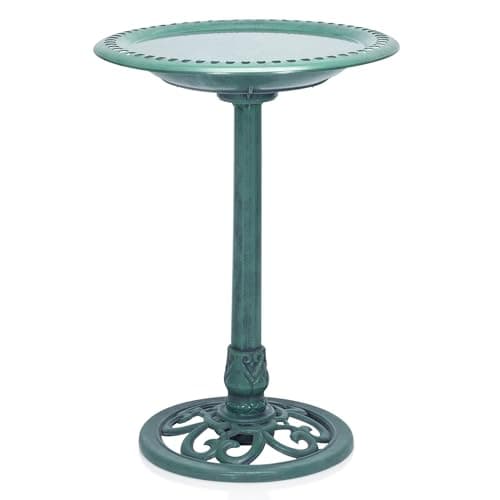
Alpine Corporation Pedestal Bird BathA handsome object that works only if you check one number the listing may not show you: the depth.Under $100
The classic garden bird bath, if the basin is shallow enough
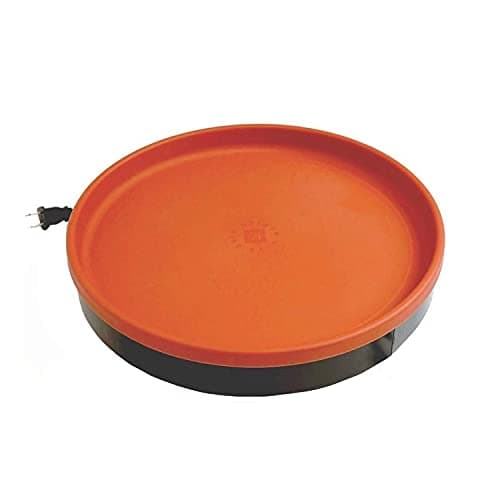
Farm Innovators Heated Bird BathThe one backyard purchase that changes what shows up, because in a hard freeze water is harder for a bird to find than seed.Under $100
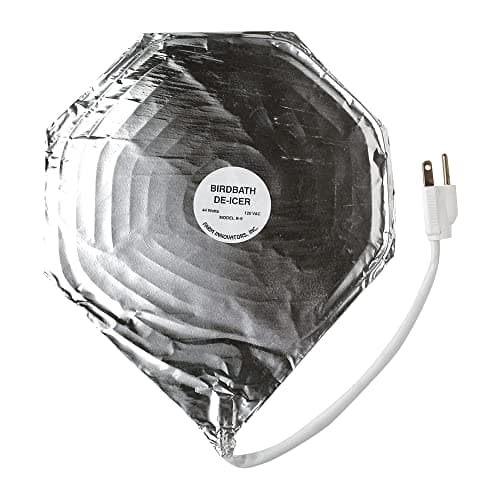
Farm Innovators Bird Bath De-IcerA heating element that drops into an existing bath, which is usually the better buy than a whole new heated one.Under $50
Squirrel StopperNo photoSquirrel Stopper Feeder Pole System with BaffleMost feeder problems are placement problems, and a pole with a baffle fixes more of them than any feeder upgrade.Under $100
Getting the feeder away from the fence and the squirrels
Scores are ours, from the published rubric on the how-we-pick page. They are editorial judgments about published specifications and cost arithmetic, not test results — we have not handled these products.
Pick 01
The classic garden bird bath, if the basin is shallow enough
Alpine Corporation Pedestal Bird Bath
A handsome object that works only if you check one number the listing may not show you: the depth.
A bird bath should be no more than 2 inches deep at its deepest point, with the basin sloping gradually from the rim inward so a small bird can wade to its own comfort depth and get out easily.Source: National Audubon Society guidance on water for birds, read 2026-09-02
What to check before buying
Whether the maker publishes a basin depth. Many pedestal baths are 3 to 4 inches deep at the center, which is deeper than Audubon recommends and deep enough that small birds avoid it.Source: National Audubon Society guidance on water for birds, read 2026-09-02
The fix if it is too deep
Add a few flat stones to the basin. They give birds somewhere to stand and reduce the effective depth without replacing the bath.Source: National Audubon Society guidance on water for birds, read 2026-09-02
Basin depth as published
Not published by the manufacturer in a form we could verify for most pedestal baths in this class — read the listing before you buy
Winter
Concrete and ceramic basins crack when water freezes in them. A pedestal bath is a three-season purchase unless it is emptied.
What it gets right
It looks like a gift, which a plastic dish does not
A pedestal keeps birds above cat height, which is a genuine safety gain
Wide basins attract more species at once than narrow ones
What it does not
Frequently deeper than the 2 inch maximum Audubon recommends
Depth is often not published at all
Ceramic and concrete crack in a hard freeze
Who it is for
A gardener with a spot in dappled shade. Check the depth, and put a bag of flat pebbles in the box with it.
Skip this if
The recipient lives somewhere with real winters and will not empty it. A cracked bath in February is a bad memory attached to your gift.
Pick 02
Winter, when open water is scarcer than food
Farm Innovators Heated Bird Bath
The one backyard purchase that changes what shows up, because in a hard freeze water is harder for a bird to find than seed.
A bird bath should be no more than 2 inches deep at its deepest point, with the basin sloping gradually from the rim inward so a small bird can wade to its own comfort depth and get out easily.Source: National Audubon Society guidance on water for birds, read 2026-09-02
Why heated water matters more than food in winter
Birds need drinking and bathing water year-round, and clean feathers are what keep them insulated. When everything within range is frozen, an open bath is a stronger draw than a full feeder.Source: National Audubon Society guidance on water for birds, read 2026-09-02
How it works
A thermostatically controlled element keeps the water just above freezing rather than warming it. Look for a stated thermostat, not just a wattage.
Power
Needs a grounded outdoor outlet within cord reach. Check the cord length against the intended spot before buying.
Wattage and thermostat setpoint
Not published by the manufacturer in a form we could verify consistently across this product class — compare listings, and prefer one that states both
What it gets right
The single most effective winter attractant, and the least commonly given
A thermostat means it only draws power when it needs to
Works in the season when a gift arrives — most bird gifts are bought in December and used in April
What it does not
Requires an outdoor outlet, which rules out many balconies and some gardens
Cords across a lawn are a real nuisance and a trip hazard
Wattage and thermostat behavior are inconsistently published
Who it is for
Someone north enough to have a real freeze, with a garden and an outdoor outlet. For them this is the best value gift on this site.
Skip this if
There is no outdoor power near a sensible spot. An extension lead running out of a window all winter is not a gift, it is a chore.
Pick 03
Keeping the bath they already own open in winter
Farm Innovators Bird Bath De-Icer
A heating element that drops into an existing bath, which is usually the better buy than a whole new heated one.
A bird bath should be no more than 2 inches deep at its deepest point, with the basin sloping gradually from the rim inward so a small bird can wade to its own comfort depth and get out easily.Source: National Audubon Society guidance on water for birds, read 2026-09-02
What it is
A submersible thermostatic element that sits in an existing basin and keeps the water from freezing
Why it often beats a heated bath
The recipient already owns a bath they like the look of. A de-icer keeps that one working instead of replacing it.
Compatibility
Check the basin material. Some de-icers are not rated for use in plastic or resin baths.
Wattage and rated basin materials
Not published by the manufacturer in a form we could verify consistently across this product class — read the specific model's listing
What it gets right
Cheaper than a heated bath and solves the same problem
Keeps a bath the recipient already chose and likes
Small enough to be a stocking gift with real utility
What it does not
Material compatibility is easy to get wrong and rarely prominent in listings
Still needs an outdoor outlet
Unwrapping a heating element is not a thrilling moment
Who it is for
Someone who already has a bath and empties it every November. This gets them through the winter with it full.
Skip this if
The recipient does not already have a bird bath. Buy the bath first; this is an accessory to something that has to exist.
Pick 04
Squirrel StopperNo photo
Getting the feeder away from the fence and the squirrels
Squirrel Stopper Feeder Pole System with Baffle
Most feeder problems are placement problems, and a pole with a baffle fixes more of them than any feeder upgrade.
A squirrel can jump a long horizontal distance and drop a long vertical one. A pole set away from fences, trees and roofs, with a baffle below the feeder, defeats them without any moving parts.
Baffle
A dome or cylinder on the pole below the feeder. It is the component that does the work; a pole without one is just a hook.
Placement
Cardinals prefer feeders within about ten feet of shrubs or trees for cover, so a pole needs to be clear of jumping range but not stranded in open lawn
Height, load rating and pole diameter
Not published by the manufacturer in a form we could verify consistently across this class
What it gets right
Fixes squirrels, ant trails and awkward hanging spots at once
Lets you hang several feeders in one place, which is how you get more species
Works with any feeder the recipient already owns
What it does not
Needs ground you can drive a pole into
Cheap poles bend under a full feeder and a wind
Load ratings are rarely published
Who it is for
Someone with a lawn who has hung a feeder off a fence and watched squirrels empty it. This is the actual fix.
Skip this if
The recipient only has a balcony or a paved yard. There is nothing to sink the pole into and it will not stand up.
FAQ
Questions people ask about this
How big should a bird bath be?
Wide and shallow. No more than two inches deep at its deepest point, with a gradual slope from the rim, and as wide as you have room for — width lets more birds use it at once without crowding.
Should a bird bath be in shade or sun?
Dappled shade. Full sun grows algae quickly and warms the water; deep shade under dense cover lets predators approach unseen. Dappled shade gives cool water and clear sightlines.
How far should a bird bath be from bushes?
A few feet — around ten is a good rule. Close enough that a bird can reach cover in a short flight, far enough that a cat cannot spring from the cover onto the bath.
How often should you change bird bath water?
Every couple of days, and more often in hot weather. Scrub the basin whenever it starts to feel slippery, because that film is algae and standing water can spread disease.
How do I get birds to find a new bird bath?
Add moving water. A dripper, bubbler or small fountain is audible from a distance and visible as motion, and it is far more effective than moving a still basin around.
Sources
Where these figures come from
National Audubon Society guidance on water for birds, read 2026-09-02