Skip to content
The GiftPerch

Binoculars — guide

Binoculars if you wear glasses

One published number decides this, and almost nobody selling binoculars leads with it. If you wear glasses, read the eye relief figure first.

By Scooter M.Published September 2, 2026Content updated September 2, 2026Prices shown live on Amazon

We don't test this gear. Here's what we do instead.

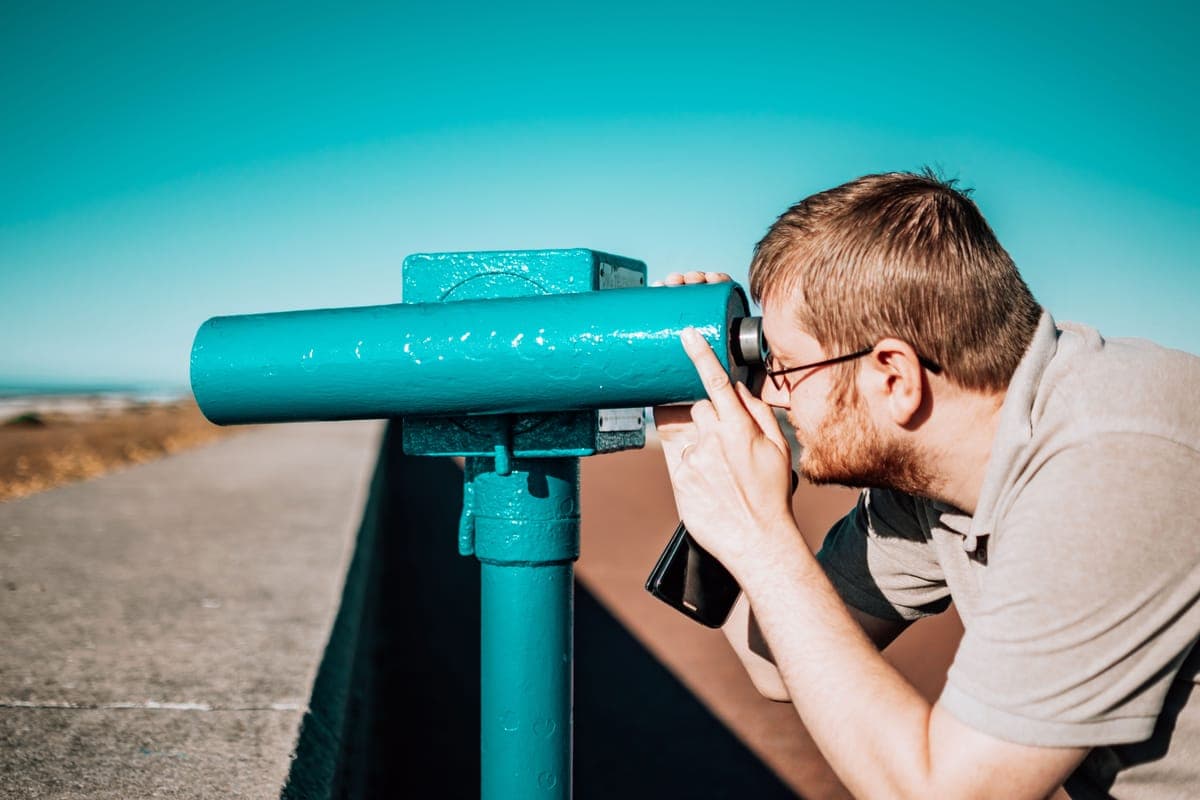
A person using coin-operated viewing binoculars on a sunny day

The Gift Perch earns a commission when you buy through our links, at no extra cost to you. We are an Amazon Associate. We accept no free products, no sponsored placements and no paid inclusion, and the commission rate plays no part in what we recommend. Full disclosure.

Look for eye relief of at least 16 mm, and preferably 17 mm or more. Eye relief is how far your eye can sit from the eyepiece and still see the whole image, and glasses push your eye back by several millimeters. Too little, and the view is cropped into a black-ringed tunnel — which is the single most common reason a gift pair goes unused.

This is the most fixable problem in birding optics, and it is fixable entirely at the point of purchase, because every manufacturer publishes the number.

The published figures

Eye relief across the pairs on this site
PairEye reliefSuitable over glasses?
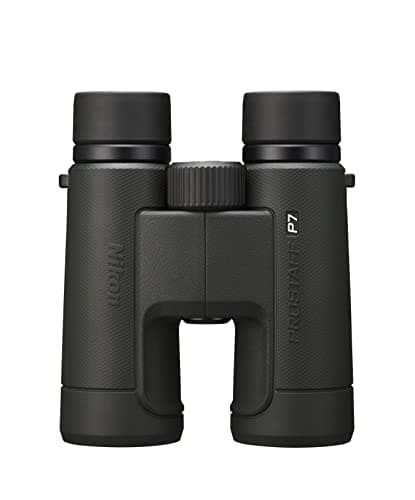
Nikon PROSTAFF P7 8x4220.2 mmYes — the most generous here by a clear margin
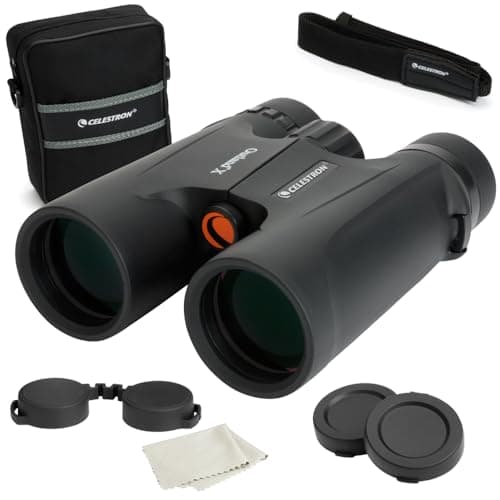
Celestron Outland X 8x4217.8 mmYes
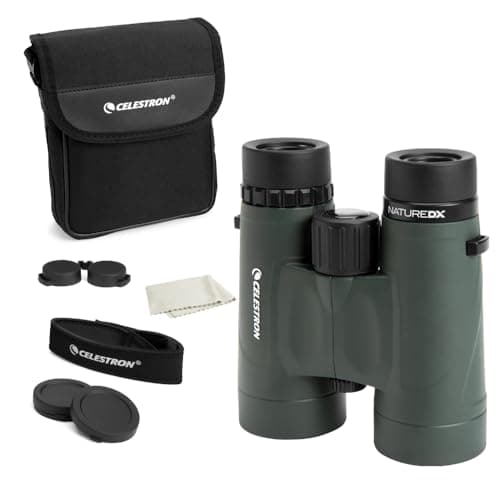
Celestron Nature DX 8x4217.5 mmYes
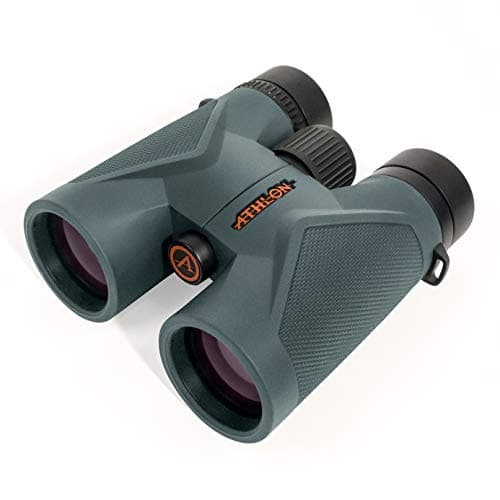
Athlon Midas G2 UHD 8x4217.2 mmYes
Vortex Diamondback HD 8x4217 mmYes, at the margin — adequate rather than generous

Manufacturer figures, read 2026-09-02. Anything under about 16 mm is where problems begin for glasses wearers.

How to actually use them with glasses

  1. Twist or fold the eyecups all the way DOWN. This is the step people miss. The eyecups exist to set the distance for people without glasses; with glasses, you want them retracted so your lens can get closer.
  2. Keep your glasses on. Taking them off and re-focusing works, but you then cannot see anything else — including the path, the notebook, and the bird when you lower the binoculars.
  3. Set the diopter with your glasses on, so the adjustment accounts for them.
  4. If you still see a black ring, the eye relief is too short for your prescription. No technique fixes that.

Why glasses change the geometry

Spectacle lenses sit a few millimeters in front of the eye, and that offset is subtracted from the available eye relief. A pair with 14 mm of eye relief that works perfectly without glasses may deliver only 8 or 9 mm of usable relief with them, which is not enough to see the full field.

The picks

Ranked picks with what each is best for, our score out of ten, the budget band it falls in, and a link to check its current price on Amazon.
#PickBest forScorePrice
01NikonNo photoNikon PROSTAFF P7 8x4220.2 mm of eye relief is the most generous figure here by a clear margin, and it is the number that decides whether a spectacle wearer keeps them.Under $250Anyone who wears glasses8.4out of 10
Check price on Amazon

#ad Price shown live on Amazon. How we are funded

02CelestronNo photoCelestron Outland X 8x42Genuinely waterproof, genuinely lifetime-warrantied, and honest about the compromise: it cannot focus close.Under $100A real pair of waterproof binoculars under $1007.5out of 10
Check price on Amazon

#ad Price shown live on Amazon. How we are funded

03CelestronNo photoCelestron Nature DX 8x42The pair nearly every birding guide starts with, and the only one in this group that focuses down to 6.5 feet — which matters more than it sounds.Under $250The default first pair, and the closest focus here8.8out of 10
Check price on Amazon

#ad Price shown live on Amazon. How we are funded

04Athlon OpticsNo photoAthlon Optics Midas G2 UHD 8x428.1 degrees is a visibly bigger picture than anything else in this group, and ED glass is the reason edges stay clean at that width.Under $250The widest view, and the only ED glass here8.9out of 10
Check price on Amazon

#ad Price shown live on Amazon. How we are funded

Scores are ours, from the published rubric on the how-we-pick page. They are editorial judgments about published specifications and cost arithmetic, not test results — we have not handled these products.

Pick 01

NikonNo photo

Anyone who wears glasses

Nikon PROSTAFF P7 8x42

20.2 mm of eye relief is the most generous figure here by a clear margin, and it is the number that decides whether a spectacle wearer keeps them.

Score
8.4
Eye relief
10.0
Field of view
6.5
Close focus
5.0
Value
8.5
Budget band
Under $250
Check price on Amazon

#ad Price shown live on Amazon. How we are funded

Published specifications

Magnification and objective
8x, 42 mmSource: Nikon PROSTAFF P7 8x42 specifications, nikonusa.com, read 2026-09-02
Field of view
7.2 degrees real, 53.4 degrees apparent, 377 ft at 1,000 yardsSource: Nikon PROSTAFF P7 8x42 specifications, nikonusa.com, read 2026-09-02
Eye relief
20.2 mm — the longest in this listSource: Nikon PROSTAFF P7 8x42 specifications, nikonusa.com, read 2026-09-02
Close focus
9.8 ft (3.0 m)Source: Nikon PROSTAFF P7 8x42 specifications, nikonusa.com, read 2026-09-02
Weight
20.8 oz (590 g) — the lightest hereSource: Nikon PROSTAFF P7 8x42 specifications, nikonusa.com, read 2026-09-02
Exit pupil
5.3 mmSource: Nikon PROSTAFF P7 8x42 specifications, nikonusa.com, read 2026-09-02
Weatherproofing
Waterproof and fogproofSource: Nikon PROSTAFF P7 8x42 specifications, nikonusa.com, read 2026-09-02

What it gets right

  • 20.2 mm eye relief, which no other pair in this group approaches
  • Lightest here at 20.8 oz, which matters after an hour around the neck
  • Nikon's service network is the easiest of these brands to actually reach

What it does not

  • 9.8 ft close focus is the worst in this group — a bird at the feeder ten feet away may not focus
  • Narrowest real field of view here at 7.2 degrees
  • Plainer finish than rivals at similar money, if that matters to the recipient

Who it is for

A glasses wearer, or anyone who has previously said binoculars give them a tunnel-vision black ring. That symptom is short eye relief, and this is the fix.

Skip this if

The recipient mostly watches a feeder from a kitchen window. At 9.8 ft minimum focus, a close feeder is exactly the shot these cannot take.

Pick 02

CelestronNo photo

A real pair of waterproof binoculars under $100

Celestron Outland X 8x42

Genuinely waterproof, genuinely lifetime-warrantied, and honest about the compromise: it cannot focus close.

Score
7.5
Eye relief
9.0
Field of view
6.0
Close focus
3.0
Value
8.5
Budget band
Under $100
Check price on Amazon

#ad Price shown live on Amazon. How we are funded

Published specifications

Magnification and objective
8x, 42 mmSource: Celestron Outland X 8x42 specifications, celestron.com, read 2026-09-02
Field of view
7 degrees, 368.4 ft at 1,000 yardsSource: Celestron Outland X 8x42 specifications, celestron.com, read 2026-09-02
Eye relief
17.8 mmSource: Celestron Outland X 8x42 specifications, celestron.com, read 2026-09-02
Close focus
13.1 ft (4 m) — the longest here by a wide marginSource: Celestron Outland X 8x42 specifications, celestron.com, read 2026-09-02
Weight
23.6 oz (670 g)Source: Celestron Outland X 8x42 specifications, celestron.com, read 2026-09-02
Prism and coatings
BaK-4 prisms, multi-coated (not fully multi-coated)Source: Celestron Outland X 8x42 specifications, celestron.com, read 2026-09-02
Weatherproofing
Waterproof, nitrogen filled, fogproofSource: Celestron Outland X 8x42 specifications, celestron.com, read 2026-09-02
Warranty
Limited lifetime warrantySource: Celestron Outland X 8x42 specifications, celestron.com, read 2026-09-02

What it gets right

  • 17.8 mm eye relief — better over glasses than binoculars costing twice as much
  • Nitrogen-filled and genuinely waterproof at this price, which most sub-$100 pairs are not
  • Limited lifetime warranty on an entry-level pair
  • Tripod adaptable, and ships with case, strap, cloth and rainguard

What it does not

  • 13.1 ft close focus rules out most feeder watching from a window
  • Multi-coated rather than fully multi-coated, so it is dimmer at dawn and dusk than the Nature DX
  • Heaviest pair in this whole comparison at 23.6 oz

Who it is for

A walker or hiker on a real budget, or a spare pair to keep in the car. For feeder watching, spend up to the Nature DX instead.

Skip this if

The recipient wants to watch their own feeder. At just over 13 ft minimum focus, the feeder outside the kitchen window is inside the blind spot.

Pick 03

CelestronNo photo

The default first pair, and the closest focus here

Celestron Nature DX 8x42

The pair nearly every birding guide starts with, and the only one in this group that focuses down to 6.5 feet — which matters more than it sounds.

Score
8.8
Eye relief
9.0
Field of view
7.0
Close focus
9.5
Value
9.0
Budget band
Under $250
Check price on Amazon

#ad Price shown live on Amazon. How we are funded

Published specifications

Magnification and objective
8x, 42 mmSource: Celestron Nature DX 8x42 specifications, celestron.com, read 2026-09-02
Field of view
7.4 degrees, 388 ft at 1,000 yardsSource: Celestron Nature DX 8x42 specifications, celestron.com, read 2026-09-02
Eye relief
17.5 mm — comfortable over glassesSource: Celestron Nature DX 8x42 specifications, celestron.com, read 2026-09-02
Close focus
6.5 ft (2 m)Source: Celestron Nature DX 8x42 specifications, celestron.com, read 2026-09-02
Weight
22.2 oz (629 g)Source: Celestron Nature DX 8x42 specifications, celestron.com, read 2026-09-02
Prism and glass
Roof prism, BaK-4 with phase coatingSource: Celestron Nature DX 8x42 specifications, celestron.com, read 2026-09-02
Weatherproofing
Waterproof, nitrogen-filled and fogproofSource: Celestron Nature DX 8x42 specifications, celestron.com, read 2026-09-02
Warranty
Limited lifetime warrantySource: Celestron Nature DX 8x42 specifications, celestron.com, read 2026-09-02

What it gets right

  • 6.5 ft close focus, so a bird on the far side of the patio is still usable — and so are butterflies
  • 17.5 mm eye relief works over glasses without cropping the view
  • Phase-coated roof prisms at an entry price, which is not universal here
  • Limited lifetime warranty

What it does not

  • Field of view is the narrowest in this group at 7.4 degrees
  • Heavier than the Nikon by well over an ounce
  • No ED glass, so high-contrast edges show more color fringing than the Athlon

Who it is for

The safe first pair. If you know nothing about the recipient except that they like birds, this is the pair with the fewest ways to be wrong.

Skip this if

You want the widest possible view for following birds in flight. The Athlon's 8.1 degrees is a noticeably easier picture to track with.

Pick 04

Athlon OpticsNo photo

The widest view, and the only ED glass here

Athlon Optics Midas G2 UHD 8x42

8.1 degrees is a visibly bigger picture than anything else in this group, and ED glass is the reason edges stay clean at that width.

Score
8.9
Eye relief
8.5
Field of view
10.0
Close focus
8.5
Value
8.5
Budget band
Under $250
Check price on Amazon

#ad Price shown live on Amazon. How we are funded

Published specifications

Magnification and objective
8x, 42 mmSource: Athlon Midas G2 UHD 8x42 specifications, athlonoptics.com, read 2026-09-02
Field of view
8.1 degrees, 429 ft at 1,000 yards — the widest hereSource: Athlon Midas G2 UHD 8x42 specifications, athlonoptics.com, read 2026-09-02
Eye relief
17.2 mmSource: Athlon Midas G2 UHD 8x42 specifications, athlonoptics.com, read 2026-09-02
Close focus
6.5 ftSource: Athlon Midas G2 UHD 8x42 specifications, athlonoptics.com, read 2026-09-02
Weight
23.3 oz — the heaviest hereSource: Athlon Midas G2 UHD 8x42 specifications, athlonoptics.com, read 2026-09-02
Glass
Extra-low dispersion (ED) glass, fully multi-coated, ESP dielectric prism coatingSource: Athlon Midas G2 UHD 8x42 specifications, athlonoptics.com, read 2026-09-02
Chassis
Magnesium, waterproofSource: Athlon Midas G2 UHD 8x42 specifications, athlonoptics.com, read 2026-09-02
Warranty
Athlon lifetime warrantySource: Athlon Midas G2 UHD 8x42 specifications, athlonoptics.com, read 2026-09-02

What it gets right

  • 429 ft at 1,000 yards is 41 ft wider than the Nature DX, which makes finding a moving bird much easier
  • ED glass reduces the purple fringing you see on a bird against a bright sky
  • Magnesium chassis rather than polycarbonate
  • Lifetime warranty

What it does not

  • Heaviest here at 23.3 oz
  • Least familiar brand of the four, which can matter for a gift recipient looking for help later
  • The wide field makes the pair physically bulkier in the hand

Who it is for

Someone who already owns a cheap pair and has said they struggle to find the bird. Field of view is the fix for that complaint, and this has the most of it.

Skip this if

The recipient has neck or shoulder problems, or will carry these all day. Two and a half ounces sounds trivial and is not, after three hours.

One caution on the Nikon

The PROSTAFF P7 has the longest eye relief here at 20.2 mm and the worst close focus at 9.8 ft. If the recipient wears glasses and watches a feeder ten feet from a window, those two requirements point in opposite directions — and the Celestron Nature DX, at 17.5 mm and 6.5 ft, is the better compromise.

FAQ

Questions people ask about this

What eye relief do you need for glasses?

At least 16 mm, and 17 mm or more is safer. Spectacle lenses push your eye several millimeters further from the eyepiece, and that offset is subtracted from the available eye relief.

What are the best binoculars for bird watching with glasses?

The Nikon PROSTAFF P7 8x42 publishes 20.2 mm, the longest here. If close focus also matters — for feeder watching — the Celestron Nature DX at 17.5 mm and 6.5 ft is the better compromise.

Should eyecups be up or down with glasses?

Down. Twist or fold them all the way in so your spectacle lens can sit as close to the eyepiece as possible. This is the step most people miss, and it is often the whole problem.

Why do I see a black ring through my binoculars?

Your eye is too far from the eyepiece to see the full field — either the eyecups are extended when they should be retracted, or the pair simply does not have enough eye relief for use with glasses.

Sources

Where these figures come from