The Gift Perch earns a commission when you buy through our links, at no extra cost to you. We are an Amazon Associate. We accept no free products, no sponsored placements and no paid inclusion, and the commission rate plays no part in what we recommend. Full disclosure.
The bird gifts that fail are the ones bought for the idea of birds rather than the activity: novelty bird-print homeware, cheap binoculars under $50, decorative birdhouses with the wrong entrance hole, bird seed as a standalone gift, and a duplicate copy of the field guide they already own.
This page exists because gift guides in this niche almost never say what to avoid, and the omission is not accidental — an affiliate site earns nothing from talking you out of a purchase. We would rather you buy one good thing than three that end up in a drawer.
1. Novelty homeware with a bird on it
Cardinal-print tea towels, owl mugs, robin-shaped ornaments. The failure is category confusion: this is a gift about the *idea* of birds, given to someone whose interest is in the *activity*. It is the equivalent of giving a keen cook a chef-hat keyring.
Buy instead: a regional field guide, for about the same money. It is specific, it gets used, and it signals you understood what they actually do.
2. Binoculars under about $50
Cheap binoculars are dim, they usually cannot focus closer than ten feet, and their eye relief is short enough to crop the view for anyone in glasses. A beginner given a bad pair concludes that birding is difficult, which is precisely the wrong lesson and hard to undo.
Buy instead: a book now, and proper 8x42 binoculars when the budget allows. Or a window feeder, which gives a better view than any cheap pair.
3. A decorative birdhouse
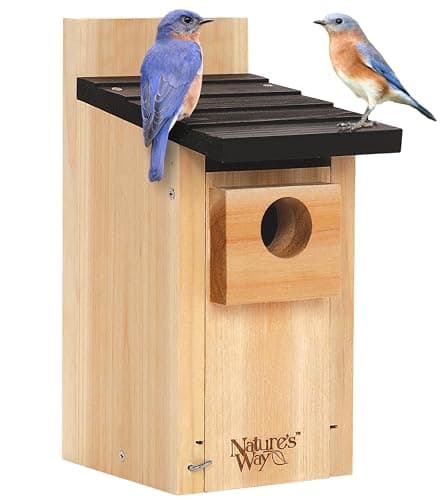
Cornell's NestWatch publishes real specifications — an Eastern Bluebird box wants a 5.5 by 5.5 inch floor, a 9 inch cavity and mounting 4 to 6 feet up, and the entrance hole diameter decides which species can use it at all: roughly 1.5 inches for bluebirds, 1 1/4 for wrens, 1 1/8 for chickadees. Most ornamental boxes match none of that, and in a photograph they look identical to ones that do.
Regular feeders already have a blend they like, seed is heavy and often not Prime-eligible, and a sack of seed is what you give when you could not think of anything. It is also, incidentally, one of the lowest-commission categories on Amazon — which is why it appears in so many affiliate gift guides and not in ours.
The Sibley Guide is the most-gifted bird book in North America, for the good reason that it is the best illustrated reference for the continent — 624 pages and nearly 7,000 paintings at a $45 list price. That popularity is exactly the risk.
Buy instead: ask a family member to check the shelf first. If you cannot, buy What It's Like to Be a Bird — same author, same artwork, and far fewer people own it.
6. A camera feeder without checking the Wi-Fi
Every camera feeder in this niche runs on 2.4 GHz Wi-Fi only. If the feeder will hang at the bottom of a long garden, behind a stone wall, or on a detached porch, it may simply never connect — and the recipient is left with an expensive plastic feeder and a setup screen.
Buy instead: check first. If the signal is doubtful, a window feeder gives a closer view than any camera does.
7. Anything with an unexplained subscription
Some camera feeders keep identification behind a paid plan; Birdbuddy's free tier still includes Photo and Sound ID, automatic photos and videos and the live stream, with Premium at $69.99 a year. Handing someone a gift that starts billing them is the one failure mode that turns a good present into a resentment.
Audubon's guidance is a maximum of two inches at the deepest point with a gradual slope from the rim. Plenty of handsome pedestal baths are three to four inches deep, and plenty do not publish the figure at all. Too deep and small birds simply will not use it.
Buy instead: a bath that publishes its depth, or add a bag of flat stones to the box so they can raise the floor. More on placement here.
What to buy instead
Four things that are almost impossible to get wrong, whatever the recipient already owns.
Ranked picks with what each is best for, our score out of ten, the budget band it falls in, and a link to check its current price on Amazon.
#
Pick
Best for
Score
Price
01
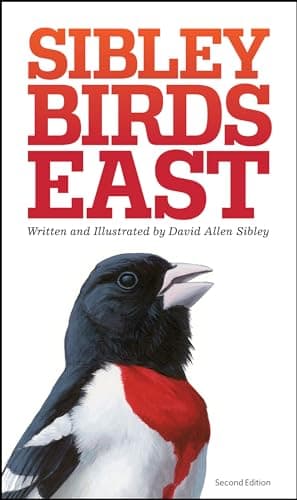
David Allen Sibley Sibley Field Guide to Birds of Eastern / Western North AmericaHalf the continent, a fraction of the size, and the version that actually gets carried outdoors.Under $25
The Sibley artwork, in a book that fits a coat pocket
Op/TechNo photoOp/Tech Binocular Harness StrapMoves the weight from the neck to the shoulders, which is the difference between binoculars worn all morning and binoculars left in the car.Under $25
The cheapest upgrade to binoculars someone already owns
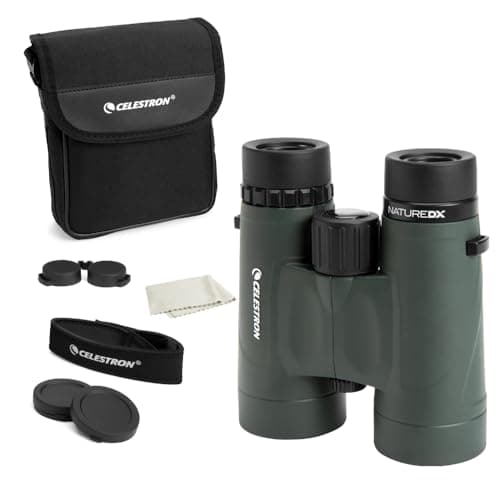
Celestron Nature DX 8x42The pair nearly every birding guide starts with, and the only one in this group that focuses down to 6.5 feet — which matters more than it sounds.Under $250
The default first pair, and the closest focus here
Scores are ours, from the published rubric on the how-we-pick page. They are editorial judgments about published specifications and cost arithmetic, not test results — we have not handled these products.
Pick 01
The Sibley artwork, in a book that fits a coat pocket
David Allen Sibley Sibley Field Guide to Birds of Eastern / Western North America
Half the continent, a fraction of the size, and the version that actually gets carried outdoors.
Regional field edition — buy Eastern or Western to match where the recipient lives
Illustration style
The same painted approach as the full guide, edited down to the species that occur in that half of the continent
Why regional wins outdoors
Removing the species that do not occur where you are standing removes most of the wrong answers, which is the hardest part of identification for a beginner
Page count and dimensions
Not published by the manufacturer in a form we could verify for the current printing on a publisher page we could read; the regional editions are substantially smaller than the 624-page full guideSource: Knopf / Penguin Random House listing for The Sibley Guide to Birds, Second Edition, read 2026-09-02
What it gets right
Fits in a jacket pocket, which is the difference between a guide used and a guide shelved
Regional editing removes most misidentifications before they happen
Cheaper than the full guide, so it works as a stocking gift
What it does not
You must know which half of the country the recipient lives in
A vagrant or an out-of-range bird will not be in it
Less impressive to unwrap than the big hardcover
Who it is for
Anyone who actually goes outside. This is the book to buy a beginner, and the full guide is the one to buy them later.
Skip this if
You do not know where the recipient does most of their birding. Buying the wrong half is a real risk and an awkward one to fix.
Pick 02
Op/TechNo photo
The cheapest upgrade to binoculars someone already owns
Op/Tech Binocular Harness Strap
Moves the weight from the neck to the shoulders, which is the difference between binoculars worn all morning and binoculars left in the car.
A neck strap hangs about 21-23 oz from the cervical spine. A harness distributes the same weight across both shoulders and stops the binoculars swinging when you bend.Source: Athlon Midas G2 UHD 8x42 specifications, athlonoptics.com, re-read 2026-09-12
Fit
Universal — attaches to the standard strap lugs on essentially any binocular
Detailed specification
Not published by the manufacturer in a form we could verify
What it gets right
Solves the most common complaint about binoculars, for the least money on this site
Works with a pair the recipient already owns, so it is never a duplicate gift
Stops the pair swinging forward and knocking into things when bending down
What it does not
It is a strap. As a standalone gift it needs pairing with something
Some harnesses are fiddly to get on over a winter coat
No published specifications to compare between brands
Who it is for
Someone who already has binoculars and complains about their neck. Add it to a book and it becomes a thoughtful pair rather than an accessory.
Skip this if
You are looking for a gift that feels like a gift on its own. This is a stocking addition, not a centerpiece.
Pick 03
The default first pair, and the closest focus here
Celestron Nature DX 8x42
The pair nearly every birding guide starts with, and the only one in this group that focuses down to 6.5 feet — which matters more than it sounds.
Floor 5.5 x 5.5 in, interior cavity depth 9 in, and mounting 4 to 6 feet above the ground.Source: NestWatch (Cornell Lab of Ornithology), Eastern Bluebird nest box specifications, nestwatch.org, read 2026-09-02
Entrance hole
1.5 in diameter is the standard bluebird hole. Mountain Bluebirds take 1 9/16 in. Chickadees need about 1 1/8 in and wrens about 1 1/4 in, so a box sold as generic will exclude or admit species depending on this one number.
Why the hole size is not decoration
A hole sized correctly for the target species also excludes larger non-native competitors. Oversizing it hands the box to European Starlings.
Material
Cedar, which weathers without treatment. Never paint or stain the interior of a nest box.
The feature to check
A side or front panel that opens. A box that cannot be cleaned out between seasons will not be used for long.
What it gets right
Cedar lasts outdoors untreated, which is the right material for a box that cannot be painted inside
The published NestWatch dimensions give you something concrete to check the listing against
A nest box is a gift that produces an event, not just an object
What it does not
Only works if it is mounted correctly, at the right height, facing away from prevailing weather
Decorative birdhouses far outnumber functional ones, and they look identical online
Nothing guarantees occupancy in the first season
Who it is for
Someone with open ground, a post, and the patience for a bird to find it. Include a note with the 4 to 6 foot mounting height; almost every box is hung too high.
Skip this if
The recipient wants something to hang on a fence and look at. Buy a decorative one and be honest that it is ornamental — an unused nest box is a small annual disappointment.
FAQ
Questions people ask about this
What should you not buy a bird watcher?
Novelty bird-print homeware, binoculars under about $50, decorative birdhouses with an unstated entrance hole, bird seed on its own, and a duplicate of the field guide they already own.
Why are cheap binoculars a bad gift?
They are dim, they usually cannot focus closer than about ten feet, and short eye relief crops the view for glasses wearers. A beginner given a bad pair concludes that birding is hard rather than that the binoculars are.
Are decorative birdhouses useless?
As ornaments, no. As nest boxes, usually — the entrance hole is the whole product, and most decorative boxes either do not state a diameter or use one that admits starlings. Cornell's NestWatch publishes the right figures per species.
What is the safest bird gift?
A regional field guide. It is specific, it gets used, it is cheap enough to pair with something else, and the regional editions are far less likely to be duplicates than the big continental guides.