


Skip to content
The GiftPerch

Books — guide

Choosing a field guide by region

Removing the birds that do not live where you are standing removes most of the wrong answers. That is the whole argument for a regional guide.

By Scooter M.Published September 2, 2026Content updated September 2, 2026Prices shown live on Amazon

We don't test this gear. Here's what we do instead.

A paper map and a compass laid out on a table

The Gift Perch earns a commission when you buy through our links, at no extra cost to you. We are an Amazon Associate. We accept no free products, no sponsored placements and no paid inclusion, and the commission rate plays no part in what we recommend. Full disclosure.

Buy a regional guide for the field and a continental one for the shelf. A North American guide covers 1,023 species; a regional edition removes everything that does not occur in your half of the continent, which eliminates most misidentifications before they happen and produces a book that fits in a coat pocket.

Beginners misidentify birds mostly by choosing something that does not live near them. It is not a failure of observation — it is a failure of the book presenting a thousand options when about two hundred are plausible.

Eastern or Western?

North American field guides are conventionally split at roughly the 100th meridian, which runs approximately down the middle of the Dakotas, Nebraska, Kansas, Oklahoma and Texas. It is a convention rather than a biological boundary, and the two editions overlap substantially around the line.

Which edition to buy
Where they liveBuyNote
East of the MississippiEasternStraightforward.
West Coast, Mountain West, SouthwestWesternStraightforward.
The Plains — Dakotas through TexasEither, or the continental guideYou are on the seam; both editions include much of the overlap.
Florida or the Gulf CoastEasternPlus expect regular strays the guide does not cover.
They travel widelyThe continental guideA regional guide fails the moment they cross the line.

The picks

Ranked picks with what each is best for, our score out of ten, the budget band it falls in, and a link to check its current price on Amazon.
#PickBest forScorePrice
01David Allen SibleyNo photoDavid Allen Sibley Sibley Field Guide to Birds of Eastern / Western North AmericaHalf the continent, a fraction of the size, and the version that actually gets carried outdoors.Under $25The Sibley artwork, in a book that fits a coat pocket8.1out of 10
Check price on Amazon

#ad Price shown live on Amazon. How we are funded

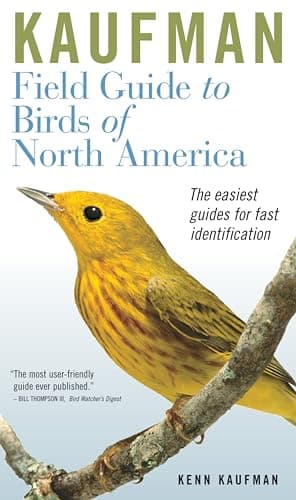
02Kenn KaufmanNo photoKenn Kaufman Kaufman Field Guide to Birds of North AmericaPhotographic rather than painted, and arranged by what a bird looks like rather than by taxonomy — which is how a beginner actually searches.Under $25A first field guide for someone who has never used one7.8out of 10
Check price on Amazon

#ad Price shown live on Amazon. How we are funded

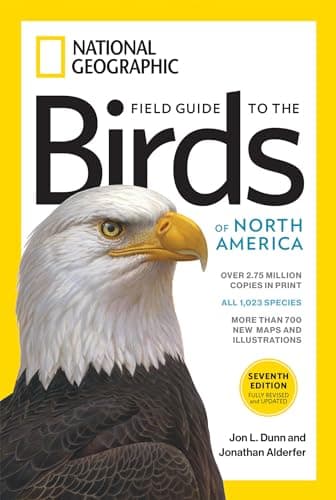
03National GeographicNo photoNational Geographic Field Guide to the Birds of North America, 7th Edition1,023 species and 80 new maps, arranged to match the American Ornithological Society's current order — the most current of the big three.Under $50The most species, and the most recent taxonomy8.6out of 10
Check price on Amazon

#ad Price shown live on Amazon. How we are funded

04David Allen SibleyNo photoDavid Allen Sibley The Sibley Guide to Birds, Second EditionThe illustrated standard for North America, and too big to take anywhere — which is the point of it.Under $50The reference that lives on the shelf, not in the pocket8.5out of 10
Check price on Amazon

#ad Price shown live on Amazon. How we are funded

Scores are ours, from the published rubric on the how-we-pick page. They are editorial judgments about published specifications and cost arithmetic, not test results — we have not handled these products.

Pick 01

David Allen SibleyNo photo

The Sibley artwork, in a book that fits a coat pocket

David Allen Sibley Sibley Field Guide to Birds of Eastern / Western North America

Half the continent, a fraction of the size, and the version that actually gets carried outdoors.

Score
8.1
Completeness
7.5
Portability
9.5
Currency
7.0
Gift appeal
7.5
Budget band
Under $25
Check price on Amazon

#ad Price shown live on Amazon. How we are funded

Published specifications

Format
Regional field edition — buy Eastern or Western to match where the recipient lives
Illustration style
The same painted approach as the full guide, edited down to the species that occur in that half of the continent
Why regional wins outdoors
Removing the species that do not occur where you are standing removes most of the wrong answers, which is the hardest part of identification for a beginner
Page count and dimensions
Not published by the manufacturer in a form we could verify for the current printing on a publisher page we could read; the regional editions are substantially smaller than the 624-page full guideSource: Knopf / Penguin Random House listing for The Sibley Guide to Birds, Second Edition, read 2026-09-02

What it gets right

  • Fits in a jacket pocket, which is the difference between a guide used and a guide shelved
  • Regional editing removes most misidentifications before they happen
  • Cheaper than the full guide, so it works as a stocking gift

What it does not

  • You must know which half of the country the recipient lives in
  • A vagrant or an out-of-range bird will not be in it
  • Less impressive to unwrap than the big hardcover

Who it is for

Anyone who actually goes outside. This is the book to buy a beginner, and the full guide is the one to buy them later.

Skip this if

You do not know where the recipient does most of their birding. Buying the wrong half is a real risk and an awkward one to fix.

Pick 02

Kenn KaufmanNo photo

A first field guide for someone who has never used one

Kenn Kaufman Kaufman Field Guide to Birds of North America

Photographic rather than painted, and arranged by what a bird looks like rather than by taxonomy — which is how a beginner actually searches.

Score
7.8
Completeness
7.0
Portability
8.5
Currency
5.0
Gift appeal
8.0
Budget band
Under $25
Check price on Amazon

#ad Price shown live on Amazon. How we are funded

Published specifications

Publisher and date
Houghton Mifflin Harcourt, 14 April 2005Source: Kaufman Field Guide to Birds of North America, Houghton Mifflin Harcourt listing, read 2026-09-02
Pages
392Source: Kaufman Field Guide to Birds of North America, Houghton Mifflin Harcourt listing, read 2026-09-02
Images
More than 2,200 full-color images, digitally edited from photographsSource: Kaufman Field Guide to Birds of North America, Houghton Mifflin Harcourt listing, read 2026-09-02
Coverage
Every species that occurs regularly in North AmericaSource: Kaufman Field Guide to Birds of North America, Houghton Mifflin Harcourt listing, read 2026-09-02
Arrangement
By appearance rather than scientific sequence, so similar-looking birds sit togetherSource: Kaufman Field Guide to Birds of North America, Houghton Mifflin Harcourt listing, read 2026-09-02

What it gets right

  • Arranged by appearance, which is the single most beginner-friendly decision in any field guide
  • 392 pages — genuinely compact next to Sibley's 624 and National Geographic's 592
  • Photographs are easier for a beginner to match than paintings
  • The cheapest of the big four, usually by a wide margin

What it does not

  • Published 2005, so it is the oldest guide here by nine years
  • Photographic guides show one plumage well and others poorly
  • Experienced birders generally graduate away from it

Who it is for

The absolute beginner — someone who just put up their first feeder and wants to know what the brown one is.

Skip this if

The recipient already identifies birds confidently. They will find the appearance-based arrangement slower than taxonomic order, not faster.

Pick 03

National GeographicNo photo

The most species, and the most recent taxonomy

National Geographic Field Guide to the Birds of North America, 7th Edition

1,023 species and 80 new maps, arranged to match the American Ornithological Society's current order — the most current of the big three.

Score
8.6
Completeness
9.5
Portability
5.0
Currency
9.0
Gift appeal
7.5
Budget band
Under $50
Check price on Amazon

#ad Price shown live on Amazon. How we are funded

Published specifications

Species covered
1,023, including 37 new to this editionSource: National Geographic Field Guide to the Birds of North America, 7th Edition, publisher listing, read 2026-09-02
Pages
592Source: National Geographic Field Guide to the Birds of North America, 7th Edition, publisher listing, read 2026-09-02
Illustrations
3,500 illustrations, 250 of them newSource: National Geographic Field Guide to the Birds of North America, 7th Edition, publisher listing, read 2026-09-02
Maps
80 new range maps and 350 revisedSource: National Geographic Field Guide to the Birds of North America, 7th Edition, publisher listing, read 2026-09-02
Taxonomy
Organized to match American Ornithological Society taxonomy changesSource: National Geographic Field Guide to the Birds of North America, 7th Edition, publisher listing, read 2026-09-02
Format
Paperback

What it gets right

  • The only guide here that states its species count plainly: 1,023
  • Current AOS taxonomy, which matters when a recipient cross-references an app
  • 80 new and 350 revised range maps — ranges have shifted, and most guides have not kept up
  • Paperback, so it is closer to field-usable than the Sibley hardcover

What it does not

  • 592 pages is still a lot of book for a coat pocket
  • Illustration style is less distinctive than Sibley's, which some birders care about a great deal
  • Covers the whole continent, so a beginner still wades through species that do not occur near them

Who it is for

The birder who checks things properly and will notice a guide using out-of-date taxonomy. Also the right answer for anyone who travels across the continent.

Skip this if

The recipient is brand new to this. A thousand species is a hard place to start; the Kaufman photographic guide is a gentler entry.

Pick 04

David Allen SibleyNo photo

The reference that lives on the shelf, not in the pocket

David Allen Sibley The Sibley Guide to Birds, Second Edition

The illustrated standard for North America, and too big to take anywhere — which is the point of it.

Score
8.5
Completeness
10.0
Portability
3.0
Currency
6.5
Gift appeal
9.0
Budget band
Under $50
Check price on Amazon

#ad Price shown live on Amazon. How we are funded

Published specifications

Publisher and date
Knopf, 11 March 2014Source: Knopf / Penguin Random House listing for The Sibley Guide to Birds, Second Edition, read 2026-09-02
Pages
624Source: Knopf / Penguin Random House listing for The Sibley Guide to Birds, Second Edition, read 2026-09-02
Illustrations
Nearly 7,000 paintings, more than 600 of them new to this editionSource: Knopf / Penguin Random House listing for The Sibley Guide to Birds, Second Edition, read 2026-09-02
Dimensions
6 x 9.5 inSource: Knopf / Penguin Random House listing for The Sibley Guide to Birds, Second Edition, read 2026-09-02
List price
$45.00 hardcoverSource: Knopf / Penguin Random House listing for The Sibley Guide to Birds, Second Edition, read 2026-09-02
Species count
The publisher does not state a total species count for this edition, so neither do weSource: Knopf / Penguin Random House listing for The Sibley Guide to Birds, Second Edition, read 2026-09-02
Illustration style
Paintings, showing plumages and postures a single photograph cannot

What it gets right

  • Multiple plumages per species — age, sex and season — which is where photographic guides fall down
  • Nearly 7,000 paintings makes it the most complete illustrated reference for the continent
  • A book that looks like a gift, which matters when it is the gift
  • The name a recipient will already have heard of

What it does not

  • 624 pages at 6 x 9.5 in is a coffee-table book, not a field book
  • Published 2014, so taxonomy and some range maps have moved on
  • The most likely book on this list to already be on the recipient's shelf

Who it is for

Someone who is past the beginner stage and identifies birds at home from photographs and notes. Ask a family member whether they own it first — this is the single most-gifted bird book in North America.

Skip this if

The recipient wants something to carry. Buy the regional Sibley field edition for the pocket and keep this one for the shelf.

The gift-buying risk

Buying the wrong half is a real and awkward mistake. If you are not certain where the recipient does most of their birding, buy the continental guide — the National Geographic 7th edition at 1,023 species and 592 pages — and let them buy the regional edition themselves.

What regional editions actually remove

  • Species from the other half of the continent, which is where most beginner errors come from.
  • Weight and bulk. The full Sibley is 624 pages at 6 by 9.5 inches; the regional editions are substantially smaller.
  • Decision fatigue. Fewer plates to flip through means the bird is still there when you look up.

What they also remove is the vagrant — the out-of-range bird that turns up once a decade. That is a genuine loss for an experienced birder and an irrelevance for a beginner.

FAQ

Questions people ask about this

Should I buy an Eastern or Western bird guide?

Match it to where the person does most of their birding. The split falls at roughly the 100th meridian, through the middle of the Dakotas, Nebraska, Kansas, Oklahoma and Texas. On the Plains, either edition or the continental guide works.

Is a regional field guide better than a full North America one?

For field use, yes. Removing the species that do not occur where you are standing removes most of the wrong answers, and the book fits in a pocket. Keep a continental guide on the shelf for the unusual bird.

What if they travel a lot?

Buy the continental guide. The National Geographic 7th edition covers 1,023 species across 592 pages with current AOS taxonomy, and a regional guide fails the moment they cross the dividing line.

What do regional guides leave out?

Species from the other half of the continent, and vagrants — the out-of-range birds that turn up occasionally. That is a real loss for an experienced birder and no loss at all for a beginner.

Sources

Where these figures come from