Not the best bird books — the first ones. A beginner needs one guide they will open, one book they will finish, and a way to write it down. Three purchases, in an order.
By Scooter M.Published September 11, 2026Content updated September 11, 2026Prices verified September 12, 2026
The Gift Perch earns a commission when you buy through our links, at no extra cost to you. We are an Amazon Associate. We accept no free products, no sponsored placements and no paid inclusion, and the commission rate plays no part in what we recommend. Full disclosure.
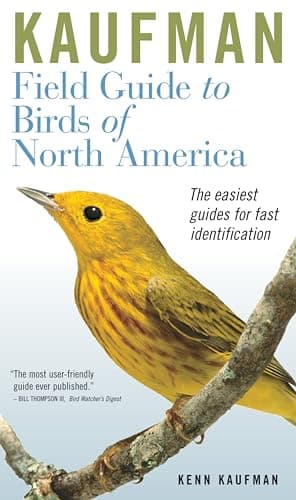
The first bird book for a beginner is the Kaufman Field Guide to Birds of North America, because it arranges birds by what they look like rather than by taxonomy, which is how a beginner actually searches. Pair it with a regional Sibley field edition for the pocket, a narrative book such as The Genius of Birds to read on the sofa, and the free Merlin app on their phone. That is a complete first shelf for well under $60, and none of it is the 624-page reference a beginner buys and never opens.
This page is not the field guide comparison. That page weighs the four standard guides against each other on published figures, for someone who already knows they want a guide. This one is for the person — or the person buying for them — who has just started noticing birds and owns no bird book at all. The question is not which guide is best. It is what three things go on an empty shelf, and in what order. Every published figure below is from the publisher's own listing, read on the dates in the sources.
What a beginner's book has to do
Be findable. A beginner does not know that a bird is a thrush. A guide arranged by taxonomy asks them to know that before they can look it up. A guide arranged by appearance — brown, medium, spotted breast — lets them find it anyway. This is the single decision that matters most, and it is why Kaufman leads.
Be carried. A book that stays on the shelf teaches nothing. The 624-page Sibley is a magnificent reference and a terrible first purchase, because it weighs as much as the binoculars and stays home.
Be regional if it is going outside. A continental guide hands a beginner a thousand wrong answers. A regional edition removes most of them before they are made.
Give them something to read, not only to look up. A narrative book is what turns a person who saw a bird into a person who watches them. It requires no identification skill and no prior interest.
Give them somewhere to write it down. A list is what makes the second sighting mean something. It costs almost nothing and it is the part beginners are least likely to buy for themselves.
Not duplicate. The continental Sibley is the most-gifted bird book in North America. If the recipient has one bird book already, it is probably that one.
The picks
Ranked picks with what each is best for, our score out of ten, the budget band it falls in, and a link to check its current price on Amazon.
#
Pick
Best for
Score
Price
01
Kenn Kaufman Kaufman Field Guide to Birds of North AmericaPhotographic rather than painted, and arranged by what a bird looks like rather than by taxonomy — which is how a beginner actually searches.Under $25
A first field guide for someone who has never used one
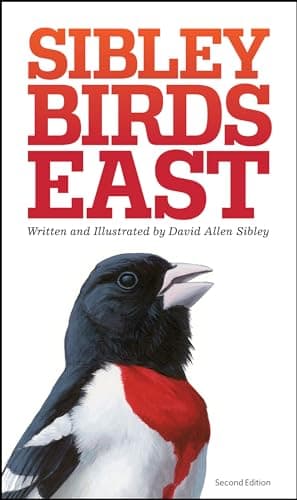
David Allen Sibley Sibley Field Guide to Birds of Eastern / Western North AmericaHalf the continent, a fraction of the size, and the version that actually gets carried outdoors.Under $25
The Sibley artwork, in a book that fits a coat pocket
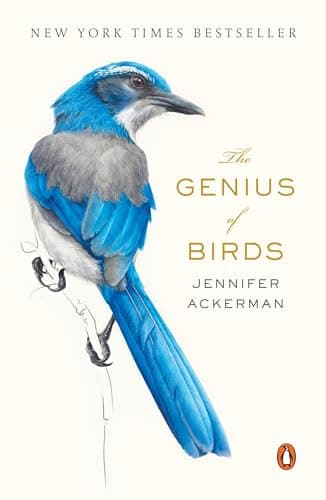
Jennifer Ackerman The Genius of BirdsPopular science about bird cognition — the right gift for someone who likes birds but has never wanted a field guide.Under $25
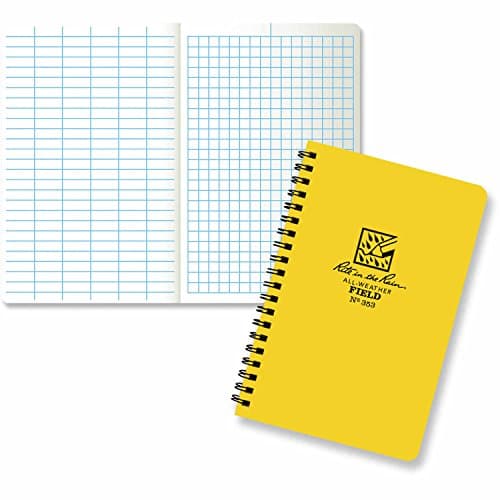
Rite in the Rain All-Weather Field NotebookWaterproof paper, which sounds like a gimmick until the first morning someone tries to write in drizzle.Under $25
Cornell Lab of OrnithologyNo photoCornell Lab of Ornithology Merlin Bird ID (free app)Free, from Cornell, and better at identifying a bird by its song than any book will ever be. We earn nothing from it and it belongs at the top of the list anyway.Under $25
The thing to give before you spend any money at all
Not sold on Amazon. We are not in Cornell Lab's affiliate program, so this link earns us nothing.
06
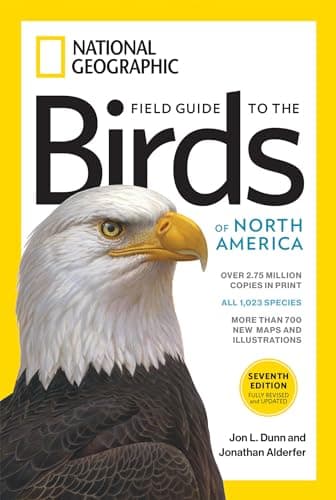
National Geographic Field Guide to the Birds of North America, 7th Edition1,023 species and 80 new maps, arranged to match the American Ornithological Society's current order — the most current of the big three.Under $50
Houghton Mifflin Harcourt, 14 April 2005Source: Kaufman Field Guide to Birds of North America, Houghton Mifflin Harcourt listing, read 2026-09-02
Pages
392Source: Kaufman Field Guide to Birds of North America, Houghton Mifflin Harcourt listing, read 2026-09-02
Images
More than 2,200 full-color images, digitally edited from photographsSource: Kaufman Field Guide to Birds of North America, Houghton Mifflin Harcourt listing, read 2026-09-02
Coverage
Every species that occurs regularly in North AmericaSource: Kaufman Field Guide to Birds of North America, Houghton Mifflin Harcourt listing, read 2026-09-02
Arrangement
By appearance rather than scientific sequence, so similar-looking birds sit togetherSource: Kaufman Field Guide to Birds of North America, Houghton Mifflin Harcourt listing, read 2026-09-02
What it gets right
Arranged by appearance, which is the single most beginner-friendly decision in any field guide
392 pages — genuinely compact next to Sibley's 624 and National Geographic's 592
Photographs are easier for a beginner to match than paintings
The cheapest of the big four, usually by a wide margin
What it does not
Published 2005, so it is the oldest guide here by nine years
Photographic guides show one plumage well and others poorly
Experienced birders generally graduate away from it
Who it is for
The absolute beginner — someone who just put up their first feeder and wants to know what the brown one is.
Skip this if
The recipient already identifies birds confidently. They will find the appearance-based arrangement slower than taxonomic order, not faster.
Pick 02
The Sibley artwork, in a book that fits a coat pocket
David Allen Sibley Sibley Field Guide to Birds of Eastern / Western North America
Half the continent, a fraction of the size, and the version that actually gets carried outdoors.
Regional field edition — buy Eastern or Western to match where the recipient lives
Illustration style
The same painted approach as the full guide, edited down to the species that occur in that half of the continent
Why regional wins outdoors
Removing the species that do not occur where you are standing removes most of the wrong answers, which is the hardest part of identification for a beginner
Page count and dimensions
Not published by the manufacturer in a form we could verify for the current printing on a publisher page we could read; the regional editions are substantially smaller than the 624-page full guideSource: Knopf / Penguin Random House listing for The Sibley Guide to Birds, Second Edition, read 2026-09-02
What it gets right
Fits in a jacket pocket, which is the difference between a guide used and a guide shelved
Regional editing removes most misidentifications before they happen
Cheaper than the full guide, so it works as a stocking gift
What it does not
You must know which half of the country the recipient lives in
A vagrant or an out-of-range bird will not be in it
Less impressive to unwrap than the big hardcover
Who it is for
Anyone who actually goes outside. This is the book to buy a beginner, and the full guide is the one to buy them later.
Skip this if
You do not know where the recipient does most of their birding. Buying the wrong half is a real risk and an awkward one to fix.
Pick 03
A gift for a reader rather than a watcher
Jennifer Ackerman The Genius of Birds
Popular science about bird cognition — the right gift for someone who likes birds but has never wanted a field guide.
Water-resistant sheets designed to be written on when wet
Why a birder needs one
Field notes are taken standing up, outdoors, often in rain. Ordinary paper pills and tears under a pencil in those conditions.
Pencil, not pen
Most all-weather paper works best with pencil; ink from a standard rollerball can bead and smear
Sizes and page counts
Not published by the manufacturer in a form we could verify for the specific model; several sizes are sold
What it gets right
Solves a genuine, specific problem rather than being a themed notebook
Cheap, so it works as an addition to a larger gift
Nobody already has one unless they are already serious
What it does not
It is a notebook. On its own it can read as a low-effort gift
Pairs best with a pencil, which is another thing to remember
Not bird-specific, so it lacks the themed pages some recipients want
Who it is for
Someone who walks in the morning and comes back with things they meant to write down.
Skip this if
The recipient keeps their records in eBird or Merlin on a phone. Many now do, and a paper notebook will sit unused.
Pick 05
Cornell Lab of OrnithologyNo photo
The thing to give before you spend any money at all
Cornell Lab of Ornithology Merlin Bird ID (free app)
Free, from Cornell, and better at identifying a bird by its song than any book will ever be. We earn nothing from it and it belongs at the top of the list anyway.
Not sold on Amazon. We are not in Cornell Lab's affiliate program, so this link earns us nothing.
Published specifications
Price
Free. The Cornell Lab of Ornithology publishes it as part of its mission.Source: Merlin Bird ID by the Cornell Lab of Ornithology, read 2026-09-02
Species coverage
Identification support, photos, sound recordings, maps and descriptions for more than 10,000 species worldwideSource: Merlin Bird ID by the Cornell Lab of Ornithology, read 2026-09-02
Sound ID coverage
540 species in the US and Canada, 602 in Central and South America, 284 in EuropeSource: Cornell Chronicle, Merlin Bird ID sound identification coverage, news.cornell.edu, read 2026-09-02
Identification methods
Photo ID, Sound ID, and a step-by-step question flowSource: Merlin Bird ID by the Cornell Lab of Ornithology, read 2026-09-02
What it does not do
Sound ID is not yet available worldwideSource: Cornell Chronicle, Merlin Bird ID sound identification coverage, news.cornell.edu, read 2026-09-02
What it gets right
Free, from the most authoritative bird organization in North America
Sound ID answers the question a book cannot: what is singing, out of sight, in that tree
Works alongside every book on this page rather than replacing them
What it does not
Needs a phone, charged, in hand — which is the opposite of what some people want from birding
Sound ID coverage is regional, not global
It is not a gift you can wrap
Who it is for
Everyone, before they spend anything.
Skip this if
Nothing. Install it first and buy the book anyway. We do not earn a commission on this and it is still the first recommendation on the page.
Pick 06
The most species, and the most recent taxonomy
National Geographic Field Guide to the Birds of North America, 7th Edition
1,023 species and 80 new maps, arranged to match the American Ornithological Society's current order — the most current of the big three.
1,023, including 37 new to this editionSource: National Geographic Field Guide to the Birds of North America, 7th Edition, publisher listing, read 2026-09-02
Pages
592Source: National Geographic Field Guide to the Birds of North America, 7th Edition, publisher listing, read 2026-09-02
Illustrations
3,500 illustrations, 250 of them newSource: National Geographic Field Guide to the Birds of North America, 7th Edition, publisher listing, read 2026-09-02
Maps
80 new range maps and 350 revisedSource: National Geographic Field Guide to the Birds of North America, 7th Edition, publisher listing, read 2026-09-02
Taxonomy
Organized to match American Ornithological Society taxonomy changesSource: National Geographic Field Guide to the Birds of North America, 7th Edition, publisher listing, read 2026-09-02
Format
Paperback
What it gets right
The only guide here that states its species count plainly: 1,023
Current AOS taxonomy, which matters when a recipient cross-references an app
80 new and 350 revised range maps — ranges have shifted, and most guides have not kept up
Paperback, so it is closer to field-usable than the Sibley hardcover
What it does not
592 pages is still a lot of book for a coat pocket
Illustration style is less distinctive than Sibley's, which some birders care about a great deal
Covers the whole continent, so a beginner still wades through species that do not occur near them
Who it is for
The birder who checks things properly and will notice a guide using out-of-date taxonomy. Also the right answer for anyone who travels across the continent.
Skip this if
The recipient is brand new to this. A thousand species is a hard place to start; the Kaufman photographic guide is a gentler entry.
The first shelf, in order
What to buy first, second and third, and why
What to buy first, second and third, and why
Order
Book
Published figures
Why this one first
1. The guide to start with
Kaufman Field Guide to Birds of North America
392 pages; more than 2,200 edited photographs; Houghton Mifflin Harcourt, 2005
Arranged by appearance, not taxonomy. A beginner can find a bird without knowing what family it is in.
2. The guide to carry
Sibley Field Guide to Birds of Eastern or Western North America
Regional editions; fits a coat pocket
Half the continent, so most wrong answers are gone before they are made. Buy the half they live in.
3. The book to read
The Genius of Birds, Jennifer Ackerman
Narrative popular science, paperback
Needs no identification skill. It is the book that makes someone want the other two.
4. The notebook
Rite in the Rain all-weather field notebook
Writes in rain
A list is what makes the hobby stick. Cheap, and never self-bought.
Free. Install it.
Merlin Bird ID, Cornell Lab
Free; Sound ID covers 540 species in the US and Canada
Identifies by sound and photo. We earn nothing from it and it belongs on every beginner's phone.
Later
National Geographic Field Guide, 7th edition
1,023 species, 592 pages, current AOS taxonomy
The reference to grow into once the beginner is not one. Not the first purchase.
Page counts and species figures are the publishers' own, read 2026-09-02. Where a publisher does not state a figure, this table does not invent one.
Why Kaufman and not Sibley first
Because the Kaufman guide is arranged the way a beginner's brain works. Every other standard guide follows taxonomic order, which means a beginner who sees a small brown streaky bird has to already know whether it is a sparrow, a finch or a pipit before they can turn to the right section. Kaufman groups birds by how they look, so similar-looking birds sit together whatever their family. It also uses edited photographs rather than paintings, which beginners consistently find easier to match to a real bird in real light.
The full Sibley is the better book. It is 624 pages with nearly 7,000 paintings and it is the reference every experienced birder ends up owning — which is exactly why it is not the first purchase. It is too big to carry, too dense to browse, and the most likely book to already be on the shelf. Buy the regional Sibley field edition for the pocket instead, and let the big one arrive later. The three-way comparison covers the argument in full.
The book that is not a guide
A beginner's shelf that is all reference is a shelf that gets used once. The narrative book is what makes someone want to look things up in the first place. The Genius of Birds is popular science about bird intelligence — tool use, memory, navigation, song — and it asks nothing of the reader except curiosity. It is also paperback-priced, which puts the whole first shelf comfortably under the cost of one pair of binoculars. If the recipient already reads a great deal, the books for adults page has the longer list.
What not to buy first
The 624-page Sibley. The right book, at the wrong time. Buy it second year.
A continental guide for the pocket. A thousand species is a thousand wrong answers for someone who does not yet know which ones live nearby.
A guide for the wrong half of the country. The regional editions are Eastern and Western. Check where the recipient lives before you buy.
A children's guide for an adult beginner. Simplified content reads as condescending. Kaufman is the beginner-friendly adult book.
A duplicate. Ask, or ask someone who would know. One bird book on the shelf is usually the Sibley.
FAQ
Questions people ask about this
What is the best bird book for a beginner?
The Kaufman Field Guide to Birds of North America. It arranges birds by appearance rather than taxonomy, so a beginner can find a bird without knowing its family, and it uses edited photographs that are easier to match to a real bird. It runs 392 pages with more than 2,200 images.
Should a beginner buy the Sibley guide?
The regional Sibley field edition, yes — it fits a pocket and covers only the half of the continent they live in. The full 624-page Sibley is the reference to grow into, not the first purchase; it is too big to carry and the most likely book to already be on the shelf.
What bird books should a beginner own?
Three: a findable guide (Kaufman), a portable regional guide (Sibley Eastern or Western), and a narrative book to read (The Genius of Birds). Add a field notebook and the free Merlin app, and that is a complete first shelf for under $60.
Photographs or paintings for a beginner?
Photographs, for a first guide. Beginners find a real bird in real light easier to match to a photograph than to an idealized painting. Paintings show more plumages per species and become more useful later, which is why Sibley is the second guide rather than the first.
Do beginners need a bird book if they have the Merlin app?
The app answers what a bird is right now; the book teaches how to tell, and works with no phone, no signal and no battery. Most birders use both. Merlin is free and belongs on every beginner's phone regardless.
Regional or North America field guide for a beginner?
Regional, for the one they carry. Removing the species that do not occur where they live removes most wrong answers before they happen. Buy the continental guide later, as the shelf reference.
Sources
Where these figures come from
Kaufman Field Guide to Birds of North America, Houghton Mifflin Harcourt listing, read 2026-09-02