
Pick 01
CelestronNo photoA pair that lives in a coat pocket
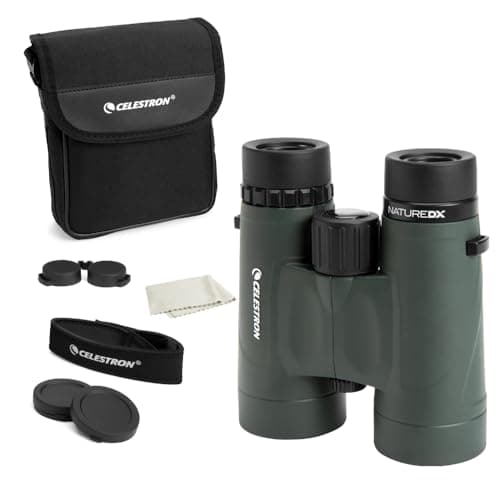
Celestron Nature DX 8x25 Compact
Half the objective means half the light, and that is the entire trade: you accept a dimmer dawn in exchange for actually having them with you.
- Score
- 6.9
- Portability
- 9.5
- Low light
- 4.0
- Published specs
- 5.0
- Value
- 7.5
- Budget band
- Under $100
Check price on Amazon
#ad Price as of October 17, 2026. How we are funded
Published specifications
- Magnification and objective
- 8x, 25 mm
- The trade-off, stated plainly
- A 25 mm objective gathers roughly a third of the light of a 42 mm at the same magnification, so dawn and dusk — the two best birding hours — are where a compact pair struggles most.
- Exit pupil
- About 3.1 mm at 8x25, against 5.3 mm on a 42 mm pair. A smaller exit pupil is harder to hold steady on the eye.
- Detailed specification
- Not published by the manufacturer in a form we could verify for the specific 25 mm variant on the page we could read; check the maker's spec table for the exact model before buying
What it gets right
- Small enough that it actually gets carried, which is worth more than optical quality nobody uses
- Light on the neck for a child or an older recipient
- Cheap enough to be a second pair rather than the only pair
What it does not
- Noticeably dimmer at dawn and dusk than any 42 mm pair here
- Smaller exit pupil is fussier to hold on the eye, which beginners find frustrating
- Compacts usually have shorter eye relief, so check the figure if the recipient wears glasses
Who it is for
A travel pair, a glovebox pair, or a gift for someone who already has full-size binoculars and never brings them.
Skip this if
This is the recipient's only pair and they are serious about it. A compact as a first and only pair teaches someone that birding is difficult, which is the wrong lesson.