The Gift Perch earns a commission when you buy through our links, at no extra cost to you. We are an Amazon Associate. We accept no free products, no sponsored placements and no paid inclusion, and the commission rate plays no part in what we recommend. Full disclosure.
A useful journal entry records six things: date, place, weather, species with rough numbers, one note about behavior, and a sketch. The single most valuable habit is writing down what you were NOT sure about, because that is the entry you can resolve later — a confident wrong identification never gets revisited.
People stop keeping bird journals because they try to keep beautiful ones. A journal is a working document, and the entries below are deliberately scrappy.
The six fields
Date, place and weather. Three seconds of writing, and it is what makes the note useful a year later. Weather explains an otherwise baffling absence of birds.
Species, with rough numbers. "About 20 goldfinches" is a real record. A precise count you invented is not.
One note about behavior. What it was doing is what you will remember, and it is what field guides describe least well.
A sketch. However bad.
What you were unsure about. The most valuable field on the page.
Anything that changed. First arrival of the year, a species you have not seen since spring, a feeder that suddenly went quiet.
Three worked examples
Example 1 — a garden morning
14 May, back garden, 7:10am. Overcast, still, about 55F. Goldfinches ~12 on the nyjer, chickadees 3, one downy woodpecker on the suet for about four minutes. Two house finches squabbling at the tube feeder. Nothing at the bath, which has been busy all week — the water is low. First hummingbird of the year at 7:35, checked the feeder and left immediately.
What makes that useful: the time, the weather, the rough counts, and the two things that changed — a quiet bath with a stated reason, and a first-of-year arrival.
Example 2 — an unresolved bird
22 Sept, woodland edge behind the school, 4:40pm. Sunny, breezy. Small, sparrow-sized, streaky brown above, paler below with fine streaks on the breast. Thin pointed beak, so not a seed eater. Faint pale wingbar, possibly two. Pale eye-ring? Not sure. Low in a hedge, moving constantly, flicking its tail. Merlin said one thing, the book suggests another. NOT CONFIDENT. Sketch below.
This is the best entry on the page, precisely because it does not reach a conclusion. It records the marks rather than the verdict, which means it can be resolved next week, next year, or by someone else.
Example 3 — a one-line entry
3 Jan, kitchen window, all day. Hard freeze, -4F. Bath heater on. Everything came to the water and almost nothing to the seed. Robins in the bath twice, which never happens in summer.
Short entries are fine and are better than no entry. This one records a real pattern — water outperforming food in a freeze — which is worth more than a species list.
Why sketch, when you could photograph
Because drawing forces you to look at the parts of the bird you would otherwise skip. To draw a wing you have to decide whether there is a wingbar. To draw a head you have to look at the eye-ring and the crown stripe. A photograph records everything and teaches nothing; a bad sketch records almost nothing and teaches you what to look at.
Paper, or an app?
Both, for different jobs. eBird and Merlin are better for lists — searchable, backed up, and they contribute to real datasets. Paper is better for the sketch, the behavior note and the uncertainty, and it works in heavy rain, in hard cold and with gloves on.
If you are buying a journal as a gift, check which the recipient already does. Someone who logs everything in an app will not use a paper journal; someone who comes back from walks saying "I meant to write that down" absolutely will.
What to write in
Ranked picks with what each is best for, our score out of ten, the budget band it falls in, and a link to check its current price on Amazon.
#
Pick
Best for
Score
Price
01
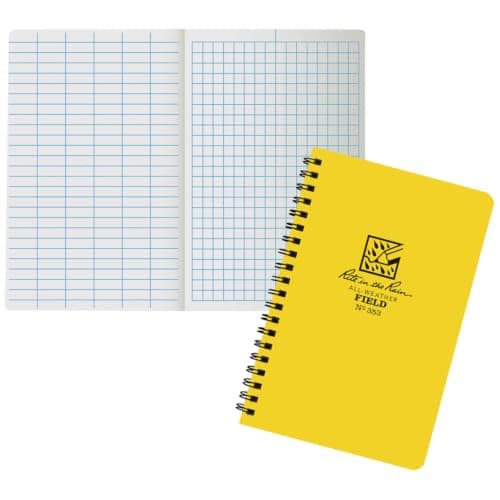
Rite in the Rain All-Weather Field NotebookWaterproof paper, which sounds like a gimmick until the first morning someone tries to write in drizzle.Under $25
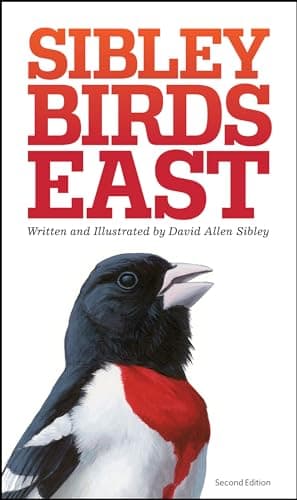
David Allen Sibley Sibley Field Guide to Birds of Eastern / Western North AmericaHalf the continent, a fraction of the size, and the version that actually gets carried outdoors.Under $25
The Sibley artwork, in a book that fits a coat pocket
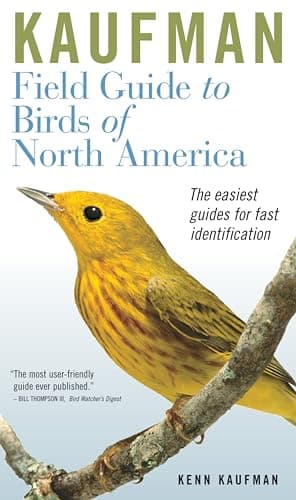
Kenn Kaufman Kaufman Field Guide to Birds of North AmericaPhotographic rather than painted, and arranged by what a bird looks like rather than by taxonomy — which is how a beginner actually searches.Under $25
A first field guide for someone who has never used one
Cornell Lab of OrnithologyNo photoCornell Lab of Ornithology Merlin Bird ID (free app)Free, from Cornell, and better at identifying a bird by its song than any book will ever be. We earn nothing from it and it belongs at the top of the list anyway.Under $25
The thing to give before you spend any money at all
Free from Cornell Lab of Ornithology — there is nothing to buy, and this link earns us nothing.
Scores are ours, from the published rubric on the how-we-pick page. They are editorial judgments about published specifications and cost arithmetic, not test results — we have not handled these products.
Pick 01
Notes that survive the weather they were taken in
Rite in the Rain All-Weather Field Notebook
Waterproof paper, which sounds like a gimmick until the first morning someone tries to write in drizzle.
Regional field edition — buy Eastern or Western to match where the recipient lives
Illustration style
The same painted approach as the full guide, edited down to the species that occur in that half of the continent
Why regional wins outdoors
Removing the species that do not occur where you are standing removes most of the wrong answers, which is the hardest part of identification for a beginner
Page count and dimensions
Not published by the manufacturer in a form we could verify for the current printing on a publisher page we could read; the regional editions are substantially smaller than the 624-page full guideSource: Knopf / Penguin Random House listing for The Sibley Guide to Birds, Second Edition, read 2026-09-02
What it gets right
Fits in a jacket pocket, which is the difference between a guide used and a guide shelved
Regional editing removes most misidentifications before they happen
Cheaper than the full guide, so it works as a stocking gift
What it does not
You must know which half of the country the recipient lives in
A vagrant or an out-of-range bird will not be in it
Less impressive to unwrap than the big hardcover
Who it is for
Anyone who actually goes outside. This is the book to buy a beginner, and the full guide is the one to buy them later.
Skip this if
You do not know where the recipient does most of their birding. Buying the wrong half is a real risk and an awkward one to fix.
Pick 03
A first field guide for someone who has never used one
Kenn Kaufman Kaufman Field Guide to Birds of North America
Photographic rather than painted, and arranged by what a bird looks like rather than by taxonomy — which is how a beginner actually searches.
Houghton Mifflin Harcourt, 14 April 2005Source: Kaufman Field Guide to Birds of North America, Houghton Mifflin Harcourt listing, read 2026-09-02
Pages
392Source: Kaufman Field Guide to Birds of North America, Houghton Mifflin Harcourt listing, read 2026-09-02
Images
More than 2,200 full-color images, digitally edited from photographsSource: Kaufman Field Guide to Birds of North America, Houghton Mifflin Harcourt listing, read 2026-09-02
Coverage
Every species that occurs regularly in North AmericaSource: Kaufman Field Guide to Birds of North America, Houghton Mifflin Harcourt listing, read 2026-09-02
Arrangement
By appearance rather than scientific sequence, so similar-looking birds sit togetherSource: Kaufman Field Guide to Birds of North America, Houghton Mifflin Harcourt listing, read 2026-09-02
What it gets right
Arranged by appearance, which is the single most beginner-friendly decision in any field guide
392 pages — genuinely compact next to Sibley's 624 and National Geographic's 592
Photographs are easier for a beginner to match than paintings
The cheapest of the big four, usually by a wide margin
What it does not
Published 2005, so it is the oldest guide here by nine years
Photographic guides show one plumage well and others poorly
Experienced birders generally graduate away from it
Who it is for
The absolute beginner — someone who just put up their first feeder and wants to know what the brown one is.
Skip this if
The recipient already identifies birds confidently. They will find the appearance-based arrangement slower than taxonomic order, not faster.
Pick 04
Cornell Lab of OrnithologyNo photo
The thing to give before you spend any money at all
Cornell Lab of Ornithology Merlin Bird ID (free app)
Free, from Cornell, and better at identifying a bird by its song than any book will ever be. We earn nothing from it and it belongs at the top of the list anyway.
Free from Cornell Lab of Ornithology — there is nothing to buy, and this link earns us nothing.
Published specifications
Price
Free. The Cornell Lab of Ornithology publishes it as part of its mission.Source: Merlin Bird ID by the Cornell Lab of Ornithology, read 2026-09-02
Species coverage
Identification support, photos, sound recordings, maps and descriptions for more than 10,000 species worldwideSource: Merlin Bird ID by the Cornell Lab of Ornithology, read 2026-09-02
Sound ID coverage
540 species in the US and Canada, 602 in Central and South America, 284 in EuropeSource: Cornell Chronicle, Merlin Bird ID sound identification coverage, news.cornell.edu, read 2026-09-02
Identification methods
Photo ID, Sound ID, and a step-by-step question flowSource: Merlin Bird ID by the Cornell Lab of Ornithology, read 2026-09-02
What it does not do
Sound ID is not yet available worldwideSource: Cornell Chronicle, Merlin Bird ID sound identification coverage, news.cornell.edu, read 2026-09-02
What it gets right
Free, from the most authoritative bird organization in North America
Sound ID answers the question a book cannot: what is singing, out of sight, in that tree
Works alongside every book on this page rather than replacing them
What it does not
Needs a phone, charged, in hand — which is the opposite of what some people want from birding
Sound ID coverage is regional, not global
It is not a gift you can wrap
Who it is for
Everyone, before they spend anything.
Skip this if
Nothing. Install it first and buy the book anyway. We do not earn a commission on this and it is still the first recommendation on the page.
FAQ
Questions people ask about this
What should you write in a bird watching journal?
Date, place and weather; species with rough numbers; one note about behavior; a sketch; and, most valuably, what you were unsure about. A confident wrong identification never gets revisited; a recorded doubt does.
What does a bird journal entry look like?
Scrappy. "14 May, back garden, 7:10am, overcast. Goldfinches ~12 on the nyjer, chickadees 3, one downy woodpecker on the suet. First hummingbird of the year at 7:35." That is a complete, useful entry.
Should I sketch birds or photograph them?
Sketch, if the goal is to learn. Drawing forces you to decide whether there is a wingbar or an eye-ring, which is exactly the looking a photograph lets you skip.
Is a paper journal better than an app?
For lists, no — apps are searchable, backed up and contribute to real datasets. For sketches, behavior notes and uncertainty, and for use in rain or hard cold, paper wins.
What kind of notebook works best outdoors?
One with water-resistant paper, used with a pencil. Ordinary paper tears under a pencil once damp, and pens fail in the cold.