

Skip to content
The GiftPerch

Gifts by Budget

Gifts for beginner birders

Ordered the way a beginner actually needs things, which is not the order the shops are arranged in. The first recommendation is free.

By Scooter M.Published September 2, 2026Content updated September 2, 2026Prices shown live on Amazon

We don't test this gear. Here's what we do instead.

A person watching birds in a sunlit park

The Gift Perch earns a commission when you buy through our links, at no extra cost to you. We are an Amazon Associate. We accept no free products, no sponsored placements and no paid inclusion, and the commission rate plays no part in what we recommend. Full disclosure.

Give a beginner three things, in this order: the free Merlin Bird ID app from the Cornell Lab, a regional field guide for the half of the continent they live in, and a feeder they can see from where they sit. Binoculars come fourth, not first — a beginner who cannot yet find a bird will not enjoy them.

The standard mistake with a beginner gift is buying the most impressive item rather than the most useful first one. Binoculars look like the obvious present and are the thing a beginner is least ready for: finding a small moving bird through a narrow circle is a learned skill, and the first ten attempts are all failures.

The picks, in the order to give them

Ranked picks with what each is best for, our score out of ten, the budget band it falls in, and a link to check its current price on Amazon.
#PickBest forScorePrice
01Cornell Lab of OrnithologyNo photoCornell Lab of Ornithology Merlin Bird ID (free app)Free, from Cornell, and better at identifying a bird by its song than any book will ever be. We earn nothing from it and it belongs at the top of the list anyway.Under $25The thing to give before you spend any money at all8.9out of 10
See it at Cornell Lab

Not sold on Amazon. We are not in Cornell Lab's affiliate program, so this link earns us nothing.

02David Allen SibleyNo photoDavid Allen Sibley Sibley Field Guide to Birds of Eastern / Western North AmericaHalf the continent, a fraction of the size, and the version that actually gets carried outdoors.Under $25The Sibley artwork, in a book that fits a coat pocket8.1out of 10
Check price on Amazon

#ad Price shown live on Amazon. How we are funded

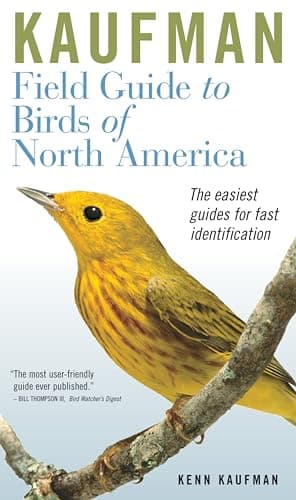
03Kenn KaufmanNo photoKenn Kaufman Kaufman Field Guide to Birds of North AmericaPhotographic rather than painted, and arranged by what a bird looks like rather than by taxonomy — which is how a beginner actually searches.Under $25A first field guide for someone who has never used one7.8out of 10
Check price on Amazon

#ad Price shown live on Amazon. How we are funded

04Nature AnywhereNo photoNature Anywhere Window Bird Feeder with Strong Suction CupsA clear acrylic tray that sticks to the glass, which turns any window into the closest view of a bird you will ever get for the money.Under $25Apartments, and anyone who cannot get to a garden7.4out of 10
Check price on Amazon

#ad Price shown live on Amazon. How we are funded

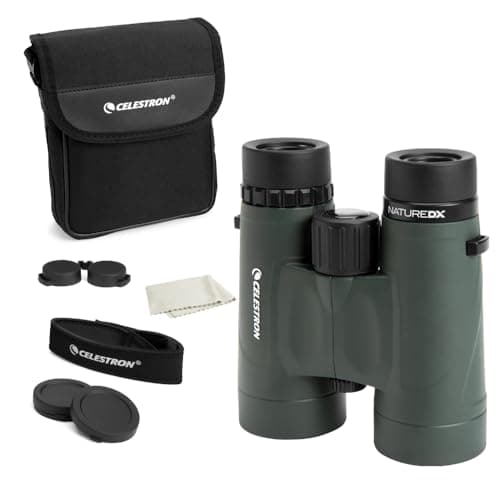
05CelestronNo photoCelestron Nature DX 8x42The pair nearly every birding guide starts with, and the only one in this group that focuses down to 6.5 feet — which matters more than it sounds.Under $250The default first pair, and the closest focus here8.8out of 10
Check price on Amazon

#ad Price shown live on Amazon. How we are funded

06Nature's WayNo photoNature's Way Cedar Suet FeederSuet brings in the birds seed does not, and a cedar cage lasts where a wire one rusts.Under $25Woodpeckers, and winter generally7.9out of 10
Check price on Amazon

#ad Price shown live on Amazon. How we are funded

Scores are ours, from the published rubric on the how-we-pick page. They are editorial judgments about published specifications and cost arithmetic, not test results — we have not handled these products.

Pick 01

Cornell Lab of OrnithologyNo photo

The thing to give before you spend any money at all

Cornell Lab of Ornithology Merlin Bird ID (free app)

Free, from Cornell, and better at identifying a bird by its song than any book will ever be. We earn nothing from it and it belongs at the top of the list anyway.

Score
8.9
Usefulness
10.0
Authority
10.0
Cost
10.0
Gift appeal
3.0
Budget band
Under $25
See it at Cornell Lab

Not sold on Amazon. We are not in Cornell Lab's affiliate program, so this link earns us nothing.

Published specifications

Price
Free. The Cornell Lab of Ornithology publishes it as part of its mission.Source: Merlin Bird ID by the Cornell Lab of Ornithology, read 2026-09-02
Species coverage
Identification support, photos, sound recordings, maps and descriptions for more than 10,000 species worldwideSource: Merlin Bird ID by the Cornell Lab of Ornithology, read 2026-09-02
Sound ID coverage
540 species in the US and Canada, 602 in Central and South America, 284 in EuropeSource: Cornell Chronicle, Merlin Bird ID sound identification coverage, news.cornell.edu, read 2026-09-02
Identification methods
Photo ID, Sound ID, and a step-by-step question flowSource: Merlin Bird ID by the Cornell Lab of Ornithology, read 2026-09-02
What it does not do
Sound ID is not yet available worldwideSource: Cornell Chronicle, Merlin Bird ID sound identification coverage, news.cornell.edu, read 2026-09-02

What it gets right

  • Free, from the most authoritative bird organization in North America
  • Sound ID answers the question a book cannot: what is singing, out of sight, in that tree
  • Works alongside every book on this page rather than replacing them

What it does not

  • Needs a phone, charged, in hand — which is the opposite of what some people want from birding
  • Sound ID coverage is regional, not global
  • It is not a gift you can wrap

Who it is for

Everyone, before they spend anything.

Skip this if

Nothing. Install it first and buy the book anyway. We do not earn a commission on this and it is still the first recommendation on the page.

Pick 02

David Allen SibleyNo photo

The Sibley artwork, in a book that fits a coat pocket

David Allen Sibley Sibley Field Guide to Birds of Eastern / Western North America

Half the continent, a fraction of the size, and the version that actually gets carried outdoors.

Score
8.1
Completeness
7.5
Portability
9.5
Currency
7.0
Gift appeal
7.5
Budget band
Under $25
Check price on Amazon

#ad Price shown live on Amazon. How we are funded

Published specifications

Format
Regional field edition — buy Eastern or Western to match where the recipient lives
Illustration style
The same painted approach as the full guide, edited down to the species that occur in that half of the continent
Why regional wins outdoors
Removing the species that do not occur where you are standing removes most of the wrong answers, which is the hardest part of identification for a beginner
Page count and dimensions
Not published by the manufacturer in a form we could verify for the current printing on a publisher page we could read; the regional editions are substantially smaller than the 624-page full guideSource: Knopf / Penguin Random House listing for The Sibley Guide to Birds, Second Edition, read 2026-09-02

What it gets right

  • Fits in a jacket pocket, which is the difference between a guide used and a guide shelved
  • Regional editing removes most misidentifications before they happen
  • Cheaper than the full guide, so it works as a stocking gift

What it does not

  • You must know which half of the country the recipient lives in
  • A vagrant or an out-of-range bird will not be in it
  • Less impressive to unwrap than the big hardcover

Who it is for

Anyone who actually goes outside. This is the book to buy a beginner, and the full guide is the one to buy them later.

Skip this if

You do not know where the recipient does most of their birding. Buying the wrong half is a real risk and an awkward one to fix.

Pick 03

Kenn KaufmanNo photo

A first field guide for someone who has never used one

Kenn Kaufman Kaufman Field Guide to Birds of North America

Photographic rather than painted, and arranged by what a bird looks like rather than by taxonomy — which is how a beginner actually searches.

Score
7.8
Completeness
7.0
Portability
8.5
Currency
5.0
Gift appeal
8.0
Budget band
Under $25
Check price on Amazon

#ad Price shown live on Amazon. How we are funded

Published specifications

Publisher and date
Houghton Mifflin Harcourt, 14 April 2005Source: Kaufman Field Guide to Birds of North America, Houghton Mifflin Harcourt listing, read 2026-09-02
Pages
392Source: Kaufman Field Guide to Birds of North America, Houghton Mifflin Harcourt listing, read 2026-09-02
Images
More than 2,200 full-color images, digitally edited from photographsSource: Kaufman Field Guide to Birds of North America, Houghton Mifflin Harcourt listing, read 2026-09-02
Coverage
Every species that occurs regularly in North AmericaSource: Kaufman Field Guide to Birds of North America, Houghton Mifflin Harcourt listing, read 2026-09-02
Arrangement
By appearance rather than scientific sequence, so similar-looking birds sit togetherSource: Kaufman Field Guide to Birds of North America, Houghton Mifflin Harcourt listing, read 2026-09-02

What it gets right

  • Arranged by appearance, which is the single most beginner-friendly decision in any field guide
  • 392 pages — genuinely compact next to Sibley's 624 and National Geographic's 592
  • Photographs are easier for a beginner to match than paintings
  • The cheapest of the big four, usually by a wide margin

What it does not

  • Published 2005, so it is the oldest guide here by nine years
  • Photographic guides show one plumage well and others poorly
  • Experienced birders generally graduate away from it

Who it is for

The absolute beginner — someone who just put up their first feeder and wants to know what the brown one is.

Skip this if

The recipient already identifies birds confidently. They will find the appearance-based arrangement slower than taxonomic order, not faster.

Pick 04

Nature AnywhereNo photo

Apartments, and anyone who cannot get to a garden

Nature Anywhere Window Bird Feeder with Strong Suction Cups

A clear acrylic tray that sticks to the glass, which turns any window into the closest view of a bird you will ever get for the money.

Score
7.4
View
9.5
Practicality
6.5
Published specs
4.0
Gift appeal
8.5
Budget band
Under $25
Check price on Amazon

#ad Price shown live on Amazon. How we are funded

Published specifications

Mounting
Suction cups to a clean exterior window pane
Material
Clear acrylic, so the birds are visible from inside
Capacity
Not published by the manufacturer in a form we could verify
Drainage
Check the listing: a removable tray with drainage holes is the feature that decides whether seed rots after rain
Warranty
Not published by the manufacturer in a form we could verify

What it gets right

  • The view is unbeatable — inches away, at eye level
  • Works with no garden at all, which no other feeder here does
  • Cheap enough to be a low-risk gift for someone who has never fed birds

What it does not

  • Suction cups fail in cold weather and after the glass gets dirty
  • Small capacity means frequent refills
  • Birds can strike the window; it takes some care to place well

Who it is for

A city-apartment gift, a gift for someone with limited mobility, or a first feeder for a child who wants to see a bird up close.

Skip this if

The recipient's windows do not open, or are above the second floor. Refilling from the outside becomes the whole problem.

Pick 05

CelestronNo photo

The default first pair, and the closest focus here

Celestron Nature DX 8x42

The pair nearly every birding guide starts with, and the only one in this group that focuses down to 6.5 feet — which matters more than it sounds.

Score
8.8
Eye relief
9.0
Field of view
7.0
Close focus
9.5
Value
9.0
Budget band
Under $250
Check price on Amazon

#ad Price shown live on Amazon. How we are funded

Published specifications

Magnification and objective
8x, 42 mmSource: Celestron Nature DX 8x42 specifications, celestron.com, read 2026-09-02
Field of view
7.4 degrees, 388 ft at 1,000 yardsSource: Celestron Nature DX 8x42 specifications, celestron.com, read 2026-09-02
Eye relief
17.5 mm — comfortable over glassesSource: Celestron Nature DX 8x42 specifications, celestron.com, read 2026-09-02
Close focus
6.5 ft (2 m)Source: Celestron Nature DX 8x42 specifications, celestron.com, read 2026-09-02
Weight
22.2 oz (629 g)Source: Celestron Nature DX 8x42 specifications, celestron.com, read 2026-09-02
Prism and glass
Roof prism, BaK-4 with phase coatingSource: Celestron Nature DX 8x42 specifications, celestron.com, read 2026-09-02
Weatherproofing
Waterproof, nitrogen-filled and fogproofSource: Celestron Nature DX 8x42 specifications, celestron.com, read 2026-09-02
Warranty
Limited lifetime warrantySource: Celestron Nature DX 8x42 specifications, celestron.com, read 2026-09-02

What it gets right

  • 6.5 ft close focus, so a bird on the far side of the patio is still usable — and so are butterflies
  • 17.5 mm eye relief works over glasses without cropping the view
  • Phase-coated roof prisms at an entry price, which is not universal here
  • Limited lifetime warranty

What it does not

  • Field of view is the narrowest in this group at 7.4 degrees
  • Heavier than the Nikon by well over an ounce
  • No ED glass, so high-contrast edges show more color fringing than the Athlon

Who it is for

The safe first pair. If you know nothing about the recipient except that they like birds, this is the pair with the fewest ways to be wrong.

Skip this if

You want the widest possible view for following birds in flight. The Athlon's 8.1 degrees is a noticeably easier picture to track with.

Pick 06

Nature's WayNo photo

Woodpeckers, and winter generally

Nature's Way Cedar Suet Feeder

Suet brings in the birds seed does not, and a cedar cage lasts where a wire one rusts.

Score
7.9
Bird range
9.0
Seasonality
6.5
Durability
8.0
Value
9.0
Budget band
Under $25
Check price on Amazon

#ad Price shown live on Amazon. How we are funded

Published specifications

What suet is for
High-fat food that suits woodpeckers, nuthatches, chickadees and wrens — species that largely ignore a seed tube
Season
Best in cold weather. Rendered suet softens and can go rancid in summer heat; some makers sell no-melt cakes for warm months.
Placement
Against a trunk or on a pole with a tail prop suits woodpeckers, which brace their tails while feeding
Capacity and dimensions
Not published by the manufacturer in a form we could verify consistently across this class

What it gets right

  • Attracts a completely different set of birds to a seed feeder
  • Cheap enough to add to any other gift on this site
  • Cold-weather timing matches when most bird gifts are given

What it does not

  • Rancid in summer heat unless no-melt cakes are used
  • Cakes are a consumable, so it is a gift with an ongoing cost
  • Starlings will empty an unprotected suet cage quickly

Who it is for

Anyone who already has a seed feeder and has said they only ever see the same three birds. Suet is the answer to that.

Skip this if

The recipient lives somewhere hot year-round. Suet is a cold-weather food and it will make a mess.

Start with the thing we earn nothing from

Merlin Bird ID is free, made by the Cornell Lab of Ornithology, and carries identification support for more than 10,000 species worldwide with Sound ID covering 540 species in the US and Canada. It answers the beginner's actual question — "what is that?" — without them needing to see the bird at all.

We make no commission on it. It goes first anyway, because a $25 book alongside an app that hears the bird is a much better gift than a $25 book alone.

Then buy regional, not continental

A guide covering all 1,023 North American species gives a beginner a thousand wrong answers to wade through. A regional edition removes the species that do not occur where they are standing, which removes most of the errors before they happen. Buy Eastern or Western to match where they live — and make sure you know which.

Then give them something to watch

A feeder within sight of where they already sit. A window feeder works in an apartment; a suet feeder brings in woodpeckers and nuthatches that a seed tube never will. Both are under $25 and both produce results in days rather than months.

Binoculars come fourth

When they are ready, 8x42 is the answer and close focus is the specification that matters for someone still learning at a feeder. The beginner binoculars page has the reasoning; 8x42 vs 10x42 explains the magnification.

FAQ

Questions people ask about this

What does a beginner bird watcher need?

The free Merlin Bird ID app, a regional field guide, and a feeder they can see from where they already sit. Binoculars are the fourth thing, not the first.

What is the best first bird book?

A regional field guide — Sibley's Eastern or Western field edition, or the Kaufman guide, which arranges birds by appearance rather than by taxonomy. That arrangement is the single most beginner-friendly decision any guide makes.

Do you need binoculars to watch birds?

No. A feeder within a few feet of a window gives a better view than binoculars do, and it works while you are doing something else. Binoculars matter once you start going to the birds instead of waiting for them.

Is Merlin Bird ID really free?

Yes. The Cornell Lab of Ornithology publishes it free as part of its mission. It covers more than 10,000 species worldwide, with Sound ID currently covering 540 species in the US and Canada.

Sources

Where these figures come from