Skip to content
The GiftPerch

Backyard — guide

Hummingbird feeder vs oriole feeder

They both hold sugar water and they are both orange or red, which is where the similarity ends. An oriole physically cannot feed from most hummingbird feeders.

By Scooter M.Published September 6, 2026Content updated September 6, 2026Prices shown live on Amazon

We don't test this gear. Here's what we do instead.

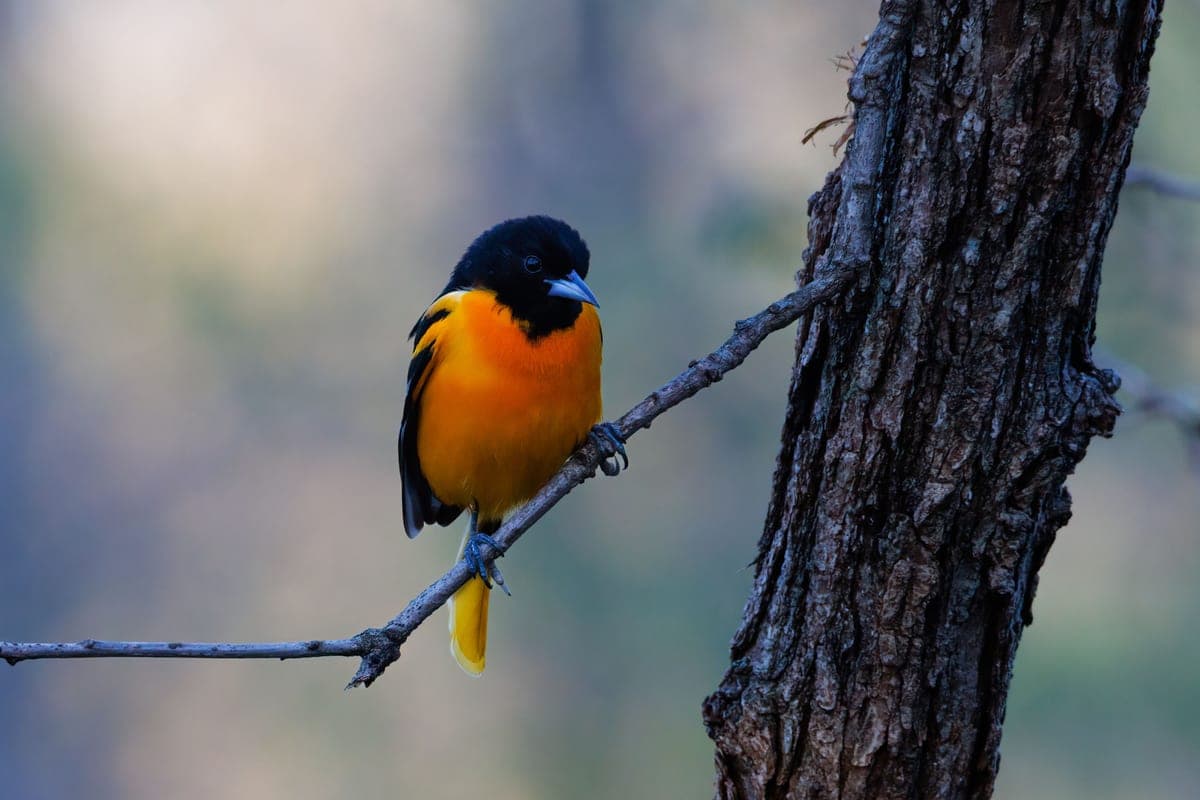
A Baltimore Oriole with bright orange and black plumage perched on a branch

The Gift Perch earns a commission when you buy through our links, at no extra cost to you. We are an Amazon Associate. We accept no free products, no sponsored placements and no paid inclusion, and the commission rate plays no part in what we recommend. Full disclosure.

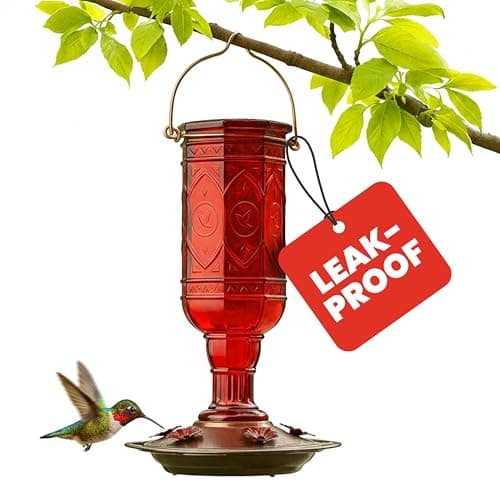
The difference is size, not color. A hummingbird feeder has tiny ports sized for a needle-like bill and usually no perch, because hummingbirds hover. An oriole is a songbird roughly the size of a robin with a stout bill, and it needs a wide port and something to stand on. It also wants food a hummingbird feeder cannot hold: jelly and orange halves. Put an oriole feeder up and hummingbirds may still use it; put a hummingbird feeder up and orioles mostly cannot.

This trips people up every spring, usually in the same way: an oriole appears in the yard, the owner puts out the nectar feeder they already own, and nothing happens. The bird was not being fussy. It could not physically get at the nectar.

The differences that matter

Two feeders that look similar and are not
Hummingbird feederOriole feeder
Bird sizeAbout 3 to 4 in, a few gramsAbout 7 to 8 in, robin-sized
Port sizeSmall, sized for a needle billWide — the Nature's Way model publishes 4 flexible flower-shaped ports
PerchesOften none; hummingbirds hoverEssential — orioles perch to feed. The Nature's Way model has 4
Other foodNectar onlyJelly dishes and orange spikes, which is often what actually draws them in
Color conventionRedOrange
CapacitySmall — nectar spoils fastLarger; the model here publishes 30 oz
SeasonSpring through fall, longer in the southShort — often only a few weeks around migration and breeding

Figures for the oriole feeder are from Nature's Way's published specification for the Orange Blossom Glass Oriole Feeder (model OFG2). The hummingbird column describes the usual design of the class rather than one model.

The picks

Ranked picks with what each is best for, our score out of ten, the budget band it falls in, and a link to check its current price on Amazon.
#PickBest forScorePrice
01Nature's WayNo photoNature's Way Orange Blossom Glass Oriole Feeder (OFG2)The rare oriole feeder that publishes its numbers, and the only one here that feeds nectar, jelly and fruit from the same frame.Under $25Orioles, which a hummingbird feeder will not hold7.9out of 10
Check price on Amazon

#ad Price shown live on Amazon. How we are funded

02More BirdsNo photoMore Birds Glass Hummingbird FeederGlass rather than plastic, because the part that decides whether a nectar feeder works is how easily it comes apart to be washed.Under $25A first nectar feeder that does not need an app7.0out of 10
Check price on Amazon

#ad Price shown live on Amazon. How we are funded

03BirdbuddyNo photoBirdbuddy Smart Hummingbird Feeder ProThe only mainstream camera feeder built for hummingbirds specifically, and the one where slow motion earns its place.Under $250Someone who already watches hummingbirds8.4out of 10
Check price on Amazon

#ad Price shown live on Amazon. How we are funded

04Alpine CorporationNo photoAlpine Corporation Pedestal Bird BathA handsome object that works only if you check one number the listing may not show you: the depth.Under $100The classic garden bird bath, if the basin is shallow enough6.9out of 10
Check price on Amazon

#ad Price shown live on Amazon. How we are funded

Scores are ours, from the published rubric on the how-we-pick page. They are editorial judgments about published specifications and cost arithmetic, not test results — we have not handled these products.

Pick 01

Nature's WayNo photo

Orioles, which a hummingbird feeder will not hold

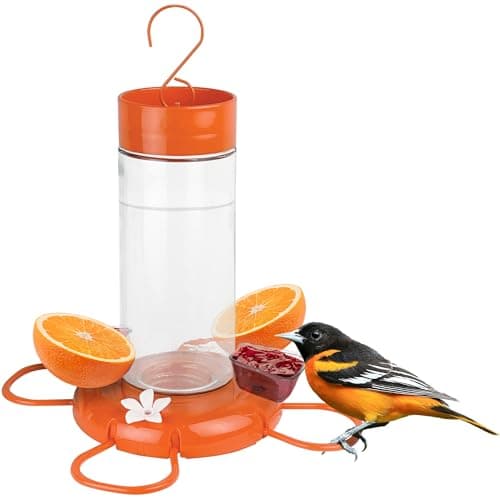
Nature's Way Orange Blossom Glass Oriole Feeder (OFG2)

The rare oriole feeder that publishes its numbers, and the only one here that feeds nectar, jelly and fruit from the same frame.

Score
7.9
Published specs
9.0
Cleaning
8.0
Versatility
9.0
Season length
5.0
Budget band
Under $25
Check price on Amazon

#ad Price shown live on Amazon. How we are funded

Published specifications

Nectar capacity
30 ozSource: Nature's Way Bird Products, Orange Blossom Glass Oriole Feeder (model OFG2) product page, natureswaybirds.com, read 2026-09-06
Feeding ports
4 flexible flower-shaped ports, with 4 perchesSource: Nature's Way Bird Products, Orange Blossom Glass Oriole Feeder (model OFG2) product page, natureswaybirds.com, read 2026-09-06
Jelly and fruit
2 removable jelly dishes plus built-in orange spikesSource: Nature's Way Bird Products, Orange Blossom Glass Oriole Feeder (model OFG2) product page, natureswaybirds.com, read 2026-09-06
Materials
Glass nectar reservoir, UV-stabilized non-rusting plastic, powder-coated steel hangerSource: Nature's Way Bird Products, Orange Blossom Glass Oriole Feeder (model OFG2) product page, natureswaybirds.com, read 2026-09-06
Dimensions
12.59 in H x 10 in W x 10 in D, 1.5 lbSource: Nature's Way Bird Products, Orange Blossom Glass Oriole Feeder (model OFG2) product page, natureswaybirds.com, read 2026-09-06
Pest control
Built-in ant moat; the maker describes the port shape as bee-resistantSource: Nature's Way Bird Products, Orange Blossom Glass Oriole Feeder (model OFG2) product page, natureswaybirds.com, read 2026-09-06
Cleaning
The maker states all parts remove for cleaningSource: Nature's Way Bird Products, Orange Blossom Glass Oriole Feeder (model OFG2) product page, natureswaybirds.com, read 2026-09-06
List price
$17.99 direct from the manufacturerSource: Nature's Way Bird Products, Orange Blossom Glass Oriole Feeder (model OFG2) product page, natureswaybirds.com, read 2026-09-06

What it gets right

  • Publishes real figures — capacity, port count, dimensions — which most feeders in this class do not
  • Nectar, jelly and orange halves from one feeder, so you are not guessing which one orioles will take
  • Glass reservoir takes hot water, which matters because nectar ferments
  • Built-in ant moat, normally a separate purchase

What it does not

  • Orioles are seasonal and regional — in much of the country they pass through for a few weeks and then are gone
  • 30 oz of nectar is far more than a few orioles drink, so it will need dumping rather than emptying
  • Jelly draws wasps and ants in high summer no matter what the moat does
  • Larger and heavier than a hummingbird feeder, so it needs a real hook

Who it is for

Someone who has seen an oriole in the yard, or lives where they breed, and has been trying to hold them with a hummingbird feeder they cannot fit on.

Skip this if

Orioles do not visit the recipient's yard. This is a species-specific feeder, and unlike a seed feeder it will sit empty if the birds are not there. Check first.

Pick 02

More BirdsNo photo

A first nectar feeder that does not need an app

More Birds Glass Hummingbird Feeder

Glass rather than plastic, because the part that decides whether a nectar feeder works is how easily it comes apart to be washed.

Score
7.0
Cleaning
8.5
Durability
6.5
Published specs
4.0
Gift appeal
7.5
Budget band
Under $25
Check price on Amazon

#ad Price shown live on Amazon. How we are funded

Published specifications

Material
Glass reservoir with a metal or plastic base
Why glass
It does not cloud or retain smell the way plastic does after repeated washing, and it can take hot water
Cleaning cadence
Nectar spoils fast in warm weather; plan on rinsing and refilling every few days in summer
Capacity
Not published by the manufacturer in a form we could verify
Warranty
Not published by the manufacturer in a form we could verify

What it gets right

  • Glass washes properly, which is the entire maintenance story for a nectar feeder
  • No electronics, nothing to charge, nothing to subscribe to
  • Cheap enough to buy two so one can always be in the sink

What it does not

  • Glass breaks if it is knocked off a hook
  • Small ports clog with sugar if it is not cleaned on schedule
  • Nothing about the feeder itself attracts hummingbirds to a yard that has none

Who it is for

Someone in hummingbird country who has never tried it. Pair it with a note about the cleaning schedule and it is a genuinely good gift.

Skip this if

The recipient will not commit to washing it every few days in hot weather. A neglected nectar feeder is worse for birds than no feeder at all.

Pick 03

BirdbuddyNo photo

Someone who already watches hummingbirds

Birdbuddy Smart Hummingbird Feeder Pro

The only mainstream camera feeder built for hummingbirds specifically, and the one where slow motion earns its place.

Score
8.4
Free tier
9.5
Published specs
7.5
Specificity
9.0
Gift appeal
8.0
Budget band
Under $250
Check price on Amazon

#ad Price shown live on Amazon. How we are funded

Published specifications

Listed price
$209.00Source: Birdbuddy Smart Hummingbird Feeder Pro product page, mybirdbuddy.com, read 2026-09-02
Camera
5 megapixel photos with HDR, 2K videoSource: Birdbuddy Smart Hummingbird Feeder Pro product page, mybirdbuddy.com, read 2026-09-02
Battery
3,800 mAh lithium ion, up to one month per charge depending on modeSource: Birdbuddy Smart Hummingbird Feeder Pro product page, mybirdbuddy.com, read 2026-09-02
Connectivity
Wi-Fi at 2.4 GHzSource: Birdbuddy Smart Hummingbird Feeder Pro product page, mybirdbuddy.com, read 2026-09-02
Nectar capacity
Not published by the manufacturer in a form we could verify
Works without a subscription?
Yes, on the standard Birdbuddy free tier. Premium is $69.99 a year individual.Source: Birdbuddy membership tiers, mybirdbuddy.com/memberships, read 2026-09-02

What it gets right

  • A hummingbird is too fast to appreciate in real time, which makes the camera genuinely useful rather than a novelty
  • The higher 5 MP / 2K camera specification, unlike the Pro Solar
  • Same free tier and app as the rest of the range

What it does not

  • Only useful in a yard that already gets hummingbirds — a camera does not attract them
  • Nectar capacity is not published, so refill frequency is hard to plan for
  • The most expensive feeder in the Birdbuddy line

Who it is for

A gift for someone who already keeps a nectar feeder and talks about it. It is a specific gift for a specific hobby, which is exactly why it lands well.

Skip this if

The recipient has never seen a hummingbird in their yard. Start them on a plain nectar feeder for a season and buy the camera next year if the birds turn up.

Pick 04

Alpine CorporationNo photo

The classic garden bird bath, if the basin is shallow enough

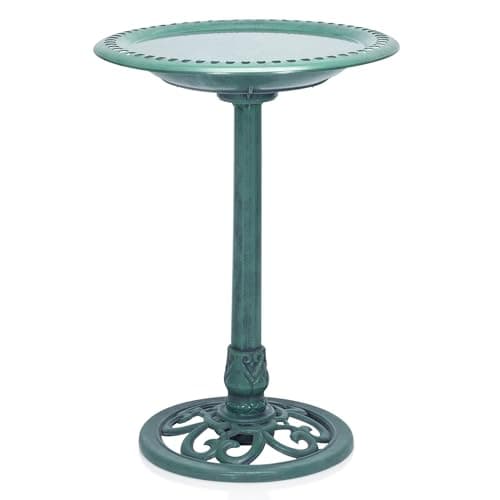
Alpine Corporation Pedestal Bird Bath

A handsome object that works only if you check one number the listing may not show you: the depth.

Score
6.9
Meets the depth rule
6.0
Appearance
9.0
Durability
6.5
Published specs
4.0
Budget band
Under $100
Check price on Amazon

#ad Price shown live on Amazon. How we are funded

Published specifications

The number that decides whether birds use it
A bird bath should be no more than 2 inches deep at its deepest point, with the basin sloping gradually from the rim inward so a small bird can wade to its own comfort depth and get out easily.Source: National Audubon Society guidance on water for birds, read 2026-09-02
What to check before buying
Whether the maker publishes a basin depth. Many pedestal baths are 3 to 4 inches deep at the center, which is deeper than Audubon recommends and deep enough that small birds avoid it.Source: National Audubon Society guidance on water for birds, read 2026-09-02
The fix if it is too deep
Add a few flat stones to the basin. They give birds somewhere to stand and reduce the effective depth without replacing the bath.Source: National Audubon Society guidance on water for birds, read 2026-09-02
Basin depth as published
Not published by the manufacturer in a form we could verify for most pedestal baths in this class — read the listing before you buy
Winter
Concrete and ceramic basins crack when water freezes in them. A pedestal bath is a three-season purchase unless it is emptied.

What it gets right

  • It looks like a gift, which a plastic dish does not
  • A pedestal keeps birds above cat height, which is a genuine safety gain
  • Wide basins attract more species at once than narrow ones

What it does not

  • Frequently deeper than the 2 inch maximum Audubon recommends
  • Depth is often not published at all
  • Ceramic and concrete crack in a hard freeze

Who it is for

A gardener with a spot in dappled shade. Check the depth, and put a bag of flat pebbles in the box with it.

Skip this if

The recipient lives somewhere with real winters and will not empty it. A cracked bath in February is a bad memory attached to your gift.

Jelly is the part people miss

Orioles take nectar, but grape jelly and orange halves are frequently what actually gets them to stop. That is the functional reason an oriole feeder is built differently: it is not really a nectar feeder with bigger holes, it is a small buffet. The Nature's Way model publishes two removable jelly dishes and built-in orange spikes alongside the 30 oz nectar reservoir, which is the shape the whole category has settled on.

It also brings a cost. Jelly draws wasps and ants in warm weather, more so than nectar does. The model here has a built-in ant moat, which helps with one of those two problems and not the other. Anyone putting out jelly should expect insects and plan to keep the dishes small and fresh rather than full.

Same rules, both feeders: cleaning

Sugar water ferments, and it ferments faster in warm weather. That is the single most important thing about owning either feeder, and it is why the glass-versus-plastic argument on the hummingbird feeder roundup matters — the feeder that comes apart easily is the feeder that actually gets washed. Both feeders here use glass reservoirs for the same reason: glass takes hot water and does not cloud or hold smells.

  • Change nectar every few days in warm weather, sooner if it looks cloudy.
  • Wash jelly dishes every time you refill. Jelly spoils faster than nectar and grows mold in a day or two in summer.
  • Take the whole thing apart. A feeder rinsed but not disassembled keeps residue in the ports, which is where fermentation starts.
  • Skip the red dye entirely. Plain sugar water is what both birds want. The feeder is already the right color; the liquid does not need to be.

Before you buy an oriole feeder

Check that orioles actually occur where the feeder is going. This is the honest caveat that distinguishes an oriole feeder from almost everything else on this site: a seed feeder works everywhere there are birds, and an oriole feeder works only where there are orioles, for the handful of weeks they are around. In much of the country that is a short window in spring migration and then nothing.

If you are unsure, the free Merlin Bird ID app will tell you which species are being reported near you and when. That is a better basis for the purchase than the picture on the box.

FAQ

Questions people ask about this

What is the difference between a hummingbird feeder and an oriole feeder?

Port size and perches. Hummingbird feeders have tiny ports for a needle-like bill and often no perch, because hummingbirds hover. Oriole feeders have wide ports, perches for a robin-sized bird, and usually jelly dishes and orange spikes as well.

Can orioles use a hummingbird feeder?

Mostly not. An oriole is roughly robin-sized with a stout bill and cannot get into a port designed for a hummingbird, and with no perch it has nowhere to stand. Some birds manage a few drips from the outside, which is not the same as feeding.

Will hummingbirds use an oriole feeder?

Often yes. The ports are larger than they need but not unusable, so hummingbirds will visit an oriole feeder more readily than orioles will visit a hummingbird feeder. It is the one-way version of this compatibility.

Do you put jelly in an oriole feeder?

Grape jelly is one of the most effective oriole attractants, and most oriole feeders include dishes for it. Expect it to draw wasps and ants in warm weather, keep the portions small, and wash the dishes at every refill because jelly spoils quickly.

Should I use red dye in nectar?

No. Plain sugar water is what both hummingbirds and orioles want, and the feeder itself already provides the color cue. There is no benefit to dye and no reason to add it.

Sources

Where these figures come from