Watch the bird before you open the book. Note size and shape, beak shape, behavior, habitat and one or two specific marks — then check the range map before the plates, because it eliminates most of the wrong answers instantly. Flipping through pictures hoping for a match is the slowest possible method and the one almost everybody starts with.
A field guide is a filtering tool, not a picture book. Used as a picture book it is genuinely bad at its job, because dozens of small brown birds look identical on a plate and completely different in a hedge.
The bird will leave. The book will not. Spend the time you have on the bird and note four things: how big it is relative to something familiar (a sparrow, a robin, a pigeon), what shape it is, what it is doing, and where it is — ground, trunk, canopy, water, wire.
Beak shape narrows the family faster than color does, and it does not change with season, sex or age. A thick conical beak is a seed eater; a thin pointed one is an insect eater; a hooked one is a predator; a chisel is a woodpecker. Color is the thing beginners notice and the thing that changes most.
- A wingbar — a pale stripe across the folded wing. Present or absent is a genuine yes/no.
- An eye-ring, or a stripe through or over the eye.
- Tail pattern — white outer feathers show clearly as the bird flies away, which is often all you get.
- Leg color, which is duller and more diagnostic than plumage.
This is the step almost everyone skips, and it is the most powerful one. A continental guide covers 1,023 North American species; a range map cuts that to the few hundred that occur where you are standing, in the season you are standing there. National Geographic's 7th edition includes 80 new maps and 350 revisions for exactly this reason — ranges shift, and an out-of-date map produces confident wrong answers.
This is also the argument for a regional edition: it has done the filtering for you before you open it. Choosing by region.
Every good guide names the species most easily confused with each entry, and that is where the actual identification happens. Peterson's pointer lines exist precisely to show which marks separate two similar birds; Kaufman goes further and arranges species by appearance rather than taxonomy, so the confusable ones sit on the same spread.
"Small, streaky, thin beak, wingbar, in the hedge, probably a sparrow but not sure which" is a useful record. "Sparrow" is not. Recording what you were unsure about is what lets you resolve it later, and it is how you get faster.
Use Merlin to get a name, then use the book to see which marks produced it. The app answers; the book teaches. Doing only the first leaves you dependent on a phone with a charged battery. Apps versus books.
Ranked picks with what each is best for, our score out of ten, the budget band it falls in, and a link to check its current price on Amazon.| # | Pick | Best for | Score | Price |
|---|
| 01 | 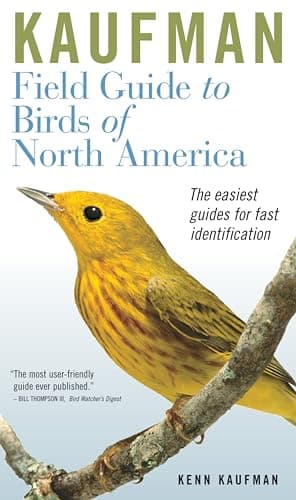 Kenn Kaufman Kaufman Field Guide to Birds of North AmericaPhotographic rather than painted, and arranged by what a bird looks like rather than by taxonomy — which is how a beginner actually searches.Under $25 Kenn Kaufman Kaufman Field Guide to Birds of North AmericaPhotographic rather than painted, and arranged by what a bird looks like rather than by taxonomy — which is how a beginner actually searches.Under $25 | A first field guide for someone who has never used one | 7.8out of 10 | |
| 02 |  David Allen Sibley Sibley Field Guide to Birds of Eastern / Western North AmericaHalf the continent, a fraction of the size, and the version that actually gets carried outdoors.Under $25 David Allen Sibley Sibley Field Guide to Birds of Eastern / Western North AmericaHalf the continent, a fraction of the size, and the version that actually gets carried outdoors.Under $25 | The Sibley artwork, in a book that fits a coat pocket | 8.1out of 10 | |
| 03 | 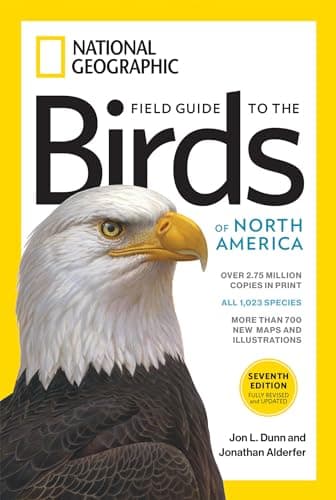 National Geographic Field Guide to the Birds of North America, 7th Edition1,023 species and 80 new maps, arranged to match the American Ornithological Society's current order — the most current of the big three.Under $50 National Geographic Field Guide to the Birds of North America, 7th Edition1,023 species and 80 new maps, arranged to match the American Ornithological Society's current order — the most current of the big three.Under $50 | The most species, and the most recent taxonomy | 8.6out of 10 | |
| 04 | 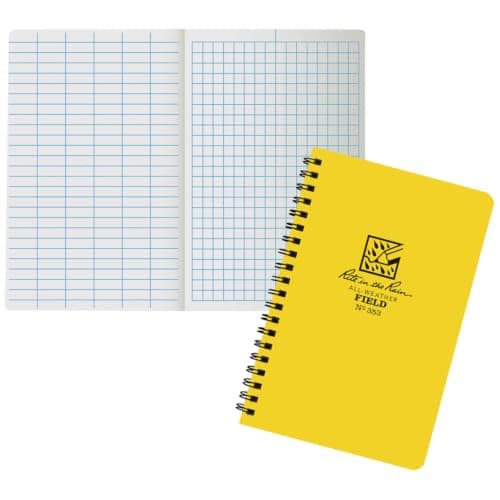 Rite in the Rain All-Weather Field NotebookWaterproof paper, which sounds like a gimmick until the first morning someone tries to write in drizzle.Under $25 Rite in the Rain All-Weather Field NotebookWaterproof paper, which sounds like a gimmick until the first morning someone tries to write in drizzle.Under $25 | Notes that survive the weather they were taken in | 7.6out of 10 | |
Scores are ours, from the published rubric on the how-we-pick page. They are editorial judgments about published specifications and cost arithmetic, not test results — we have not handled these products.
Pick 01
A first field guide for someone who has never used one
Kenn Kaufman Kaufman Field Guide to Birds of North America
Photographic rather than painted, and arranged by what a bird looks like rather than by taxonomy — which is how a beginner actually searches.
- Score
- 7.8
- Completeness
- 7.0
- Portability
- 8.5
- Currency
- 5.0
- Gift appeal
- 8.0
- Budget band
- Under $25
Published specifications
- Publisher and date
- Houghton Mifflin Harcourt, 14 April 2005Source: Kaufman Field Guide to Birds of North America, Houghton Mifflin Harcourt listing, read 2026-09-02
- Pages
- 392Source: Kaufman Field Guide to Birds of North America, Houghton Mifflin Harcourt listing, read 2026-09-02
- Images
- More than 2,200 full-color images, digitally edited from photographsSource: Kaufman Field Guide to Birds of North America, Houghton Mifflin Harcourt listing, read 2026-09-02
- Coverage
- Every species that occurs regularly in North AmericaSource: Kaufman Field Guide to Birds of North America, Houghton Mifflin Harcourt listing, read 2026-09-02
- Arrangement
- By appearance rather than scientific sequence, so similar-looking birds sit togetherSource: Kaufman Field Guide to Birds of North America, Houghton Mifflin Harcourt listing, read 2026-09-02
What it gets right
- Arranged by appearance, which is the single most beginner-friendly decision in any field guide
- 392 pages — genuinely compact next to Sibley's 624 and National Geographic's 592
- Photographs are easier for a beginner to match than paintings
- The cheapest of the big four, usually by a wide margin
What it does not
- Published 2005, so it is the oldest guide here by nine years
- Photographic guides show one plumage well and others poorly
- Experienced birders generally graduate away from it
Who it is for
The absolute beginner — someone who just put up their first feeder and wants to know what the brown one is.
Skip this if
The recipient already identifies birds confidently. They will find the appearance-based arrangement slower than taxonomic order, not faster.
Pick 02
The Sibley artwork, in a book that fits a coat pocket
David Allen Sibley Sibley Field Guide to Birds of Eastern / Western North America
Half the continent, a fraction of the size, and the version that actually gets carried outdoors.
- Score
- 8.1
- Completeness
- 7.5
- Portability
- 9.5
- Currency
- 7.0
- Gift appeal
- 7.5
- Budget band
- Under $25
Published specifications
- Format
- Regional field edition — buy Eastern or Western to match where the recipient lives
- Illustration style
- The same painted approach as the full guide, edited down to the species that occur in that half of the continent
- Why regional wins outdoors
- Removing the species that do not occur where you are standing removes most of the wrong answers, which is the hardest part of identification for a beginner
- Page count and dimensions
- Not published by the manufacturer in a form we could verify for the current printing on a publisher page we could read; the regional editions are substantially smaller than the 624-page full guideSource: Knopf / Penguin Random House listing for The Sibley Guide to Birds, Second Edition, read 2026-09-02
What it gets right
- Fits in a jacket pocket, which is the difference between a guide used and a guide shelved
- Regional editing removes most misidentifications before they happen
- Cheaper than the full guide, so it works as a stocking gift
What it does not
- You must know which half of the country the recipient lives in
- A vagrant or an out-of-range bird will not be in it
- Less impressive to unwrap than the big hardcover
Who it is for
Anyone who actually goes outside. This is the book to buy a beginner, and the full guide is the one to buy them later.
Skip this if
You do not know where the recipient does most of their birding. Buying the wrong half is a real risk and an awkward one to fix.
Pick 03
The most species, and the most recent taxonomy
National Geographic Field Guide to the Birds of North America, 7th Edition
1,023 species and 80 new maps, arranged to match the American Ornithological Society's current order — the most current of the big three.
- Score
- 8.6
- Completeness
- 9.5
- Portability
- 5.0
- Currency
- 9.0
- Gift appeal
- 7.5
- Budget band
- Under $50
Published specifications
- Species covered
- 1,023, including 37 new to this editionSource: National Geographic Field Guide to the Birds of North America, 7th Edition, publisher listing, read 2026-09-02
- Pages
- 592Source: National Geographic Field Guide to the Birds of North America, 7th Edition, publisher listing, read 2026-09-02
- Illustrations
- 3,500 illustrations, 250 of them newSource: National Geographic Field Guide to the Birds of North America, 7th Edition, publisher listing, read 2026-09-02
- Maps
- 80 new range maps and 350 revisedSource: National Geographic Field Guide to the Birds of North America, 7th Edition, publisher listing, read 2026-09-02
- Taxonomy
- Organized to match American Ornithological Society taxonomy changesSource: National Geographic Field Guide to the Birds of North America, 7th Edition, publisher listing, read 2026-09-02
- Format
- Paperback
What it gets right
- The only guide here that states its species count plainly: 1,023
- Current AOS taxonomy, which matters when a recipient cross-references an app
- 80 new and 350 revised range maps — ranges have shifted, and most guides have not kept up
- Paperback, so it is closer to field-usable than the Sibley hardcover
What it does not
- 592 pages is still a lot of book for a coat pocket
- Illustration style is less distinctive than Sibley's, which some birders care about a great deal
- Covers the whole continent, so a beginner still wades through species that do not occur near them
Who it is for
The birder who checks things properly and will notice a guide using out-of-date taxonomy. Also the right answer for anyone who travels across the continent.
Skip this if
The recipient is brand new to this. A thousand species is a hard place to start; the Kaufman photographic guide is a gentler entry.
Pick 04
Notes that survive the weather they were taken in
Rite in the Rain All-Weather Field Notebook
Waterproof paper, which sounds like a gimmick until the first morning someone tries to write in drizzle.
- Score
- 7.6
- Usefulness
- 8.0
- Durability
- 9.5
- Gift appeal
- 6.0
- Value
- 8.5
- Budget band
- Under $25
Published specifications
- Paper
- Water-resistant sheets designed to be written on when wet
- Why a birder needs one
- Field notes are taken standing up, outdoors, often in rain. Ordinary paper pills and tears under a pencil in those conditions.
- Pencil, not pen
- Most all-weather paper works best with pencil; ink from a standard rollerball can bead and smear
- Sizes and page counts
- Not published by the manufacturer in a form we could verify for the specific model; several sizes are sold
What it gets right
- Solves a genuine, specific problem rather than being a themed notebook
- Cheap, so it works as an addition to a larger gift
- Nobody already has one unless they are already serious
What it does not
- It is a notebook. On its own it can read as a low-effort gift
- Pairs best with a pencil, which is another thing to remember
- Not bird-specific, so it lacks the themed pages some recipients want
Who it is for
Someone who walks in the morning and comes back with things they meant to write down.
Skip this if
The recipient keeps their records in eBird or Merlin on a phone. Many now do, and a paper notebook will sit unused.
