From a window, a porch or a garden chair, the bird is close — often inside ten feet. That makes close focus the deciding figure, and it rules out pairs that are excellent everywhere else.
By Scooter M.Published September 11, 2026Content updated September 11, 2026Prices verified September 12, 2026
The Gift Perch earns a commission when you buy through our links, at no extra cost to you. We are an Amazon Associate. We accept no free products, no sponsored placements and no paid inclusion, and the commission rate plays no part in what we recommend. Full disclosure.
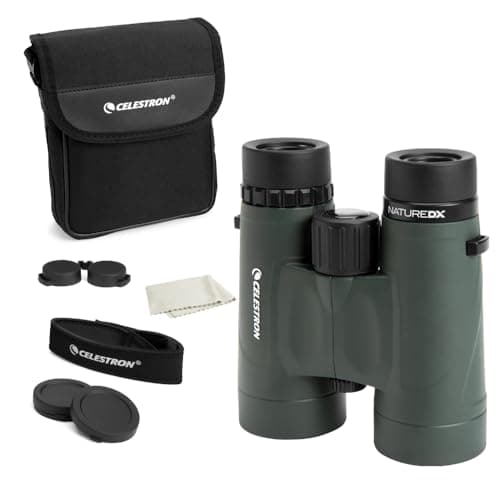
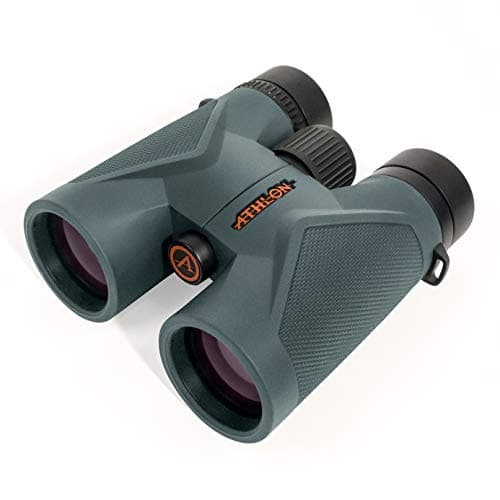
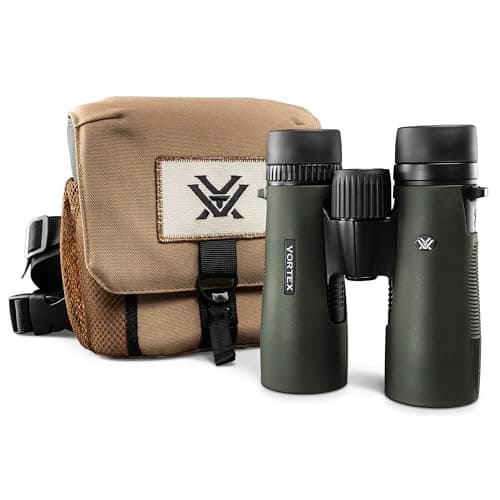
For watching birds from home, buy the pair with the shortest published close focus, and that is the Vortex Diamondback HD 8x42 at 5 ft. A feeder outside a kitchen window is typically six to ten feet from the glass, which puts it inside the minimum focus distance of any pair that publishes 10 ft or more. The Celestron Nature DX and Athlon Midas G2 both publish 6.5 ft and work well; the Nikon PROSTAFF P7 at 9.8 ft and the Celestron Outland X at 13.1 ft do not.
This page reorders the main binocular roundup for one job. Out on a trail, close focus barely matters, because nothing is that near. From a window it is the whole purchase, and it is the figure gift buyers least often check — most people assume any binocular focuses on anything. It does not. Every number here is from the maker's own published table; we have not handled these pairs.
What decides a from-home pair
Close focus, above everything. The nearest distance at which the pair forms a sharp image. Under about 7 ft works for a feeder outside a window; 10 ft or more does not. Makers publish it, and the spread here runs from 5 ft to 13.1 ft.
Whether it gets picked up. A pair that lives on a windowsill is picked up for thirty seconds at a time. Weight matters far less than on a trail, and a slightly heavier pair with better close focus is the right trade.
Eye relief still matters. Someone watching from an armchair is often wearing their reading glasses. Under about 16 mm the view crops; everything on this list publishes 17 mm or more.
Field of view matters less. The feeder is not moving. A narrower field is a reasonable price for closer focus, which is a different trade from the one a hiker makes.
Interpupillary range, if the face is small. Vortex publishes a 55-75 mm range; most makers do not publish one at all. It decides whether the two barrels can close enough for the eyes to merge the image.
The picks
Ranked picks with what each is best for, our score out of ten, the budget band it falls in, and a link to check its current price on Amazon.
#
Pick
Best for
Score
Price
01
Vortex Diamondback HD 8x42Nothing here is the best figure in its column, and nothing is the worst — which for a gift is exactly the right shape.Under $250
Celestron Nature DX 8x42The pair nearly every birding guide starts with, and the only one in this group that focuses down to 6.5 feet — which matters more than it sounds.Under $250
The default first pair, and the closest focus here
Athlon Optics Midas G2 UHD 8x428.1 degrees is a visibly bigger picture than anything else in this group, and ED glass is the reason edges stay clean at that width.Under $250
CelestronNo photoCelestron Nature DX 8x25 CompactHalf the objective means half the light, and that is the entire trade: you accept a dimmer dawn in exchange for actually having them with you.Under $100
Ranked on published close focus, shortest first. The last pick is on the list to show what a long close-focus figure costs you, not because it is recommended for this job.
Pick 01
The best balance of the four numbers that matter
Vortex Diamondback HD 8x42
Nothing here is the best figure in its column, and nothing is the worst — which for a gift is exactly the right shape.
426 ft at 1,000 yards is 38 ft wider than the Nature DX, which makes finding a moving bird much easier
ED glass reduces the purple fringing you see on a bird against a bright sky
Magnesium chassis rather than polycarbonate
Lifetime warranty
What it does not
Heaviest here at 23.3 oz
Least familiar brand of the four, which can matter for a gift recipient looking for help later
The wide field makes the pair physically bulkier in the hand
Who it is for
Someone who already owns a cheap pair and has said they struggle to find the bird. Field of view is the fix for that complaint, and this has the most of it.
Skip this if
The recipient has neck or shoulder problems, or will carry these all day. Two and a half ounces sounds trivial and is not, after three hours.
Pick 04
CelestronNo photo
A pair that lives in a coat pocket
Celestron Nature DX 8x25 Compact
Half the objective means half the light, and that is the entire trade: you accept a dimmer dawn in exchange for actually having them with you.
A 25 mm objective gathers roughly a third of the light of a 42 mm at the same magnification, so dawn and dusk — the two best birding hours — are where a compact pair struggles most.
Exit pupil
About 3.1 mm at 8x25, against 5.3 mm on a 42 mm pair. A smaller exit pupil is harder to hold steady on the eye.
Detailed specification
Not published by the manufacturer in a form we could verify for the specific 25 mm variant on the page we could read; check the maker's spec table for the exact model before buying
What it gets right
Small enough that it actually gets carried, which is worth more than optical quality nobody uses
Light on the neck for a child or an older recipient
Cheap enough to be a second pair rather than the only pair
What it does not
Noticeably dimmer at dawn and dusk than any 42 mm pair here
Smaller exit pupil is fussier to hold on the eye, which beginners find frustrating
Compacts usually have shorter eye relief, so check the figure if the recipient wears glasses
Who it is for
A travel pair, a glovebox pair, or a gift for someone who already has full-size binoculars and never brings them.
Skip this if
This is the recipient's only pair and they are serious about it. A compact as a first and only pair teaches someone that birding is difficult, which is the wrong lesson.
Pick 05
A real pair of waterproof binoculars under $100
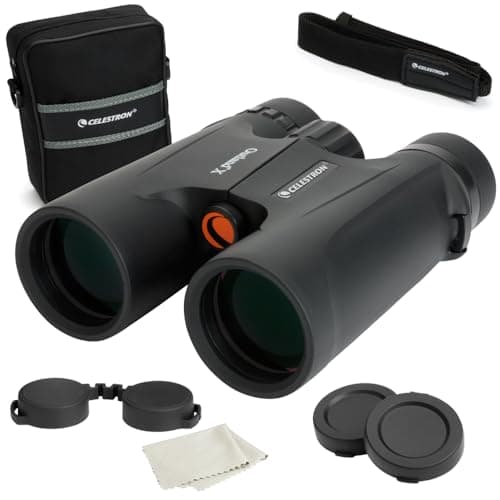
Celestron Outland X 8x42
Genuinely waterproof, genuinely lifetime-warrantied, and honest about the compromise: it cannot focus close.
17.8 mm eye relief — better over glasses than binoculars costing twice as much
Nitrogen-filled and genuinely waterproof at this price, which most sub-$100 pairs are not
Limited lifetime warranty on an entry-level pair
Tripod adaptable, and ships with case, strap, cloth and rainguard
What it does not
13.1 ft close focus rules out most feeder watching from a window
Multi-coated rather than fully multi-coated, so it is dimmer at dawn and dusk than the Nature DX
Heaviest pair in this whole comparison at 23.6 oz
Who it is for
A walker or hiker on a real budget, or a spare pair to keep in the car. For feeder watching, spend up to the Nature DX instead.
Skip this if
The recipient wants to watch their own feeder. At just over 13 ft minimum focus, the feeder outside the kitchen window is inside the blind spot.
Close focus, all pairs, side by side
Published close focus for every full-size pair on this site, shortest first
Published close focus for every full-size pair on this site, shortest first
Pair
Close focus
Works on a feeder 8 ft from the window?
Eye relief
Weight
Vortex Diamondback HD 8x42
5 ft
Yes, with room to spare
17 mm
21.8 oz
Celestron Nature DX 8x42
6.5 ft
Yes
17.5 mm
22.2 oz
Athlon Midas G2 UHD 8x42
6.5 ft
Yes
17.2 mm
23.3 oz
Nikon PROSTAFF P7 8x42
9.8 ft
No — the feeder is inside the minimum
20.2 mm
20.8 oz
Celestron Outland X 8x42
13.1 ft
No — by a wide margin
17.8 mm
23.6 oz
Close focus figures are the makers' own. The Nikon is an excellent pair for glasses wearers and for hiking, and is on this table to show why it is the wrong one for a window rather than because it is a poor binocular.
Why the Nikon is not on the list
It is the lightest full-size pair on this site and has the longest eye relief, and it publishes a 9.8 ft close focus. That makes it the pair we recommend for hiking and for anyone with thick glasses, and the wrong pair for this page. A feeder eight feet outside a window will not come into focus through it. The point is not that the Nikon is worse — it is that from-home watching has one deciding figure and the Nikon happens to lose on exactly that one. The full review covers where it wins.
The compact option
An 8x25 compact is worth considering for a windowsill specifically, because it is small enough to live there and light enough to hold up at any angle from a chair. The trade is a roughly 3.1 mm exit pupil against 5.3 mm on a 42 mm pair, which is harder to hold steady on the eye and dimmer at dusk. For a bright feeder in daylight, that trade is smaller than it sounds. Check the close focus figure on the specific 25 mm model, because the maker's page we could read did not state it for that variant.
The feeder placement that makes any pair work
You can also move the feeder. A feeder placed twelve to fifteen feet from the window is inside the close focus of every pair here except the Outland X, and it is also further from the glass — which, counterintuitively, is the more dangerous placement for the birds. A feeder within about three feet of a window or directly on it is the safer position, because a bird leaving it cannot build up speed; a feeder set back ten feet gives it a run-up. So the honest advice is to buy the close-focusing pair and keep the feeder near the glass, rather than moving the feeder out to suit the binoculars.
FAQ
Questions people ask about this
What are the best binoculars for watching birds from a window?
The pair with the shortest close focus. The Vortex Diamondback HD 8x42 publishes 5 ft, the closest here; the Celestron Nature DX and Athlon Midas G2 publish 6.5 ft. Anything at 10 ft or more cannot focus on a feeder a few feet outside the glass.
What close focus do I need for backyard bird watching?
Under about 7 ft for a feeder outside a window. Most feeders sit six to ten feet from the glass, so a pair publishing 10 ft or more will not bring it into focus. Makers publish this figure; check it before buying.
Can you use any binoculars to watch a bird feeder?
No. Every pair has a minimum focus distance, and on many it is 10 ft or more. A feeder closer than that will stay blurred. This is the single figure that decides a from-home pair and the one gift buyers most often skip.
Are compact binoculars good for watching from a window?
They can be — they live on a sill and are easy to hold from a chair. The trade is a smaller exit pupil, which is harder to keep centered on the eye and dimmer at dusk. Check the close focus of the specific model, which varies.
Should I move the feeder closer to the window?
Yes, if it is currently set back. A feeder within about three feet of the glass or mounted on it is safer for birds, because one leaving it cannot build up speed for a collision. Pair that placement with a close-focusing binocular rather than moving the feeder out.