A gardener almost always owns a feeder already. What is missing is everything that makes the feeder work — and the one gift that brings birds the feeder never will.
By Scooter M.Published September 4, 2026Content updated September 4, 2026Prices verified October 18, 2026
The Gift Perch earns a commission when you buy through our links, at no extra cost to you. We are an Amazon Associate. We accept no free products, no sponsored placements and no paid inclusion, and the commission rate plays no part in what we recommend. Full disclosure.
The best gift for someone who loves birds and gardening is whatever makes the garden hold more birds, not whatever helps them look at the ones already there. In practice that means water at a depth birds will use, a nest box built to published dimensions, or a book on native planting. A gardener almost certainly owns a feeder. What they are missing is everything that makes it work.
This is one of the easier people to buy for, and buyers routinely get it wrong anyway. The mistake is treating the two interests as separate — buying a bird thing that happens to sit in a garden. The gifts that land are the ones that live at the overlap, where the garden is the reason the birds come. Everything below is filed by price as well as by type, so if you are shopping to a number rather than to a category, start at gifts by budget instead.
What makes a garden gift different
Five constraints separate a gift a gardener keeps from one that ends up in the shed. They are worth reading before the picks, because they explain the order the picks are in.
It has to survive being outside. A gardener judges outdoor objects harshly, because they own a lot of them and they know which ones lasted. Cedar, galvanized steel and glazed stone age well. Thin painted pine and printed plastic do not.
It has to work in a bed, not just on a tree. Plenty of gardens have no branch in the right place. Anything that assumes a mature tree within sight of a window is a gift that needs a second purchase before it can be used.
It should not compete with the planting. A gardener has a color scheme whether or not they would call it that. A bright novelty feeder is not a neutral object in a border, and a lot of bird gear is designed to be seen from a shop shelf rather than from a patio door.
It should not create work they did not ask for. Feeders need cleaning, baths need refilling, nest boxes need a yearly clear-out. That is fine for someone already outside daily, which a gardener is. It is worth knowing that you are giving a small chore along with the object.
Best of all, it should act on the garden itself. The gifts that keep paying out are the ones that change what the garden offers, rather than adding another thing to look at. That is the whole case for the pick at the top of this list.
The picks
Ranked picks with what each is best for, our score out of ten, the budget band it falls in, and a link to check its current price on Amazon.
#
Pick
Best for
Score
Price
01
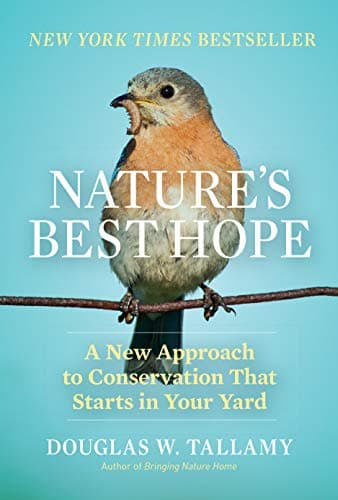
Douglas W. Tallamy Nature's Best HopeThe one gift on this list that changes how many birds the garden holds rather than how well they are watched.Under $50
The gardener who already feeds birds and wants more of them
Squirrel StopperNo photoSquirrel Stopper Feeder Pole System with BaffleMost feeder problems are placement problems, and a pole with a baffle fixes more of them than any feeder upgrade.Under $100
Getting the feeder away from the fence and the squirrels
More Birds Glass Hummingbird FeederGlass rather than plastic, because the part that decides whether a nectar feeder works is how easily it comes apart to be washed.Under $25
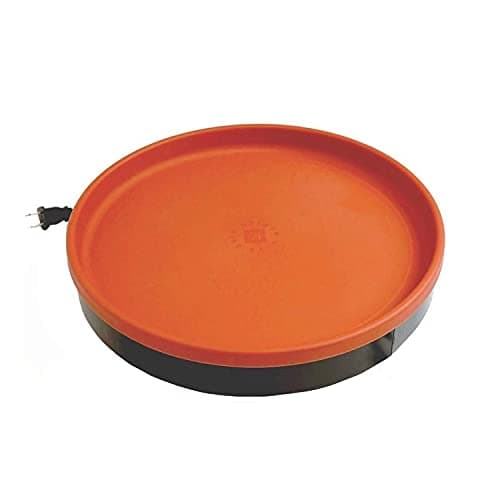
Farm Innovators Heated Bird BathThe one backyard purchase that changes what shows up, because in a hard freeze water is harder for a bird to find than seed.Under $100
Timber Press, 4 February 2020Source: Nature's Best Hope by Douglas W. Tallamy, Timber Press publisher listing at Hachette Book Group, read 2026-09-04
Pages
256Source: Nature's Best Hope by Douglas W. Tallamy, Timber Press publisher listing at Hachette Book Group, read 2026-09-04
ISBN-13
9781604699005Source: Nature's Best Hope by Douglas W. Tallamy, Timber Press publisher listing at Hachette Book Group, read 2026-09-04
Formats
Hardcover and ebookSource: Nature's Best Hope by Douglas W. Tallamy, Timber Press publisher listing at Hachette Book Group, read 2026-09-04
List price
$30.00 hardcoverSource: Nature's Best Hope by Douglas W. Tallamy, Timber Press publisher listing at Hachette Book Group, read 2026-09-04
Subject
Turning a private yard into habitat by planting natives — the publisher's framing is a conservation approach that works without waiting on policySource: Nature's Best Hope by Douglas W. Tallamy, Timber Press publisher listing at Hachette Book Group, read 2026-09-04
What it is not
Not a field guide. There are no identification plates and no range maps.
What it gets right
Answers the question a gardener who already has feeders is actually stuck on: why more birds do not come
Written by the entomologist whose native-plant research Audubon cites, so the argument is his own rather than repeated
Acts on the garden, which means it keeps paying out every season rather than being used once
Very unlikely to duplicate a field guide already on the shelf
What it does not
Useless for identifying the bird at the window — it is an ecology book, not a reference
The advice assumes ground you are allowed to dig, which rules out most renters and balcony gardeners
Native-plant recommendations are region-dependent, so the reader still has to do local homework
A gardener with strong opinions about their existing borders may read it as being told to start again
Who it is for
Someone who gardens and feeds birds as two separate hobbies and has not yet connected them. If they have ever said the feeder is busy but nothing else visits, this is the book that explains why.
Skip this if
The recipient gardens in containers, on a balcony, or in a yard they do not control. The book's central advice is about what to plant in soil you own, and it will read as a rebuke rather than a gift.
Pick 02
The classic garden bird bath, if the basin is shallow enough
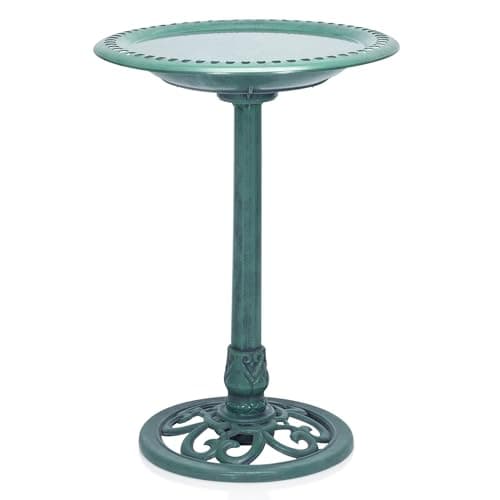
Alpine Corporation Pedestal Bird Bath
A handsome object that works only if you check one number the listing may not show you: the depth.
A bird bath should be no more than 2 inches deep at its deepest point, with the basin sloping gradually from the rim inward so a small bird can wade to its own comfort depth and get out easily.Source: National Audubon Society guidance on water for birds, read 2026-09-02
What to check before buying
Whether the maker publishes a basin depth. Many pedestal baths are 3 to 4 inches deep at the center, which is deeper than Audubon recommends and deep enough that small birds avoid it.Source: National Audubon Society guidance on water for birds, read 2026-09-02
The fix if it is too deep
Add a few flat stones to the basin. They give birds somewhere to stand and reduce the effective depth without replacing the bath.Source: National Audubon Society guidance on water for birds, read 2026-09-02
Basin depth as published
Not published by the manufacturer in a form we could verify for most pedestal baths in this class — read the listing before you buy
Winter
Concrete and ceramic basins crack when water freezes in them. A pedestal bath is a three-season purchase unless it is emptied.
What it gets right
It looks like a gift, which a plastic dish does not
A pedestal keeps birds above cat height, which is a genuine safety gain
Wide basins attract more species at once than narrow ones
What it does not
Frequently deeper than the 2 inch maximum Audubon recommends
Depth is often not published at all
Ceramic and concrete crack in a hard freeze
Who it is for
A gardener with a spot in dappled shade. Check the depth, and put a bag of flat pebbles in the box with it.
Skip this if
The recipient lives somewhere with real winters and will not empty it. A cracked bath in February is a bad memory attached to your gift.
Pick 03
Squirrel StopperNo photo
Getting the feeder away from the fence and the squirrels
Squirrel Stopper Feeder Pole System with Baffle
Most feeder problems are placement problems, and a pole with a baffle fixes more of them than any feeder upgrade.
A squirrel can jump a long horizontal distance and drop a long vertical one. A pole set away from fences, trees and roofs, with a baffle below the feeder, defeats them without any moving parts.
Baffle
A dome or cylinder on the pole below the feeder. It is the component that does the work; a pole without one is just a hook.
Placement
Cardinals prefer feeders within about ten feet of shrubs or trees for cover, so a pole needs to be clear of jumping range but not stranded in open lawn
Height, load rating and pole diameter
Not published by the manufacturer in a form we could verify consistently across this class
What it gets right
Fixes squirrels, ant trails and awkward hanging spots at once
Lets you hang several feeders in one place, which is how you get more species
Works with any feeder the recipient already owns
What it does not
Needs ground you can drive a pole into
Cheap poles bend under a full feeder and a wind
Load ratings are rarely published
Who it is for
Someone with a lawn who has hung a feeder off a fence and watched squirrels empty it. This is the actual fix.
Skip this if
The recipient only has a balcony or a paved yard. There is nothing to sink the pole into and it will not stand up.
Pick 04
A nest box a bluebird will actually use
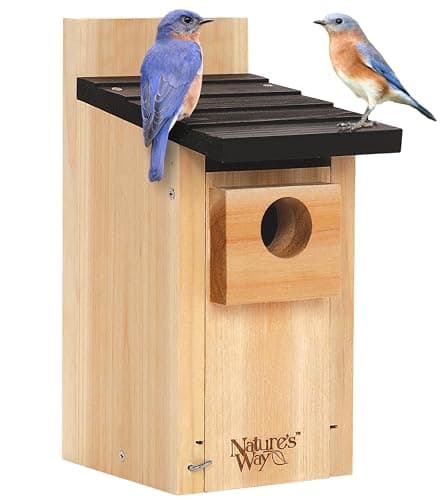
Nature's Way Cedar Bluebird House
The entrance hole is the whole product. Everything else is joinery.
Floor 5.5 x 5.5 in, interior cavity depth 9 in, and mounting 4 to 6 feet above the ground.Source: NestWatch (Cornell Lab of Ornithology), Eastern Bluebird nest box specifications, nestwatch.org, read 2026-09-02
Entrance hole
1.5 in diameter is the standard bluebird hole. Mountain Bluebirds take 1 9/16 in. Chickadees need about 1 1/8 in and wrens about 1 1/4 in, so a box sold as generic will exclude or admit species depending on this one number.
Why the hole size is not decoration
A hole sized correctly for the target species also excludes larger non-native competitors. Oversizing it hands the box to European Starlings.
Material
Cedar, which weathers without treatment. Never paint or stain the interior of a nest box.
The feature to check
A side or front panel that opens. A box that cannot be cleaned out between seasons will not be used for long.
What it gets right
Cedar lasts outdoors untreated, which is the right material for a box that cannot be painted inside
The published NestWatch dimensions give you something concrete to check the listing against
A nest box is a gift that produces an event, not just an object
What it does not
Only works if it is mounted correctly, at the right height, facing away from prevailing weather
Decorative birdhouses far outnumber functional ones, and they look identical online
Nothing guarantees occupancy in the first season
Who it is for
Someone with open ground, a post, and the patience for a bird to find it. Include a note with the 4 to 6 foot mounting height; almost every box is hung too high.
Skip this if
The recipient wants something to hang on a fence and look at. Buy a decorative one and be honest that it is ornamental — an unused nest box is a small annual disappointment.
Pick 05
A first nectar feeder that does not need an app
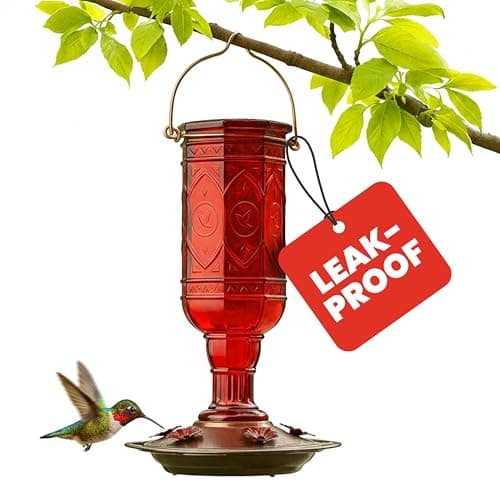
More Birds Glass Hummingbird Feeder
Glass rather than plastic, because the part that decides whether a nectar feeder works is how easily it comes apart to be washed.
A bird bath should be no more than 2 inches deep at its deepest point, with the basin sloping gradually from the rim inward so a small bird can wade to its own comfort depth and get out easily.Source: National Audubon Society guidance on water for birds, read 2026-09-02
Why heated water matters more than food in winter
Birds need drinking and bathing water year-round, and clean feathers are what keep them insulated. When everything within range is frozen, an open bath is a stronger draw than a full feeder.Source: National Audubon Society guidance on water for birds, read 2026-09-02
How it works
A thermostatically controlled element keeps the water just above freezing rather than warming it. Look for a stated thermostat, not just a wattage.
Power
Needs a grounded outdoor outlet within cord reach. Check the cord length against the intended spot before buying.
Wattage and thermostat setpoint
Not published by the manufacturer in a form we could verify consistently across this product class — compare listings, and prefer one that states both
What it gets right
The single most effective winter attractant, and the least commonly given
A thermostat means it only draws power when it needs to
Works in the season when a gift arrives — most bird gifts are bought in December and used in April
What it does not
Requires an outdoor outlet, which rules out many balconies and some gardens
Cords across a lawn are a real nuisance and a trip hazard
Wattage and thermostat behavior are inconsistently published
Who it is for
Someone north enough to have a real freeze, with a garden and an outdoor outlet. For them this is the best value gift on this site.
Skip this if
There is no outdoor power near a sensible spot. An extension lead running out of a window all winter is not a gift, it is a chore.
Pick 08
The unglamorous gift that solves a real problem
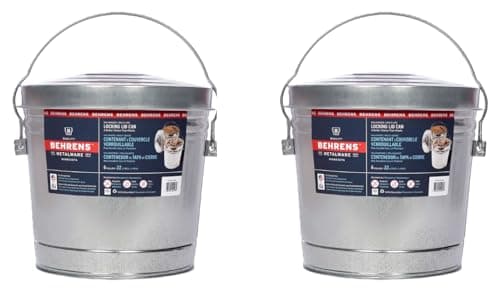
Behrens Galvanized Steel Can with Lid
Seed in a paper sack in a garage feeds mice. A metal can with a tight lid does not.
Rodents chew through paper and plastic seed sacks. Galvanized steel is the standard answer, and the lid seal is the part that matters.
Why not plastic
A determined rodent gets through a plastic tub. Steel is the reason people keep buying these.
Damp
A sealed can also keeps seed dry, which matters because damp seed molds and moldy seed makes birds ill
Capacity and dimensions
Not published by the manufacturer in a form we could verify consistently — capacities from around 6 to 31 gallons are sold, so match it to how much seed they buy
What it gets right
Solves a problem every regular feeder-filler eventually has
Lasts effectively forever
Keeps seed dry, which is a bird-health issue and not just a convenience
What it does not
Deeply unromantic to unwrap
Bulky to ship and to store
Capacity is easy to get wrong without knowing their habits
Who it is for
Someone who has been feeding birds for years and keeps the seed in a torn bag. They will use it every week.
Skip this if
You want the gift to be the moment. This is a good gift and a bad centerpiece — put it under something else.
Why planting beats a second feeder
If the recipient already feeds birds and still sees the same four species, the limit is not the feeder. It is what the garden grows, and the numbers behind that are more dramatic than most gift guides let on.
Audubon's account of the research is worth quoting in plain figures. Ninety-six percent of terrestrial bird species in North America feed insects to their young, so a garden without insects cannot raise birds no matter how much seed is in it. A single clutch of Carolina Chickadee chicks can eat more than 9,000 caterpillars in the sixteen days between hatching and fledging. And which plants those caterpillars live on is not a small effect: native oaks support over 550 species of butterflies and moths, while a ginkgo supports five.
What the planting decides
What the planting decides
Figure
Value
Why it matters to a gift buyer
North American land birds that feed insects to their young
96 percent
Seed feeds adults. Almost every bird raising chicks needs insects, which come from plants.
Caterpillars for one chickadee clutch
More than 9,000, in 16 days
The scale of the demand explains why a feeder alone does not increase nesting.
Butterfly and moth species supported by native oaks
Over 550
The upper end of what one native tree can host.
Butterfly and moth species supported by a ginkgo
5
An ornamental that looks like habitat and functions as furniture.
Difference in some woodland songbirds, native versus exotic plantings
Eight times more
From a study of suburban properties in southeast Pennsylvania, for Wood Thrushes, Eastern Towhees, Veeries and Scarlet Tanagers.
Figures as reported by the National Audubon Society, citing entomologist Doug Tallamy's research. We have not measured any of this ourselves.
That is the argument for giving a book rather than an object, which normally would be the weaker gift. Tallamy's is the research Audubon is citing, so the recipient gets the case first-hand instead of second-hand — and unlike everything else on this page, it changes the garden rather than adding to it.
Water, and the number nobody checks
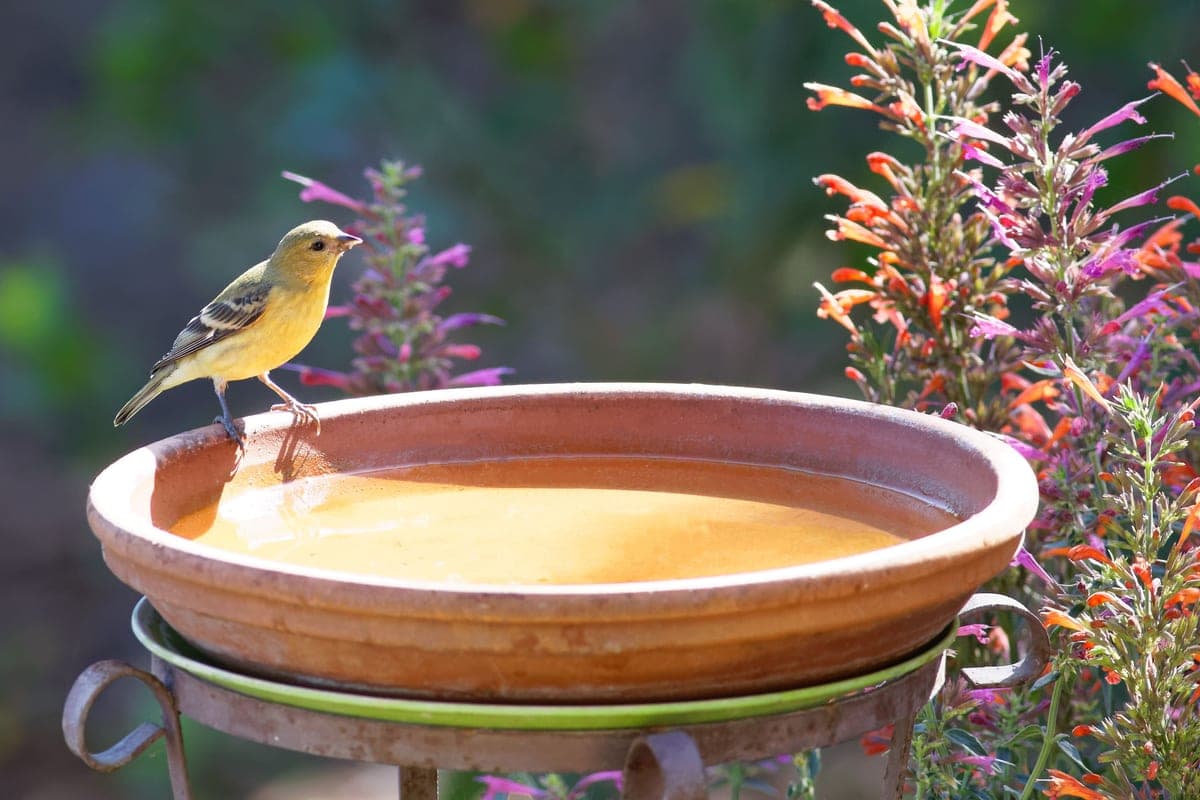
Water is the single biggest gap in most planted gardens, and it is the gift a gardener is least likely to have bought themselves. Every bird needs it; only some eat seed. A bath brings in warblers, thrushes and waxwings that will never approach a feeder.
The catch is depth. Audubon's guidance is a maximum of two inches at the deepest point, with the basin sloping gradually from the rim so a bird can wade to its own comfort and get out fast. A great many decorative pedestal baths are three or four inches deep and flat-bottomed, which is deep enough that small birds simply decline to land. Read the depth before you buy, and if the listing does not state one, assume it is too deep. Full placement guidance is here, including why dappled shade beats full sun and why moving water is the fastest way to get a new bath found.
Where it goes when there is no tree
This is the practical problem that ruins more bird gifts in gardens than anything else. A hanging feeder needs somewhere to hang, and a border, a lawn or a patio does not provide one. A pole system with a baffle solves it properly: it stands wherever the gardener wants it, which usually means in sight of a window and well clear of the fence a squirrel can launch from.
It also settles the squirrel question, which in a garden is not only about seed. A baffled pole set away from launch points is the one arrangement that reliably works, and it is worth more than an expensive feeder hung somewhere convenient. If squirrels are the specific complaint, the squirrel-proof feeders page covers the feeder end of the same problem.
The pollinator overlap
A gardener who plants for bees and butterflies is already three-quarters of the way to planting for hummingbirds, and usually has not noticed. A glass hummingbird feeder is the cheapest way to make that visible, and it sits naturally alongside the planting rather than arguing with it. Glass matters here for a reason the listings rarely explain: hummingbird nectar ferments in warm weather and the feeder needs washing every few days, which is easy on glass and unpleasant on textured plastic.
Nest boxes are the other overlap worth knowing about. The dimension that decides which species can use a box is the entrance hole, and Cornell's NestWatch program publishes the figures per species — so a box is not a decorative object with a hole in it, it is a specification. Our nest box picks are judged against those published dimensions.
What not to buy a gardener who likes birds
Anything described as a bird bath without a stated depth. The most common failure on this list, and the one that looks best in a photograph.
Decorative nest boxes with the wrong hole. A box with an oversized entrance admits starlings and house sparrows and excludes the birds it was bought for. Ornamental boxes with tiny holes and no ventilation are worse — they are objects shaped like nest boxes.
Cheap mixed seed. Heavy with red milo, which most feeder birds throw on the ground, where it feeds rodents. It is also the lowest-margin thing in this niche, which is why it appears at the top of so many gift guides and near the bottom of ours.
A second feeder when they already have one. Two feeders of the same type roughly doubles the refilling and does very little to the species list. A different type, or water, does far more.
Live plants chosen by you. Tempting, and almost always wrong. Gardeners have plans, soil they know, and strong opinions about what goes where. A book about planting is a suggestion; a plant is an instruction.
FAQ
Questions people ask about this
What do you buy someone who likes birds and gardening?
Something that makes the garden hold more birds rather than something extra to look at. A shallow bird bath, a nest box built to published dimensions, or a book on native planting. A gardener usually already owns a feeder, so a second one is the least useful choice.
Is a bird bath or a bird feeder the better gift for a gardener?
A bath, if they only get one. Every bird needs water and only some eat seed, so a bath draws warblers, thrushes and waxwings that a feeder never will. Check that it is no more than two inches deep at the deepest point, with a sloping basin.
Do native plants really bring more birds?
That is what the research Audubon cites reports. Ninety-six percent of North American land birds feed insects to their young, native oaks support over 550 butterfly and moth species against five for a ginkgo, and one study of suburban Pennsylvania yards found eight times more of several woodland songbirds where the planting was native.
What if they garden on a balcony or in containers?
Skip the planting book, which assumes ground they can dig. A window feeder, a glass hummingbird feeder and a shallow dish of water all work in a container garden, and none of them need permission from a landlord.
Should I give a gardener plants for the birds?
Generally no. Gardeners have plans and know their own soil, and a plant chosen by someone else is an instruction about where it goes. A book on native planting makes the same point and leaves the decisions with them.
How do I hang a feeder in a garden with no trees?
A pole system with a baffle. It stands anywhere, which means it can go in sight of a window and well away from the fences and branches squirrels launch from, and that placement matters more than which feeder you hang on it.