The Gift Perch earns a commission when you buy through our links, at no extra cost to you. We are an Amazon Associate. We accept no free products, no sponsored placements and no paid inclusion, and the commission rate plays no part in what we recommend. Full disclosure.
Assume they already own a nectar feeder, because almost everyone who loves hummingbirds does. That makes the obvious present the wrong one, and it leaves three that work: a camera feeder, which is the only gift here that shows them something they cannot already see; water, which draws hummingbirds and everything else and which far fewer people have; and close-focus binoculars, which turn a blur at the feeder into a bird with a visible gorget. A second plain feeder is only the right answer if the first one is plastic, cloudy and impossible to take apart.
There is also a timing problem that no other gift category on this site has quite so sharply. Hummingbirds are seasonal almost everywhere in the United States, so a nectar feeder given in December is a present the recipient cannot use for four months. That does not make it a bad gift, but it does mean the card should say so, and it makes the non-seasonal picks on this page better choices for winter occasions. Every figure below comes from the maker's own published specification, read on the dates in the sources.
How we chose
Does it duplicate what they own? A nectar feeder is the single most-owned object in this hobby. A gift that duplicates it is a gift that goes in the garage.
Does it work in the month you are giving it? Hummingbirds are present for part of the year in most of the country. Anything nectar-related is a spring gift wearing a bow.
Does it need a decision from the recipient? The best gifts here work without the recipient choosing a mounting position, a subscription tier or a compatible accessory.
Does the maker publish real figures? Capacity, camera resolution, close focus, basin depth. Where a maker publishes nothing, that is noted rather than glossed.
Is there a running cost? The camera feeder is the one pick here with a subscription question attached, and it is dealt with plainly rather than buried.
The picks
Ranked picks with what each is best for, our score out of ten, the budget band it falls in, and a link to check its current price on Amazon.
#
Pick
Best for
Score
Price
01
BirdbuddyNo photoBirdbuddy Smart Hummingbird Feeder ProThe only mainstream camera feeder built for hummingbirds specifically, and the one where slow motion earns its place.Under $250
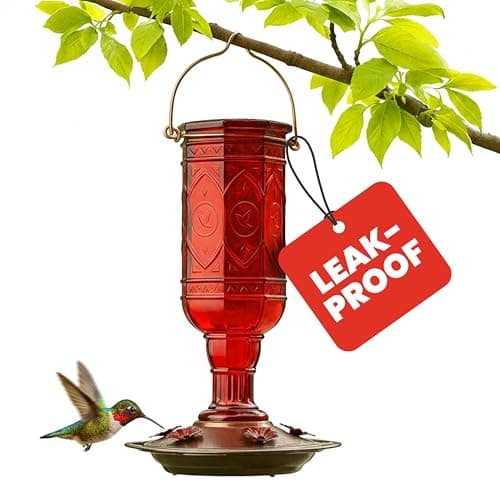
More Birds Glass Hummingbird FeederGlass rather than plastic, because the part that decides whether a nectar feeder works is how easily it comes apart to be washed.Under $25
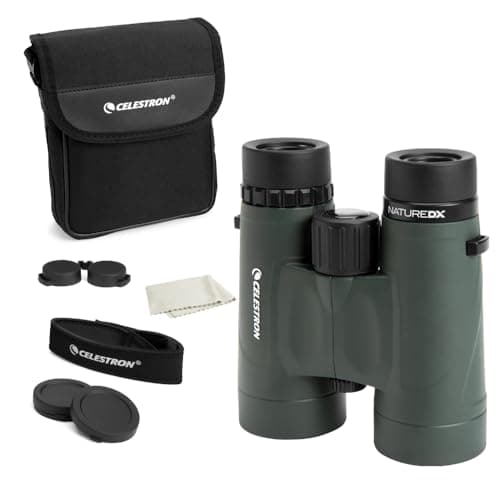
Celestron Nature DX 8x42The pair nearly every birding guide starts with, and the only one in this group that focuses down to 6.5 feet — which matters more than it sounds.Under $250
The default first pair, and the closest focus here
Ranked for someone who already has one nectar feeder up, which is the usual situation. If they genuinely have none, buy the plain glass feeder first and save the rest for next year.
Pick 01
BirdbuddyNo photo
Someone who already watches hummingbirds
Birdbuddy Smart Hummingbird Feeder Pro
The only mainstream camera feeder built for hummingbirds specifically, and the one where slow motion earns its place.
5 megapixel photos with HDR, 2K videoSource: Birdbuddy Smart Hummingbird Feeder Pro product page, mybirdbuddy.com, read 2026-09-02
Battery
3,800 mAh lithium ion, up to one month per charge depending on modeSource: Birdbuddy Smart Hummingbird Feeder Pro product page, mybirdbuddy.com, read 2026-09-02
Connectivity
Wi-Fi at 2.4 GHzSource: Birdbuddy Smart Hummingbird Feeder Pro product page, mybirdbuddy.com, read 2026-09-02
Nectar capacity
Not published by the manufacturer in a form we could verify
Works without a subscription?
Yes, on the standard Birdbuddy free tier. Premium is $69.99 a year individual.Source: Birdbuddy membership tiers, mybirdbuddy.com/memberships, read 2026-09-02
What it gets right
A hummingbird is too fast to appreciate in real time, which makes the camera genuinely useful rather than a novelty
The higher 5 MP / 2K camera specification, unlike the Pro Solar
Same free tier and app as the rest of the range
What it does not
Only useful in a yard that already gets hummingbirds — a camera does not attract them
Nectar capacity is not published, so refill frequency is hard to plan for
The most expensive feeder in the Birdbuddy line
Who it is for
A gift for someone who already keeps a nectar feeder and talks about it. It is a specific gift for a specific hobby, which is exactly why it lands well.
Skip this if
The recipient has never seen a hummingbird in their yard. Start them on a plain nectar feeder for a season and buy the camera next year if the birds turn up.
Pick 02
A first nectar feeder that does not need an app
More Birds Glass Hummingbird Feeder
Glass rather than plastic, because the part that decides whether a nectar feeder works is how easily it comes apart to be washed.
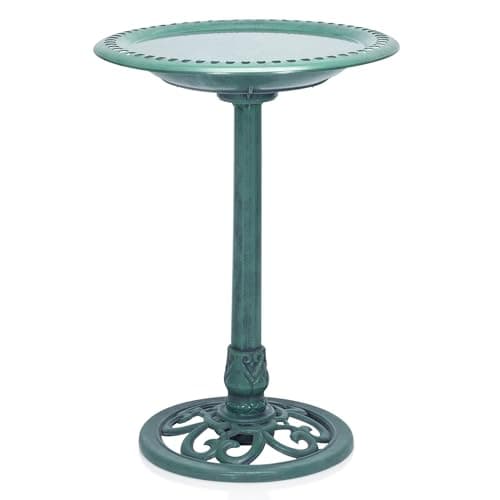
A bird bath should be no more than 2 inches deep at its deepest point, with the basin sloping gradually from the rim inward so a small bird can wade to its own comfort depth and get out easily.Source: National Audubon Society guidance on water for birds, read 2026-09-02
What to check before buying
Whether the maker publishes a basin depth. Many pedestal baths are 3 to 4 inches deep at the center, which is deeper than Audubon recommends and deep enough that small birds avoid it.Source: National Audubon Society guidance on water for birds, read 2026-09-02
The fix if it is too deep
Add a few flat stones to the basin. They give birds somewhere to stand and reduce the effective depth without replacing the bath.Source: National Audubon Society guidance on water for birds, read 2026-09-02
Basin depth as published
Not published by the manufacturer in a form we could verify for most pedestal baths in this class — read the listing before you buy
Winter
Concrete and ceramic basins crack when water freezes in them. A pedestal bath is a three-season purchase unless it is emptied.
What it gets right
It looks like a gift, which a plastic dish does not
A pedestal keeps birds above cat height, which is a genuine safety gain
Wide basins attract more species at once than narrow ones
What it does not
Frequently deeper than the 2 inch maximum Audubon recommends
Depth is often not published at all
Ceramic and concrete crack in a hard freeze
Who it is for
A gardener with a spot in dappled shade. Check the depth, and put a bag of flat pebbles in the box with it.
Skip this if
The recipient lives somewhere with real winters and will not empty it. A cracked bath in February is a bad memory attached to your gift.
Pick 04
The default first pair, and the closest focus here
Celestron Nature DX 8x42
The pair nearly every birding guide starts with, and the only one in this group that focuses down to 6.5 feet — which matters more than it sounds.
6.5 ft close focus, so a bird on the far side of the patio is still usable — and so are butterflies
17.5 mm eye relief works over glasses without cropping the view
Phase-coated roof prisms at an entry price, which is not universal here
Limited lifetime warranty
What it does not
Field of view is the narrowest in this group at 7.4 degrees
Heavier than the Nikon by well over an ounce
No ED glass, so high-contrast edges show more color fringing than the Athlon
Who it is for
The safe first pair. If you know nothing about the recipient except that they like birds, this is the pair with the fewest ways to be wrong.
Skip this if
You want the widest possible view for following birds in flight. The Athlon's 8.1 degrees is a noticeably easier picture to track with.
The gift they almost certainly do not have
Water. Hummingbirds do not drink from a bird bath the way a finch does, but they will use moving or shallow water to bathe in, and a bath brings in every other species besides. Far fewer people own a decent bath than own a feeder, which makes it the pick on this page least likely to duplicate something already in the garden. The depth figure is the part most baths get wrong, and it is covered properly on bird bath size and placement.
The seasonal problem, stated plainly
Matching the gift to the month you are giving it
Matching the gift to the month you are giving it
When you are giving it
Good choice
Why
What to avoid
Spring, roughly April to June
Any nectar feeder
Perfectly timed — birds are arriving and a new feeder gets found quickly
Nothing; this is the season the category is built for
Mother's Day
Nectar feeder or camera feeder
May is when migration peaks in much of the country
Anything that needs a hard freeze to be useful
Midsummer
Bird bath
Water matters most in heat, and hummingbirds will use it
A third nectar feeder
Christmas or a winter birthday
Camera feeder, binoculars or a bath
All three work the day they are opened
A nectar feeder, unless you say in the card that it is for April
If you are buying a feeder anyway
Sometimes a feeder genuinely is the right gift — the recipient's current one is cloudy plastic, or they have none at all. In that case buy glass, and buy one that comes apart. Nectar ferments, and the feeder that gets washed is the feeder that can be taken to pieces over a sink. That argument is made in full on the hummingbird feeder roundup.
One useful piece of crossover knowledge: hummingbirds will readily use an oriole feeder, which typically has larger ports, real perches and, more often than hummingbird feeders do, a published ant moat and bee guards. If the recipient has had trouble with insects, an oriole feeder is a genuinely thoughtful gift for a hummingbird person, and the ants and bees guide explains why the hardware is on that side of the category.
What not to buy a hummingbird lover
Red dye or colored nectar concentrate. Plain sugar water is what the birds want and the feeder already supplies the color cue. Giving dye signals that you did not check.
A fourth feeder. If they have hummingbirds, they have feeders. Duplicating is the commonest mistake in this category.
Hummingbird-themed ornaments and homeware. It is a different hobby from the one they actually have. What not to buy a birder covers this properly.
A nectar feeder in December, without a note. It is a perfectly good gift and a confusing one to open in midwinter. Say in the card that it is for spring.
FAQ
Questions people ask about this
What do you buy someone who loves hummingbirds?
Something other than a nectar feeder, because they almost certainly own one. A camera feeder shows them something they cannot already see, a bird bath is the thing far fewer people own, and close-focus binoculars turn a blur at the feeder into a bird with visible detail.
Is a hummingbird feeder a good gift?
Yes, in spring, and only if the recipient does not already have a good one. In winter it is a gift they cannot use for months, which is fine if the card says so. If you do buy one, buy glass and buy one that comes fully apart, because nectar ferments and the cleanable feeder is the one that stays in use.
Do hummingbirds use bird baths?
Not the way a finch does. They bathe rather than drink at water, and they favor shallow or moving water. A bath is still a strong gift for a hummingbird person because it brings in every other species as well, and because far fewer people own one than own a feeder.
Should I give red nectar or dye with the feeder?
No. Plain sugar water is what hummingbirds want, and the feeder itself provides the color that attracts them. There is no benefit to dye, and including it with a gift suggests the giver did not check.
Are hummingbird camera feeders worth it?
In a yard that already gets hummingbirds, yes — slow-motion footage of a bird that moves too fast to see properly is genuinely revealing rather than a novelty. The camera is not an attractant, so it is the wrong gift for someone with no hummingbirds, and the subscription question is covered in smart feeder subscription costs.
When is the best time to give a hummingbird gift?
Spring, roughly April to June in most of the United States, which is why Mother's Day is the best-timed occasion in this category. For winter occasions, choose the camera feeder, the bath or the binoculars — all three work the day they are opened.