Skip to content
The GiftPerch

Binoculars — guide

Binoculars vs monoculars for bird watching

A monocular is half the weight and half the price, and it costs you more than half the experience. Here is exactly what you lose.

By Scooter M.Published September 2, 2026Content updated September 2, 2026Prices shown live on Amazon

We don't test this gear. Here's what we do instead.

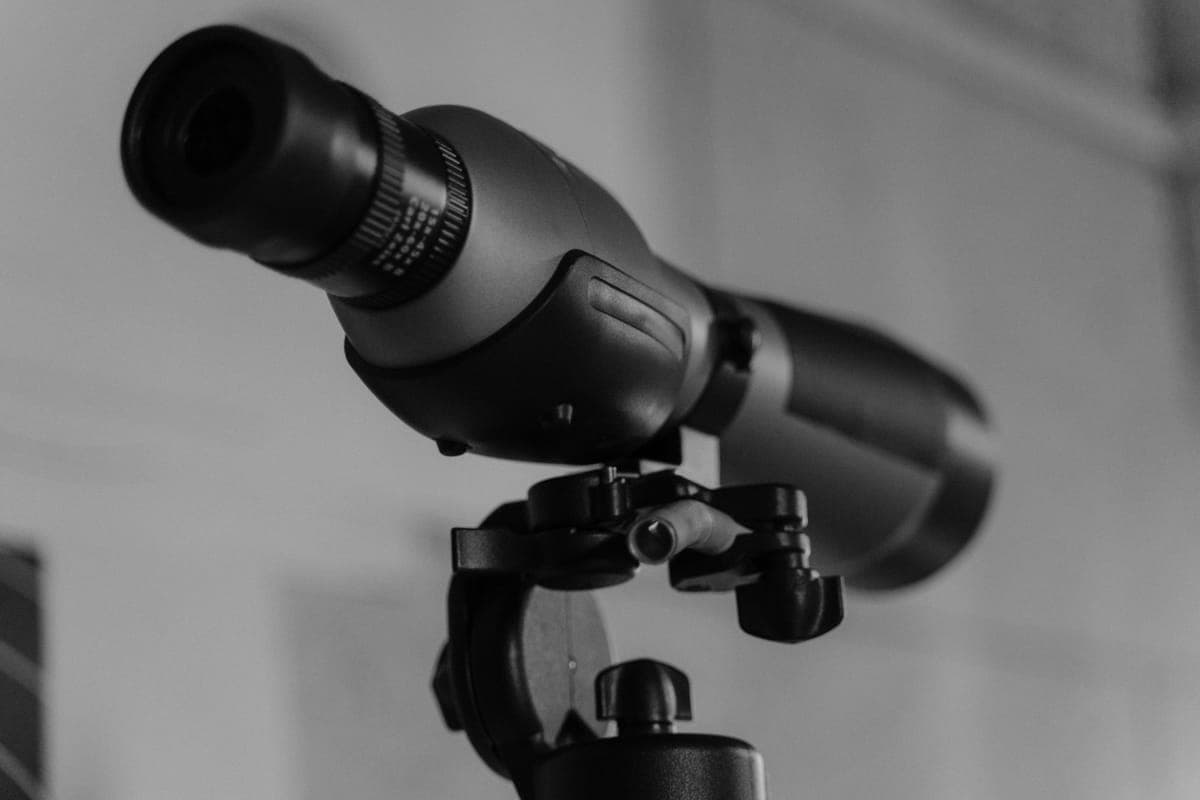
A telescope lens mounted on a tripod

The Gift Perch earns a commission when you buy through our links, at no extra cost to you. We are an Amazon Associate. We accept no free products, no sponsored placements and no paid inclusion, and the commission rate plays no part in what we recommend. Full disclosure.

Buy binoculars for birding. Two eyes give a wider combined field, better depth perception and far less eye strain over a long session, and finding a moving bird with one eye is measurably harder. A monocular is worth it only when weight and pocket size genuinely decide whether you carry anything at all.

"Binoculars vs monoculars for bird watching" is a real search, and it usually comes from one of two places: a weight concern, or a price one. Both are legitimate, and the answer is still binoculars in nearly every case.

What two eyes actually buy you

The comparison, honestly
BinocularsMonocular
Field of viewWider combined view — easier to find a birdNarrower
Depth perceptionPresent, and genuinely useful in a hedgeAbsent
Eye strain over an hourLowHigh — one eye works while the other tries to close
Finding a moving birdMuch easierNoticeably harder
Weight20 to 24 ozOften under 10 oz
PocketabilityNeeds a strap or harnessFits a jacket pocket
Price for equivalent opticsHigherLower
Verdict for birdingBuy thisA specialist choice

The eye-strain problem is the real one

With a monocular, one eye is working hard and the other is trying to close or is looking at something completely different. Over ten minutes that is fine. Over an hour of scanning it produces genuine fatigue and often a headache, which is why serious birders do not use them.

When a monocular makes sense

  • Ultralight backpacking, where every ounce is negotiated and birding is a bonus rather than the point.
  • As a pocket spare, for the days a full-size pair stays home.
  • On a tight budget, where a decent monocular beats terrible binoculars — though a used or entry-level 8x42 usually beats both.
  • For someone with sight in one eye only, where a monocular is simply the right tool.

The middle option most people miss

If weight is the reason you are considering a monocular, a compact 8x25 binocular is often the better answer: roughly half the weight of a full-size pair, still two eyes, still pocketable. It gives up light-gathering rather than binocular vision, which is the cheaper thing to give up. The compact trade-off is here.

And if the reason is neck comfort rather than pack weight, a harness fixes that for a fraction of the cost of new optics.

The picks

Ranked picks with what each is best for, our score out of ten, the budget band it falls in, and a link to check its current price on Amazon.
#PickBest forScorePrice
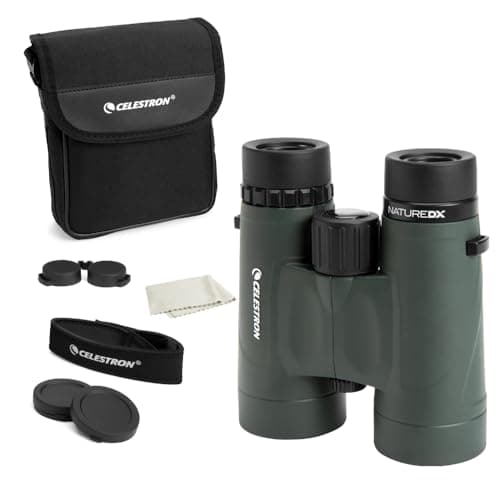
01CelestronNo photoCelestron Nature DX 8x42The pair nearly every birding guide starts with, and the only one in this group that focuses down to 6.5 feet — which matters more than it sounds.Under $250The default first pair, and the closest focus here8.8out of 10
Check price on Amazon

#ad Price shown live on Amazon. How we are funded

02CelestronNo photoCelestron Nature DX 8x25 CompactHalf the objective means half the light, and that is the entire trade: you accept a dimmer dawn in exchange for actually having them with you.Under $100A pair that lives in a coat pocket6.9out of 10
Check price on Amazon

#ad Price shown live on Amazon. How we are funded

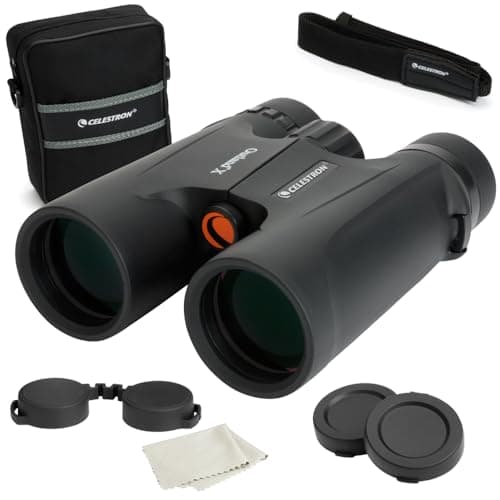
03CelestronNo photoCelestron Outland X 8x42Genuinely waterproof, genuinely lifetime-warrantied, and honest about the compromise: it cannot focus close.Under $100A real pair of waterproof binoculars under $1007.5out of 10
Check price on Amazon

#ad Price shown live on Amazon. How we are funded

04Op/TechNo photoOp/Tech Binocular Harness StrapMoves the weight from the neck to the shoulders, which is the difference between binoculars worn all morning and binoculars left in the car.Under $25The cheapest upgrade to binoculars someone already owns6.8out of 10
Check price on Amazon

#ad Price shown live on Amazon. How we are funded

Scores are ours, from the published rubric on the how-we-pick page. They are editorial judgments about published specifications and cost arithmetic, not test results — we have not handled these products.

Pick 01

CelestronNo photo

The default first pair, and the closest focus here

Celestron Nature DX 8x42

The pair nearly every birding guide starts with, and the only one in this group that focuses down to 6.5 feet — which matters more than it sounds.

Score
8.8
Eye relief
9.0
Field of view
7.0
Close focus
9.5
Value
9.0
Budget band
Under $250
Check price on Amazon

#ad Price shown live on Amazon. How we are funded

Published specifications

Magnification and objective
8x, 42 mmSource: Celestron Nature DX 8x42 specifications, celestron.com, read 2026-09-02
Field of view
7.4 degrees, 388 ft at 1,000 yardsSource: Celestron Nature DX 8x42 specifications, celestron.com, read 2026-09-02
Eye relief
17.5 mm — comfortable over glassesSource: Celestron Nature DX 8x42 specifications, celestron.com, read 2026-09-02
Close focus
6.5 ft (2 m)Source: Celestron Nature DX 8x42 specifications, celestron.com, read 2026-09-02
Weight
22.2 oz (629 g)Source: Celestron Nature DX 8x42 specifications, celestron.com, read 2026-09-02
Prism and glass
Roof prism, BaK-4 with phase coatingSource: Celestron Nature DX 8x42 specifications, celestron.com, read 2026-09-02
Weatherproofing
Waterproof, nitrogen-filled and fogproofSource: Celestron Nature DX 8x42 specifications, celestron.com, read 2026-09-02
Warranty
Limited lifetime warrantySource: Celestron Nature DX 8x42 specifications, celestron.com, read 2026-09-02

What it gets right

  • 6.5 ft close focus, so a bird on the far side of the patio is still usable — and so are butterflies
  • 17.5 mm eye relief works over glasses without cropping the view
  • Phase-coated roof prisms at an entry price, which is not universal here
  • Limited lifetime warranty

What it does not

  • Field of view is the narrowest in this group at 7.4 degrees
  • Heavier than the Nikon by well over an ounce
  • No ED glass, so high-contrast edges show more color fringing than the Athlon

Who it is for

The safe first pair. If you know nothing about the recipient except that they like birds, this is the pair with the fewest ways to be wrong.

Skip this if

You want the widest possible view for following birds in flight. The Athlon's 8.1 degrees is a noticeably easier picture to track with.

Pick 02

CelestronNo photo

A pair that lives in a coat pocket

Celestron Nature DX 8x25 Compact

Half the objective means half the light, and that is the entire trade: you accept a dimmer dawn in exchange for actually having them with you.

Score
6.9
Portability
9.5
Low light
4.0
Published specs
5.0
Value
7.5
Budget band
Under $100
Check price on Amazon

#ad Price shown live on Amazon. How we are funded

Published specifications

Magnification and objective
8x, 25 mm
The trade-off, stated plainly
A 25 mm objective gathers roughly a third of the light of a 42 mm at the same magnification, so dawn and dusk — the two best birding hours — are where a compact pair struggles most.
Exit pupil
About 3.1 mm at 8x25, against 5.3 mm on a 42 mm pair. A smaller exit pupil is harder to hold steady on the eye.
Detailed specification
Not published by the manufacturer in a form we could verify for the specific 25 mm variant on the page we could read; check the maker's spec table for the exact model before buying

What it gets right

  • Small enough that it actually gets carried, which is worth more than optical quality nobody uses
  • Light on the neck for a child or an older recipient
  • Cheap enough to be a second pair rather than the only pair

What it does not

  • Noticeably dimmer at dawn and dusk than any 42 mm pair here
  • Smaller exit pupil is fussier to hold on the eye, which beginners find frustrating
  • Compacts usually have shorter eye relief, so check the figure if the recipient wears glasses

Who it is for

A travel pair, a glovebox pair, or a gift for someone who already has full-size binoculars and never brings them.

Skip this if

This is the recipient's only pair and they are serious about it. A compact as a first and only pair teaches someone that birding is difficult, which is the wrong lesson.

Pick 03

CelestronNo photo

A real pair of waterproof binoculars under $100

Celestron Outland X 8x42

Genuinely waterproof, genuinely lifetime-warrantied, and honest about the compromise: it cannot focus close.

Score
7.5
Eye relief
9.0
Field of view
6.0
Close focus
3.0
Value
8.5
Budget band
Under $100
Check price on Amazon

#ad Price shown live on Amazon. How we are funded

Published specifications

Magnification and objective
8x, 42 mmSource: Celestron Outland X 8x42 specifications, celestron.com, read 2026-09-02
Field of view
7 degrees, 368.4 ft at 1,000 yardsSource: Celestron Outland X 8x42 specifications, celestron.com, read 2026-09-02
Eye relief
17.8 mmSource: Celestron Outland X 8x42 specifications, celestron.com, read 2026-09-02
Close focus
13.1 ft (4 m) — the longest here by a wide marginSource: Celestron Outland X 8x42 specifications, celestron.com, read 2026-09-02
Weight
23.6 oz (670 g)Source: Celestron Outland X 8x42 specifications, celestron.com, read 2026-09-02
Prism and coatings
BaK-4 prisms, multi-coated (not fully multi-coated)Source: Celestron Outland X 8x42 specifications, celestron.com, read 2026-09-02
Weatherproofing
Waterproof, nitrogen filled, fogproofSource: Celestron Outland X 8x42 specifications, celestron.com, read 2026-09-02
Warranty
Limited lifetime warrantySource: Celestron Outland X 8x42 specifications, celestron.com, read 2026-09-02

What it gets right

  • 17.8 mm eye relief — better over glasses than binoculars costing twice as much
  • Nitrogen-filled and genuinely waterproof at this price, which most sub-$100 pairs are not
  • Limited lifetime warranty on an entry-level pair
  • Tripod adaptable, and ships with case, strap, cloth and rainguard

What it does not

  • 13.1 ft close focus rules out most feeder watching from a window
  • Multi-coated rather than fully multi-coated, so it is dimmer at dawn and dusk than the Nature DX
  • Heaviest pair in this whole comparison at 23.6 oz

Who it is for

A walker or hiker on a real budget, or a spare pair to keep in the car. For feeder watching, spend up to the Nature DX instead.

Skip this if

The recipient wants to watch their own feeder. At just over 13 ft minimum focus, the feeder outside the kitchen window is inside the blind spot.

Pick 04

Op/TechNo photo

The cheapest upgrade to binoculars someone already owns

Op/Tech Binocular Harness Strap

Moves the weight from the neck to the shoulders, which is the difference between binoculars worn all morning and binoculars left in the car.

Score
6.8
Usefulness
9.0
Gift appeal
5.5
Published specs
3.0
Value
9.0
Budget band
Under $25
Check price on Amazon

#ad Price shown live on Amazon. How we are funded

Published specifications

What it changes
A neck strap hangs about 21-23 oz from the cervical spine. A harness distributes the same weight across both shoulders and stops the binoculars swinging when you bend.Source: Athlon Midas G2 UHD 8x42 specifications, athlonoptics.com, read 2026-09-02
Fit
Universal — attaches to the standard strap lugs on essentially any binocular
Detailed specification
Not published by the manufacturer in a form we could verify

What it gets right

  • Solves the most common complaint about binoculars, for the least money on this site
  • Works with a pair the recipient already owns, so it is never a duplicate gift
  • Stops the pair swinging forward and knocking into things when bending down

What it does not

  • It is a strap. As a standalone gift it needs pairing with something
  • Some harnesses are fiddly to get on over a winter coat
  • No published specifications to compare between brands

Who it is for

Someone who already has binoculars and complains about their neck. Add it to a book and it becomes a thoughtful pair rather than an accessory.

Skip this if

You are looking for a gift that feels like a gift on its own. This is a stocking addition, not a centerpiece.

FAQ

Questions people ask about this

Are monoculars good for bird watching?

Not for extended use. One eye working while the other tries to close causes real fatigue over an hour, the field of view is narrower, and finding a moving bird is harder. They suit ultralight carrying and pocket spares.

Why are binoculars better than monoculars for birding?

Two eyes give a wider combined field of view, depth perception that helps enormously in cluttered habitat, and far less strain over a long session. Finding a small moving bird is the hardest part of birding and binoculars make it easier.

What is a lighter alternative to full-size binoculars?

A compact 8x25 binocular. It is roughly half the weight of a 42 mm pair and still gives binocular vision — you give up light gathering rather than depth perception, which is the cheaper trade.

Can you use a monocular with glasses?

Yes, and the same eye relief rule applies: under about 16 mm the view gets cropped. Many compact monoculars publish short eye relief, so check the figure before buying.

Sources

Where these figures come from