Skip to content
The GiftPerch

Backyard

Best roosting boxes for winter

A roosting box is not a nest box with a different label. The entrance sits low instead of high, there are perches inside, and the whole design exists to trap body heat on a February night.

By Scooter M.Published September 27, 2026Content updated September 27, 2026Prices verified September 27, 2026

We don't test this gear. Here's what we do instead.

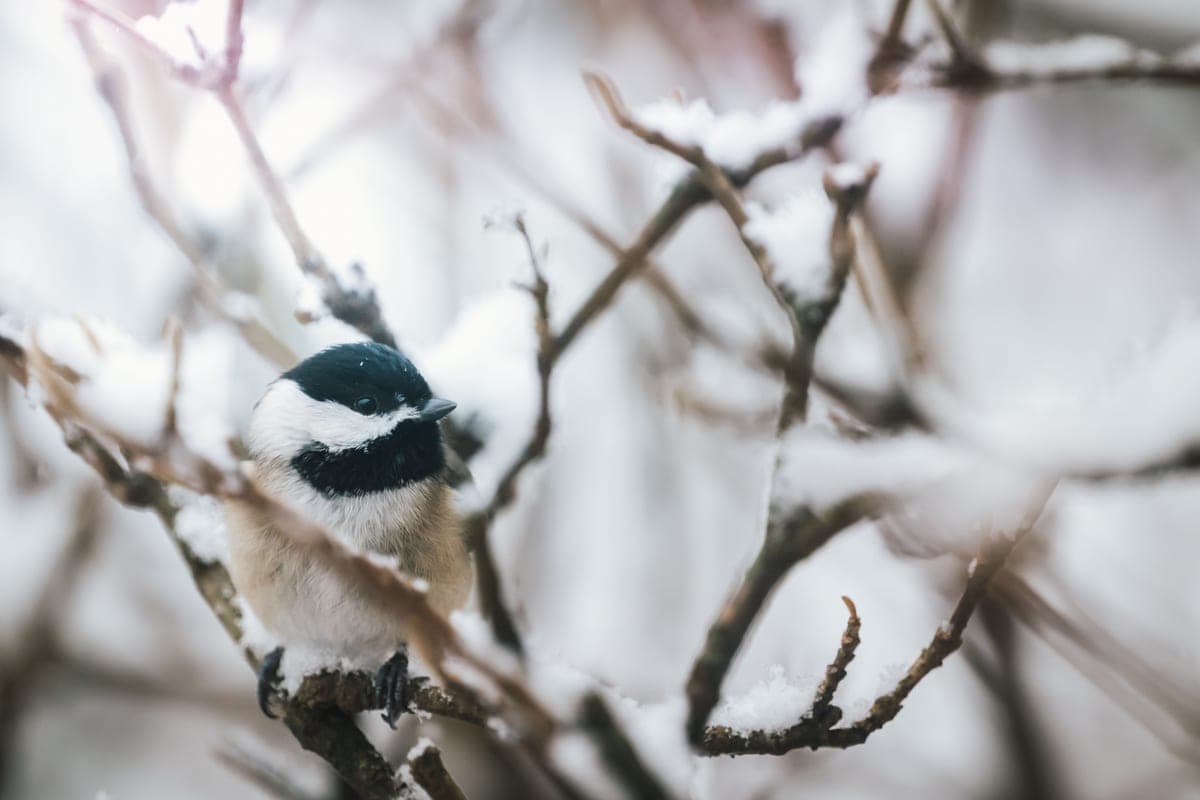
A black-capped chickadee on a snow-covered branch in winter

The Gift Perch earns a commission when you buy through our links, at no extra cost to you. We are an Amazon Associate. We accept no free products, no sponsored placements and no paid inclusion, and the commission rate plays no part in what we recommend. Full disclosure.

Buy a box with the entrance low and perches inside, which is the opposite of a nest box. Warm air rises, so a nest box with its hole near the top vents most of the birds' body heat straight out; a roosting box puts the hole near the floor and stacks perches above it so several birds can huddle in the warm layer. Kettle Moraine's large cedar box publishes three internal perches, a 1-1/2 in copper portal and 7 x 7.625 x 12 in for $50, and is the one to buy. The version with a hook costs a dollar more and hangs instead of mounting. The Songbird Essentials woven pocket is a fifth of the price and is shelter rather than a fortress.

This is a small category and a seasonal one, which is why it is worth being precise about what the product does. Non-migrating songbirds lose heat overnight in winter, and a sheltered cavity is worth real energy to them. It is also why a roosting box sits empty from spring to autumn — you are buying something used hard for a few months and ignored for the rest. Every figure below is the maker's own, read on the dates in the sources.

Why a nest box makes a poor roost

The difference is where the hole is. A nest box puts its entrance high, close to the roof, because the nest sits on the floor and the young need to climb up and out. That geometry vents warm air continuously. A roosting box inverts it: the entrance goes near the bottom, so the heat a huddle of birds produces collects in the space above the hole rather than escaping through it, and perches are fitted across that warm upper volume.

Kettle Moraine publishes three perches in its large box and two in the small one, positioned for what it calls accessibility and comfort. That perch count is the clearest single indicator that a box is designed as a roost rather than relabeled as one. A box sold as a roosting box with no internal perches and a hole near the roof is a nest box with a different sticker.

What we judged on

  1. Entrance position and internal perches. The two features that define the category. Everything without them is a nest box being marketed twice.
  2. Entrance size. Big enough for the birds you have, small enough to exclude what you do not want. The large box publishes 1-1/2 in, the small one 1-1/4 in.
  3. Whether the entrance can be chewed. A copper portal cannot be enlarged by a squirrel. Plain wood can, and a box left out all winter is unsupervised for months.
  4. Materials against winter. Solid cedar with stainless hardware is built for wind, rain and snow. Woven reed grass is not, and costs accordingly.
  5. How it mounts. A fixed box moves less in the wind it is sheltering birds from. A hanging one goes where a post cannot.
  6. What nobody publishes. No maker in this class publishes an insulation value or a tested temperature difference. Every warmth claim on this page, including ours, is structural reasoning rather than measurement.

The picks

Ranked picks with what each is best for, our score out of ten, the budget band it falls in, and a link to check its current price on Amazon.
#PickBest forScorePrice
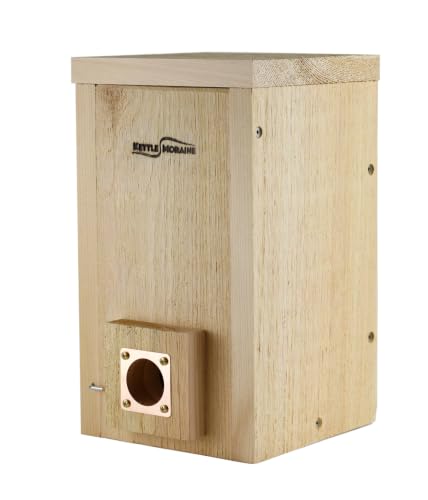
01Kettle Moraine Large Cedar Roosting BoxKettle Moraine Large Cedar Roosting BoxThree internal perches, a copper portal and solid cedar — a box built to hold birds through a February night, which is the opposite job from a nest box.Under $100The serious winter shelter, mounted8.1out of 10
$50.00 · View on Amazon

#ad Price as of September 27, 2026. How we are funded

02Kettle Moraine Large Cedar Roosting Box with HookKettle Moraine Large Cedar Roosting Box with HookIdentical cedar box and copper portal with a hook fitted, for a dollar more — the version for a branch or a shepherd's hook rather than a post.Under $100The same box, if you have nowhere to screw it7.9out of 10
$51.00 · View on Amazon

#ad Price as of September 27, 2026. How we are funded

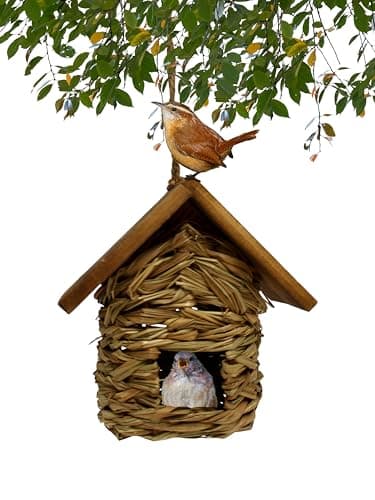
03Songbird Essentials Hanging Grass Roosting Pocket with Roof (SE935)Songbird Essentials Hanging Grass Roosting Pocket with Roof (SE935)Woven reed grass under a cedar roof — a fraction of the price of a built box, and honest about being shelter rather than a fortress.Under $25Finding out whether anything roosts in your yard, cheaply7.0out of 10
$22.14 · View on Amazon

#ad Price as of September 27, 2026. How we are funded

Ranked for a cold-winter yard that already runs nest boxes. If you are not sure anything in your garden roosts communally, the woven pocket at the bottom costs a fifth as much and will tell you.

Pick 01

Kettle Moraine Large Cedar Roosting Box

The serious winter shelter, mounted

Kettle Moraine Large Cedar Roosting Box

Three internal perches, a copper portal and solid cedar — a box built to hold birds through a February night, which is the opposite job from a nest box.

Score
8.1
Winter shelter
9.0
Durability
8.5
Predator defense
8.5
Value
7.0
Budget band
Under $100
$50.00 · View on Amazon

#ad Price as of September 27, 2026. How we are funded

Published specifications

What a roosting box is, and is not
A roosting box is winter shelter for adult birds overnight, not a nest box. The entrance sits low rather than high so body heat is trapped above it, and internal perches let several birds stack up inside. A nest box used for roosting loses most of that heat straight out of the hole.
Entrance
1-1/2 in copper portal, which the maker says keeps larger birds and predators outSource: Kettle Moraine Woodworking, Cedar Roosting Boxes product page (small and large variants), kmwoodworking.com, read 2026-09-27
Perches
3 inside, positioned for accessibility and comfortSource: Kettle Moraine Woodworking, Cedar Roosting Boxes product page (small and large variants), kmwoodworking.com, read 2026-09-27
Dimensions
7 in wide x 7.625 in deep x 12 in tallSource: Kettle Moraine Woodworking, Cedar Roosting Boxes product page (small and large variants), kmwoodworking.com, read 2026-09-27
Construction
Solid cedar with stainless steel hardwareSource: Kettle Moraine Woodworking, Cedar Roosting Boxes product page (small and large variants), kmwoodworking.com, read 2026-09-27
Smaller option
A small version publishes a 1-1/4 in entry, 2 perches and 7 in x 6.25 in x 8 inSource: Kettle Moraine Woodworking, Cedar Roosting Boxes product page (small and large variants), kmwoodworking.com, read 2026-09-27
Seasonal swap
The maker offers an optional rear bracket so a roosting box and a nest box can trade places on the same 1 in pole as the seasons changeSource: Kettle Moraine Woodworking, Cedar Roosting Boxes product page (small and large variants), kmwoodworking.com, read 2026-09-27
Insulation value
Not published by the manufacturer in a form we could verify — no maker in this class publishes one
Maker's list price
$50.00 for the large with no add-on on 2026-09-27Source: Kettle Moraine Woodworking, Cedar Roosting Boxes product page (small and large variants), kmwoodworking.com, read 2026-09-27

What it gets right

  • Three internal perches is the whole point: a roosting box holds several birds stacked above the entrance, where the warm air is
  • A copper portal will not be chewed wider, which matters on a box that sits out all winter unattended
  • The entrance is low on the box rather than high, which is what keeps body heat in — the inverse of a nest box
  • The optional pole bracket makes the seasonal swap with a nest box a two-minute job

What it does not

  • Nobody in this category publishes an insulation figure, so warmth claims are structural rather than measured
  • A roosting box is used for a few months a year and ignored for the rest
  • Cedar grays and, unlike the recycled boxes, needs occasional attention
  • The hook and bracket versions cost more, and the plain version has no mounting hardware at all

Who it is for

Anyone north of a real freeze line who already runs nest boxes and wants the birds that use them in summer to survive the winter nearby.

Skip this if

Your winters are mild. This is a cold-climate product, and in a warm region the same money buys a nest box that gets used every spring.

Pick 02

Kettle Moraine Large Cedar Roosting Box with Hook

The same box, if you have nowhere to screw it

Kettle Moraine Large Cedar Roosting Box with Hook

Identical cedar box and copper portal with a hook fitted, for a dollar more — the version for a branch or a shepherd's hook rather than a post.

Score
7.9
Winter shelter
8.5
Durability
8.5
Predator defense
8.5
Value
7.0
Budget band
Under $100
$51.00 · View on Amazon

#ad Price as of September 27, 2026. How we are funded

Published specifications

What a roosting box is, and is not
A roosting box is winter shelter for adult birds overnight, not a nest box. The entrance sits low rather than high so body heat is trapped above it, and internal perches let several birds stack up inside. A nest box used for roosting loses most of that heat straight out of the hole.
Entrance
1-1/2 in copper portalSource: Kettle Moraine Woodworking, Cedar Roosting Boxes product page (small and large variants), kmwoodworking.com, read 2026-09-27
Perches
3 insideSource: Kettle Moraine Woodworking, Cedar Roosting Boxes product page (small and large variants), kmwoodworking.com, read 2026-09-27
Dimensions
7 in wide x 7.625 in deep x 12 in tallSource: Kettle Moraine Woodworking, Cedar Roosting Boxes product page (small and large variants), kmwoodworking.com, read 2026-09-27
Construction
Solid cedar with stainless steel hardwareSource: Kettle Moraine Woodworking, Cedar Roosting Boxes product page (small and large variants), kmwoodworking.com, read 2026-09-27
The difference
A hook for hanging, in place of the plain version's bare backSource: Kettle Moraine Woodworking, Cedar Roosting Boxes product page (small and large variants), kmwoodworking.com, read 2026-09-27
Maker's list price
$51.00 for the large with hook, against $50.00 with no add-on and $67.00 with a mounting bracket, on 2026-09-27Source: Kettle Moraine Woodworking, Cedar Roosting Boxes product page (small and large variants), kmwoodworking.com, read 2026-09-27

What it gets right

  • A dollar over the plain version, which is the cheapest useful upgrade on either of these pages
  • Hanging suits a roosting box better than most boxes, because it can go where a post cannot
  • Same cedar body, copper portal and three perches as the mounted version — nothing is traded
  • Easy to bring in and store for the summer, which a screwed-down box is not

What it does not

  • A hanging box swings in exactly the wind it is meant to shelter birds from
  • It is the same product as the plain version, so buying both makes no sense
  • No published insulation figure, same as every box in this class
  • The mounting-bracket version costs $16 more and is the better choice if you own a 1 in pole

Who it is for

Anyone with a sheltered branch or a hook and nothing to screw into — a balcony, a porch beam, an established tree.

Skip this if

You have a post, a tree trunk or a pole to mount to. A fixed box moves less in wind, and the plain version costs a dollar less.

Pick 03

Songbird Essentials Hanging Grass Roosting Pocket with Roof (SE935)

Finding out whether anything roosts in your yard, cheaply

Songbird Essentials Hanging Grass Roosting Pocket with Roof (SE935)

Woven reed grass under a cedar roof — a fraction of the price of a built box, and honest about being shelter rather than a fortress.

Score
7.0
Winter shelter
5.5
Durability
4.0
Predator defense
5.0
Value
9.0
Budget band
Under $25
$22.14 · View on Amazon

#ad Price as of September 27, 2026. How we are funded

Published specifications

What a roosting box is, and is not
A roosting box is winter shelter for adult birds overnight, not a nest box. The entrance sits low rather than high so body heat is trapped above it, and internal perches let several birds stack up inside. A nest box used for roosting loses most of that heat straight out of the hole.
Opening
1.5 in wide x 1.75 in tall at the frontSource: Songbird Essentials, Hanging Grass Roosting Pocket with Roof (item SE935) product page, songbirdessentials.com, read 2026-09-27
Materials
Reed grass with a cedar roof, which the maker says resists premature decaySource: Songbird Essentials, Hanging Grass Roosting Pocket with Roof (item SE935) product page, songbirdessentials.com, read 2026-09-27
Weather
The rounded cedar roof protects the interior from rainSource: Songbird Essentials, Hanging Grass Roosting Pocket with Roof (item SE935) product page, songbirdessentials.com, read 2026-09-27
Why the rough surface
The maker states rough surfaces make entering and exiting easier for birdsSource: Songbird Essentials, Hanging Grass Roosting Pocket with Roof (item SE935) product page, songbirdessentials.com, read 2026-09-27
Camouflage
Natural materials that the maker says blend into the surroundings rather than drawing attention to the birdsSource: Songbird Essentials, Hanging Grass Roosting Pocket with Roof (item SE935) product page, songbirdessentials.com, read 2026-09-27
Birds the maker lists
Chickadees, wrens and house finches particularlySource: Songbird Essentials, Hanging Grass Roosting Pocket with Roof (item SE935) product page, songbirdessentials.com, read 2026-09-27
Ventilation and drainage
Natural, per the makerSource: Songbird Essentials, Hanging Grass Roosting Pocket with Roof (item SE935) product page, songbirdessentials.com, read 2026-09-27
Perches
None published — this is a pocket rather than a perched box
Lifespan
Not published by the manufacturer in a form we could verify — woven grass is a consumable in a way cedar is not

What it gets right

  • A fifth of the price of a cedar roosting box, which makes it the sensible way to find out if anything in your yard roosts at all
  • Blends in, which the maker argues is a safety feature rather than a style one — a conspicuous winter roost is a predator target
  • The cedar roof is the part that matters most in rain, and it is real cedar rather than treated board
  • Light enough to hang anywhere, including places a 12 in cedar box will not go

What it does not

  • Woven grass will not last like cedar; treat it as a season or two rather than a decade
  • No internal perches published, so it holds fewer birds than a purpose-built roosting box
  • A 1.5 in x 1.75 in opening is larger than the small cedar box's 1-1/4 in entry and excludes less
  • No maker price could be read, so the Amazon price is the only figure available

Who it is for

Anyone curious, anyone on a budget, or anyone who wants to hang several around a garden rather than one good box in one spot.

Skip this if

You already know birds roost in your yard and you want the shelter to still be there in five years. That is what the cedar boxes are for.

The published figures, side by side

Every roost on this page, on the maker's own numbers
KM Large CedarKM Large with HookSongbird Essentials SE935
Entrance1-1/2 in copper portal1-1/2 in copper portal1.5 in wide x 1.75 in tall
Internal perches33None published
Dimensions7 x 7.625 x 12 in7 x 7.625 x 12 inNot published
MaterialSolid cedar, stainless hardwareSolid cedar, stainless hardwareReed grass with a cedar roof
MountingBare back; bracket optionalHook fittedHanging
Maker's list price$50.00$51.00Not readable

Makers' own published figures, read 2026-09-27. Kettle Moraine also publishes a small version at 1-1/4 in entry, 2 perches and 7 x 6.25 x 8 in, and offers a mounting-bracket option at $67.00. No maker in this class publishes an insulation figure.

Where to hang it, and when

  • Out of the prevailing wind. The point is shelter; a box on an exposed face gives up most of the benefit. A wall, a dense hedge or the lee side of a trunk all work.
  • Put it up before the cold, not during it. Birds find and learn a roost over time, and a box hung in a cold snap is unfamiliar exactly when it is most needed.
  • Higher than a nest box is fine. There is no brood to clean out at 5 to 10 ft, so reach is less of a constraint than it is on a wren box.
  • Clean it out in spring. Droppings accumulate fast in a box used by several birds every night all winter. All the cedar boxes here open.
  • One box, not a cluster. A roost works by concentrating birds, which is the opposite of the territorial spacing a nest box needs.

What not to buy

  • A nest box relabeled as a roost. If the hole is near the roof and there are no perches inside, it is not a roosting box whatever the listing says.
  • Anything with a perch outside the hole. Same objection as a nest box: it helps predators, not the birds sheltering inside.
  • A roosting box in a mild climate. This is cold-country equipment. Where winters are gentle the same money buys a nest box that earns its place every spring.
  • A woven pocket expecting it to last. Reed grass is a season or two of shelter, not a decade. That is fine at the price, but buy it knowing that.

FAQ

Questions people ask about this

What is a roosting box?

Winter shelter for adult birds overnight, not a place to raise young. The entrance sits low rather than high so body heat collects above it, and internal perches let several birds huddle in that warm upper space. Kettle Moraine publishes three perches in its large box and two in its small one.

What is the difference between a roosting box and a nest box?

Where the hole is, and what is inside. A nest box has its entrance near the roof and an empty floor for the nest; a roosting box puts the entrance near the bottom and fits perches above it. Using a nest box as a roost vents most of the birds' heat straight out of the hole.

Do birds actually use roosting boxes?

Non-migrating songbirds shelter in cavities on cold nights, and makers list chickadees, wrens and house finches among the likely users. Note that no maker in this category publishes tested occupancy or insulation figures, so this page ranks on published structure rather than on measured results.

Where should I put a roosting box?

Out of the prevailing wind — against a wall, in a dense hedge or on the sheltered side of a trunk — and up before the cold weather arrives rather than during it, so the birds have time to find it.

Can you use a bird house as a roosting box in winter?

You can, and it will be better than nothing, but it is the wrong shape. The high entrance on a nest box lets warm air escape continuously, which is exactly what a roosting box is designed to prevent. Kettle Moraine's optional pole bracket exists so the two can swap places seasonally.

How big should a roosting box entrance be?

The boxes here publish 1-1/2 in on the large and 1-1/4 in on the small. Larger admits more species; smaller excludes more of what you do not want. A copper portal is worth looking for at either size, because a wooden hole left out all winter can be chewed wider unsupervised.

Sources

Where these figures come from