Skip to content
The GiftPerch

Feeders & Cams

Dried mealworms for birds

The highest published protein in bird food by a factor of three, and the one food that reaches birds a seed feeder never will.

By Scooter M.Published October 17, 2026Content updated October 17, 2026Prices verified October 17, 2026

We don't test this gear. Here's what we do instead.

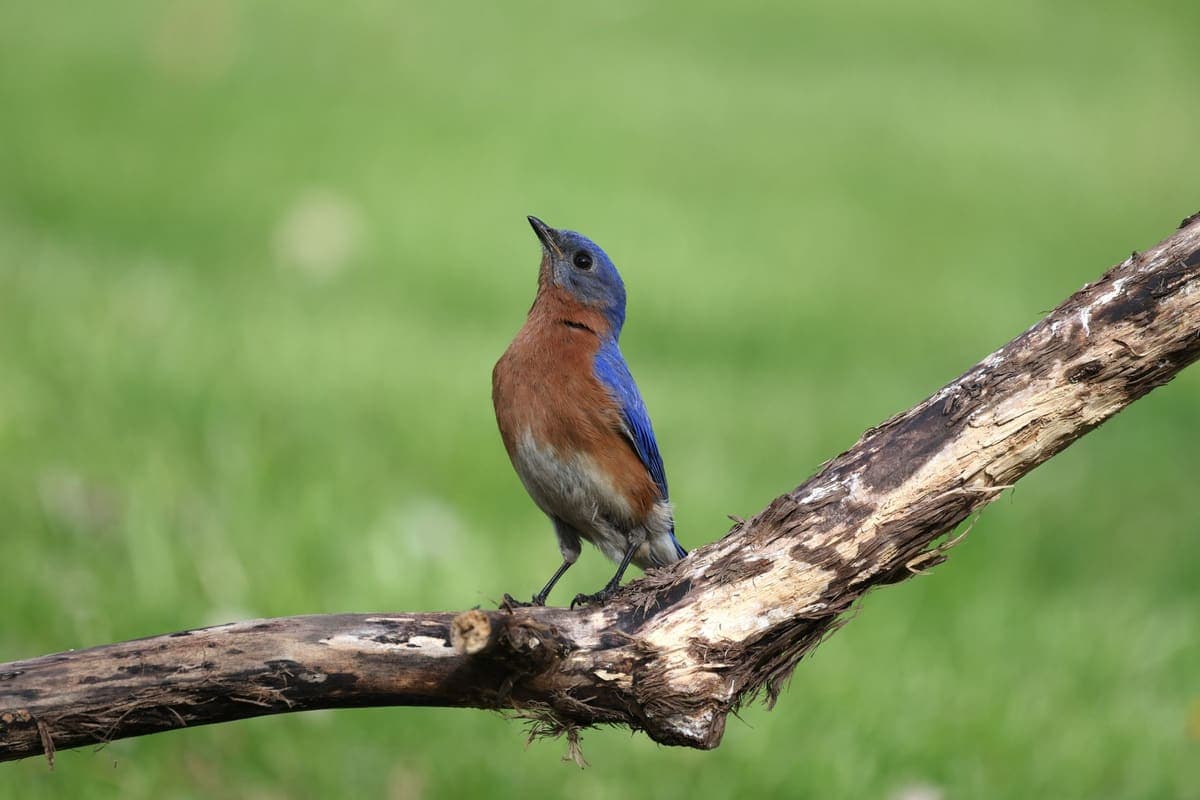
An eastern bluebird perched on a branch in a green garden

The Gift Perch earns a commission when you buy through our links, at no extra cost to you. We are an Amazon Associate. We accept no free products, no sponsored placements and no paid inclusion, and the commission rate plays no part in what we recommend. Full disclosure.

Buy Kaytee Mealworms, and buy the 3.5 oz bag before the 17.6 oz one. It is a single-ingredient food with a published guaranteed analysis of 47% minimum crude protein — against 15.5% for black oil sunflower and 12% for the richest suet cake on this site — and it reaches bluebirds, robins and wrens, which barely touch a seed feeder. The reason to start small is that mealworms only work in a garden that already has insect-eating birds in it, and a 3.5 oz bag answers that question for the price of a coffee.

Mealworms are the clearest case on this site of a food where the numbers are not close. Everything else in the bird-food aisle argues over a few percentage points of protein. This triples it, and its maker publishes the figure.

What we judged on

  1. The published guaranteed analysis. Kaytee prints protein, fat, fiber and moisture for its mealworms. Most dried-mealworm bags on the shelf come from sellers with no manufacturer page at all, and nothing from those is on this page.
  2. Single ingredient or not. "Dried mealworms" as a complete ingredient list is the strongest version of this product. A mealworm-flavoured anything is a different thing, and the ingredient order shows it.
  3. Whether the food can be delivered. Mealworms need a dish, tray or enclosed feeder. A food you cannot keep in front of the right bird is not a purchase, it is an experiment.
  4. Who else eats them. Starlings and grackles like mealworms as much as bluebirds do, and mealworms are the most expensive thing in the shed. Exclusion matters more here than with any seed.

The picks

Ranked picks with what each is best for, our score out of ten, the budget band it falls in, and a link to check its current price on Amazon.
#PickBest forScorePrice
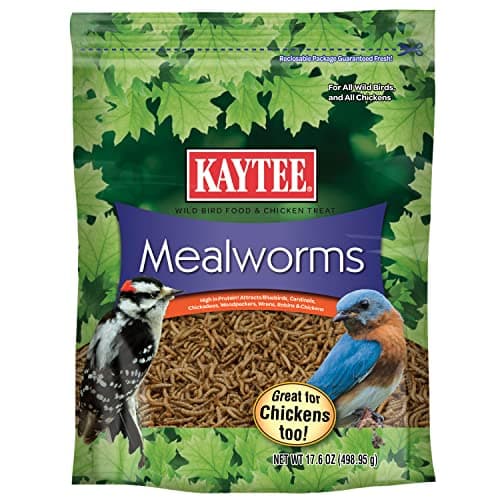
01Kaytee Mealworms, 17.6 ozKaytee Mealworms, 17.6 oz47% minimum crude protein, published, with dried mealworms as the only ingredient — more than three times what the richest seed on this site declares.Under $25The protein figure nothing else in bird food comes close to8.3out of 10
$21.99 · View on Amazon

#ad Price as of October 17, 2026. How we are funded

02Kaytee Mealworms, 3.5 ozKaytee Mealworms, 3.5 ozThe same 47%-protein product in the smallest pack Kaytee makes, which is the right way to buy mealworms the first time.Under $25Finding out whether any bird in your garden wants them8.0out of 10
$6.49 · View on Amazon

$8.1220% off

#ad Price as of October 17, 2026. How we are funded

03Kettle Moraine Cedar Hanging Bluebird Feeder (8515)Kettle Moraine Cedar Hanging Bluebird Feeder (8515)Solid cedar with plexiglass on both sides and a 1.5 in entry hole — an enclosed feeder that excludes starlings and jays by geometry rather than by hope.Under $50Keeping the mealworms for the bluebirds7.9out of 10
$41.50 · View on Amazon

#ad Price as of October 17, 2026. How we are funded

04C&S Mealworm Delight No Melt Suet DoughC&S Mealworm Delight No Melt Suet DoughThe only cake here with mealworms in it, which is the food insect-eating birds actually want — at 8% protein, lower than the nut blend.Under $25Putting insect protein out without running a mealworm feeder7.4out of 10
$19.60 · View on Amazon

#ad Price as of October 17, 2026. How we are funded

Live prices. Buy the 3.5 oz bag first — mealworms are the one bird food many gardens turn out not to need.

Pick 01

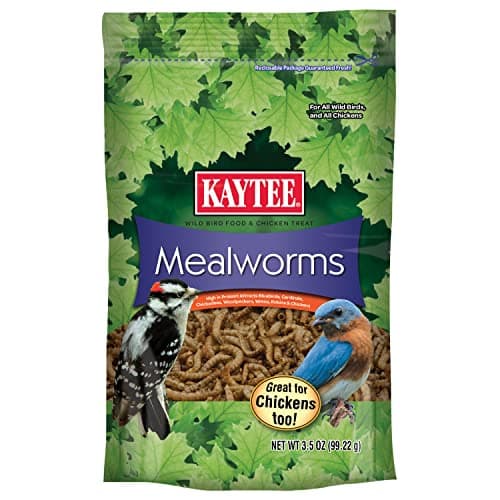
Kaytee Mealworms, 17.6 oz

The protein figure nothing else in bird food comes close to

Kaytee Mealworms, 17.6 oz

47% minimum crude protein, published, with dried mealworms as the only ingredient — more than three times what the richest seed on this site declares.

Score
8.3
Protein
10.0
Bird range
7.0
Published detail
9.5
Value
6.0
Budget band
Under $25
$21.99 · View on Amazon

#ad Price as of October 17, 2026. How we are funded

Published specifications

What dried mealworms are for
They reach the insect-eaters a seed feeder misses — bluebirds, robins, wrens — and they matter most in the nesting season, when adults are carrying protein to chicks rather than feeding themselves. Dried rather than live means cupboard storage and no refrigeration.
Who publishes a guaranteed analysis
Kaytee prints a full guaranteed analysis and an ordered ingredient list for every product. Wagner's prints ingredients, bag sizes and its own claims, but no analysis anywhere in its range. Most other brands publish neither, which is why they are not on this site.
Ingredients
Dried mealworms — the complete listSource: Kaytee Mealworms product page, kaytee.com/all-products/wild-bird/mealworm, read 2026-10-17
Crude protein (min)
47.0% — against 15.5% for black oil sunflower and 12% for the richest suet cake on this siteSource: Kaytee Mealworms product page, kaytee.com/all-products/wild-bird/mealworm, read 2026-10-17
Crude fat (min)
25.0%Source: Kaytee Mealworms product page, kaytee.com/all-products/wild-bird/mealworm, read 2026-10-17
Crude fiber (max)
6.0%Source: Kaytee Mealworms product page, kaytee.com/all-products/wild-bird/mealworm, read 2026-10-17
Moisture (max)
5.0% — dried, not live, which is why it keeps in a cupboardSource: Kaytee Mealworms product page, kaytee.com/all-products/wild-bird/mealworm, read 2026-10-17
Birds the maker names
Bluebirds, wrens, robins, chickadees, woodpeckers and cardinals, plus insect-eating birds that do not normally use a seed feederSource: Kaytee Mealworms product page, kaytee.com/all-products/wild-bird/mealworm, read 2026-10-17
Feeding guidance
Keep feeders filled with fresh food, discard old food before refilling, and clean feeders regularly to minimize mold and bacteriaSource: Kaytee Mealworms product page, kaytee.com/all-products/wild-bird/mealworm, read 2026-10-17
Pack sizes
3.5 oz, 7 oz and 17.6 ozSource: Kaytee Mealworms product page, kaytee.com/all-products/wild-bird/mealworm, read 2026-10-17

What it gets right

  • 47% published protein is the highest figure anywhere on this site, by a factor of three
  • A single ingredient with a full guaranteed analysis — the most transparent bird food we have sourced
  • Reaches bluebirds, robins and wrens, which seed feeders largely do not
  • 5% maximum moisture means it stores in a cupboard with no refrigeration and no smell

What it does not

  • Expensive per pound — several times the cost of any seed here
  • Needs a dish, tray or caged feeder; mealworms blow out of an open platform and pour through tube ports
  • Dried worms are less attractive than live ones, and some birds take a while to recognize them as food
  • Starlings and grackles love them too, and nothing about the food excludes those birds

Who it is for

A bluebird box owner in nesting season, and anyone whose garden has insect-eating birds that ignore the seed feeder.

Skip this if

You have never seen a bluebird, robin or wren in the garden. Mealworms feed insect-eaters that are already visiting; they are not bait that produces them.

Pick 02

Kaytee Mealworms, 3.5 oz

Finding out whether any bird in your garden wants them

Kaytee Mealworms, 3.5 oz

The same 47%-protein product in the smallest pack Kaytee makes, which is the right way to buy mealworms the first time.

Score
8.0
Protein
10.0
Bird range
7.0
Published detail
9.5
Value
7.0
Budget band
Under $25
$6.49 · View on Amazon

$8.1220% off

#ad Price as of October 17, 2026. How we are funded

Published specifications

What dried mealworms are for
They reach the insect-eaters a seed feeder misses — bluebirds, robins, wrens — and they matter most in the nesting season, when adults are carrying protein to chicks rather than feeding themselves. Dried rather than live means cupboard storage and no refrigeration.
Who publishes a guaranteed analysis
Kaytee prints a full guaranteed analysis and an ordered ingredient list for every product. Wagner's prints ingredients, bag sizes and its own claims, but no analysis anywhere in its range. Most other brands publish neither, which is why they are not on this site.
Ingredients
Dried mealworms — the complete listSource: Kaytee Mealworms product page, kaytee.com/all-products/wild-bird/mealworm, read 2026-10-17
Crude protein (min)
47.0%Source: Kaytee Mealworms product page, kaytee.com/all-products/wild-bird/mealworm, read 2026-10-17
Crude fat (min)
25.0%Source: Kaytee Mealworms product page, kaytee.com/all-products/wild-bird/mealworm, read 2026-10-17
Crude fiber (max)
6.0%Source: Kaytee Mealworms product page, kaytee.com/all-products/wild-bird/mealworm, read 2026-10-17
Moisture (max)
5.0%Source: Kaytee Mealworms product page, kaytee.com/all-products/wild-bird/mealworm, read 2026-10-17
Pack size
3.5 oz — the smallest of the three Kaytee publishesSource: Kaytee Mealworms product page, kaytee.com/all-products/wild-bird/mealworm, read 2026-10-17
Birds the maker names
Bluebirds, wrens, robins, chickadees, woodpeckers and cardinalsSource: Kaytee Mealworms product page, kaytee.com/all-products/wild-bird/mealworm, read 2026-10-17

What it gets right

  • Identical published analysis to the large pack, at a fraction of the outlay
  • The honest way to test a food that many gardens turn out not to need
  • Small enough to use up before it can go stale in an opened bag
  • Cheap enough to scatter on a tray as a one-off experiment

What it does not

  • Much worse value per ounce than the 17.6 oz pack — this is a test purchase, not a supply
  • 3.5 oz disappears in days if bluebirds do take to it
  • Same feeder problem as the big pack: it needs a dish or a tray
  • Same starling and grackle problem as the big pack

Who it is for

A first mealworm purchase, or a stocking-filler alongside a dish feeder.

Skip this if

You already know bluebirds use your garden. Buy the 17.6 oz pack instead; the small bag is for answering a question you have already answered.

Pick 03

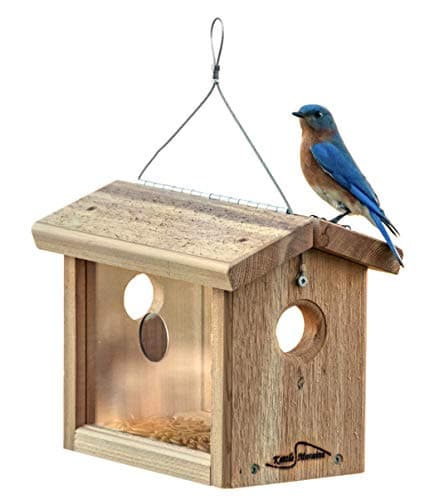
Kettle Moraine Cedar Hanging Bluebird Feeder (8515)

Keeping the mealworms for the bluebirds

Kettle Moraine Cedar Hanging Bluebird Feeder (8515)

Solid cedar with plexiglass on both sides and a 1.5 in entry hole — an enclosed feeder that excludes starlings and jays by geometry rather than by hope.

Score
7.9
Starling exclusion
9.0
Durability
7.5
Ease of use
6.0
Value
8.0
Budget band
Under $50
$41.50 · View on Amazon

#ad Price as of October 17, 2026. How we are funded

Published specifications

Entry hole
1.5 in, sized for Eastern BluebirdsSource: Kettle Moraine Woodworking, Cedar Hanging Bluebird Feeder (SKU 8515) product page, kmwoodworking.com, read 2026-09-20
Access
Entry holes on both ends and in each plexiglass windowSource: Kettle Moraine Woodworking, Cedar Hanging Bluebird Feeder (SKU 8515) product page, kmwoodworking.com, read 2026-09-20
What it excludes
The maker states the entry holes prevent larger, more aggressive birds such as starlings and jays from feedingSource: Kettle Moraine Woodworking, Cedar Hanging Bluebird Feeder (SKU 8515) product page, kmwoodworking.com, read 2026-09-20
Other birds the maker lists
Chickadees, nuthatches and wrens will also feed hereSource: Kettle Moraine Woodworking, Cedar Hanging Bluebird Feeder (SKU 8515) product page, kmwoodworking.com, read 2026-09-20
Dimensions
11 in wide x 7 in deep x 8 in tallSource: Kettle Moraine Woodworking, Cedar Hanging Bluebird Feeder (SKU 8515) product page, kmwoodworking.com, read 2026-09-20
Construction
Solid cedar with stainless steel screws — the maker specifies no staples or bradsSource: Kettle Moraine Woodworking, Cedar Hanging Bluebird Feeder (SKU 8515) product page, kmwoodworking.com, read 2026-09-20
Filling
Hinged roof; stainless steel hanging cableSource: Kettle Moraine Woodworking, Cedar Hanging Bluebird Feeder (SKU 8515) product page, kmwoodworking.com, read 2026-09-20
Mounting
Hangs, or bottom-mounts to a pole kit sold separatelySource: Kettle Moraine Woodworking, Cedar Hanging Bluebird Feeder (SKU 8515) product page, kmwoodworking.com, read 2026-09-20
Made in
USASource: Kettle Moraine Woodworking, Cedar Hanging Bluebird Feeder (SKU 8515) product page, kmwoodworking.com, read 2026-09-20
Maker's list price
$41.00 on 2026-09-20Source: Kettle Moraine Woodworking, Cedar Hanging Bluebird Feeder (SKU 8515) product page, kmwoodworking.com, read 2026-09-20

What it gets right

  • The 1.5 in hole is the whole point: mealworms are expensive and this is the design that stops starlings clearing the dish
  • Plexiglass on both sides, so the birds can see the food and so can you
  • Solid cedar and stainless screws rather than staples — this is built like the maker's nest boxes
  • Bottom-mounts to a pole, which matters because bluebirds prefer open ground to dense cover

What it does not

  • Bluebirds take time to learn the entry holes; the maker's own instructions describe removing a window for a few days to teach them
  • Cedar weathers and will gray over, unlike the recycled-plastic version of the same feeder
  • The maker publishes no capacity figure at all
  • An enclosed feeder is harder to clean than an open cup, and mealworm residue does need cleaning

Who it is for

Someone whose bluebirds already come and whose mealworms keep disappearing into starlings. This is the fix for that specific problem.

Skip this if

You have not yet seen bluebirds in the yard. This is a single-species feeder with a hole sized to exclude almost everything else, so it will simply sit full.

Pick 04

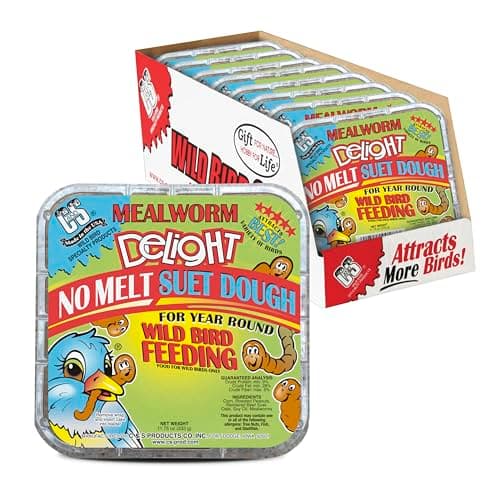
C&S Mealworm Delight No Melt Suet Dough

Putting insect protein out without running a mealworm feeder

C&S Mealworm Delight No Melt Suet Dough

The only cake here with mealworms in it, which is the food insect-eating birds actually want — at 8% protein, lower than the nut blend.

Score
7.4
Protein
6.5
Fat
7.0
Published detail
9.5
Value
7.0
Budget band
Under $25
$19.60 · View on Amazon

#ad Price as of October 17, 2026. How we are funded

Published specifications

What a no-melt suet cake actually is
C&S states its no-melt suet dough stays solid up to 100 degrees Fahrenheit, which is the whole reason the category exists: rendered suet softens and goes rancid in summer heat, while a dough formulation can stay in the feeder year round.
Crude protein (min)
8%Source: C&S Products, Mealworm Delight No Melt Suet Dough product page including its published ingredient list and guaranteed analysis, wildbirdsuets.com, read 2026-09-27
Crude fat (min)
20%Source: C&S Products, Mealworm Delight No Melt Suet Dough product page including its published ingredient list and guaranteed analysis, wildbirdsuets.com, read 2026-09-27
Crude fiber (max)
4%Source: C&S Products, Mealworm Delight No Melt Suet Dough product page including its published ingredient list and guaranteed analysis, wildbirdsuets.com, read 2026-09-27
Ingredients
Corn; roasted peanuts; rendered beef suet; oats; mealworms; soybean oilSource: C&S Products, Mealworm Delight No Melt Suet Dough product page including its published ingredient list and guaranteed analysis, wildbirdsuets.com, read 2026-09-27
Where mealworms sit in the list
Fifth of six, so this is a suet cake containing mealworms rather than a mealworm productSource: C&S Products, Mealworm Delight No Melt Suet Dough product page including its published ingredient list and guaranteed analysis, wildbirdsuets.com, read 2026-09-27
Feeding
Remove wrap, insert into a feeder or place on top of seedSource: C&S Products, Mealworm Delight No Melt Suet Dough product page including its published ingredient list and guaranteed analysis, wildbirdsuets.com, read 2026-09-27
Pack size
Not published by the manufacturer in a form we could verify on the Amazon listing
Maker's price
None — C&S does not sell direct

What it gets right

  • Insect content in a form that keeps on a shelf and clips into an ordinary suet cage
  • Reaches birds that take insects over seed without the cost and handling of live or dried mealworms
  • Same 100°F no-melt formulation as the rest of the range, so it holds up in warm weather
  • A sensible pairing for anyone already running a bluebird feeder and wanting a second offering

What it does not

  • 8% protein is the second-lowest here, below both the nut and peanut butter varieties
  • Mealworms are fifth on a six-item ingredient list, so the quantity is modest
  • Corn-first again, and corn is the cheapest thing in the recipe
  • For bluebirds specifically, a dedicated mealworm feeder reaches them far more directly

Who it is for

Someone who wants to broaden what a suet cage offers without adding another feeder to the yard.

Skip this if

Bluebirds are the actual target. They are insect eaters that largely ignore seed feeders, and [a proper mealworm feeder](/feeders/best-bluebird-feeders) with a 1.5 in entry hole is the product for them.

The protein figures, against everything else on this site

Published minimum crude protein, makers' own figures
FoodProtein (min)Fat (min)Ingredients
Kaytee Mealworms47.0%25.0%1 — dried mealworms
Kaytee Black Oil Sunflower15.5%30.0%1 — oil sunflower seed
Kaytee Safflower14.0%30.0%1 — safflower seed
C&S Woodpecker Delight suet12.0%20.0%11 — corn first
Kaytee Songbird Blend11.0%22.0%6 — sunflower first, corn second
C&S Mealworm Delight suet8.0%20.0%6 — corn first, mealworms fifth

Read 2026-10-17 from Kaytee's and C&S's own product pages. The last row is the one worth noticing: a suet cake named after mealworms publishes less protein than a bag of seed, because mealworms are its fifth ingredient.

The mealworm suet cake, honestly

C&S Mealworm Delight is a good product and it is on this page, but not for the reason the name suggests. Its published ingredient list, in C&S's own order, is corn, roasted peanuts, rendered beef suet, oats, mealworms, soybean oil. Mealworms are fifth of six. Its published protein is 8% minimum — the lowest figure in the table above, and a sixth of what the bag of actual mealworms declares.

What it buys you is delivery. A no-melt suet cake goes into an ordinary suet cage, stays put in wind and rain, does not blow away, and does not need a dish you have to remember to fill. If the obstacle to feeding insect protein is the hardware rather than the food, that is a real advantage, and it is why the cake is here. It is not a substitute for mealworms on a protein basis and the ingredient list says so.

How to actually put them out

  1. Use a dish, a tray or an enclosed feeder. Dried mealworms are light and dry: they blow off an open platform and pour straight through tube-feeder ports.
  2. Put out a small handful, not a scoopful. Mealworms are the most expensive food in this category by a wide margin and uneaten worms go stale.
  3. Feed in the morning. Insect-eaters forage early, and anything left by afternoon is feeding starlings.
  4. Time it to the nesting season if bluebirds are the point. Adults carry protein to chicks rather than eating it themselves, which is when a 47% protein food matters most.
  5. Follow Kaytee's own guidance on hygiene: keep the feeder filled with fresh food, discard old food before refilling rather than topping up over it, and clean the feeder regularly to minimize mold and bacteria.

Live or dried?

Dried, for almost everybody. Live mealworms are more attractive to birds and that is the only argument for them: they need refrigeration, they arrive by post as a living animal, and they have to be used quickly. Dried worms publish 5% maximum moisture, which is why they keep in a cupboard indefinitely and have no smell. The trade is that some birds take a while to recognize a dried worm as food — which is another reason to buy the small bag first.

What mealworms will not do

They will not produce bluebirds. This is the single most common disappointment with the product. Mealworms feed insect-eating birds that are already using your garden; they are not bait that summons a species that is not there. If you have no bluebirds, the thing that changes that is habitat and a correctly specified nest box, not food — which is what bluebird houses is about.

They are also not a winter staple. Fat is the winter currency and mealworms publish 25% against 30% for plain sunflower and more again for suet. Mealworms are a spring and summer food, bought for the nesting season.

FAQ

Questions people ask about this

What are the best dried mealworms for birds?

Kaytee Mealworms, on the strength of what the maker publishes: dried mealworms as the only ingredient and a full guaranteed analysis of 47% minimum crude protein, 25% minimum fat and 5% maximum moisture. Most dried-mealworm bags on the shelf come from sellers with no manufacturer page and no published analysis at all.

How do you feed mealworms to birds?

In a dish, tray or enclosed feeder rather than an open platform — dried worms are light enough to blow away and small enough to fall through tube ports. Put out a small handful in the morning, when insect-eaters forage, and discard anything uneaten rather than topping up over it.

What birds eat dried mealworms?

Kaytee names bluebirds, wrens, robins, chickadees, woodpeckers and cardinals, plus insect-eating birds that do not normally visit a seed feeder. That last group is the real reason to buy them: a seed feeder never reaches a robin.

Will mealworms attract bluebirds to my garden?

Not on their own. Mealworms feed insect-eating birds that already visit; they do not summon a species that is not present. If bluebirds are the goal, a correctly specified nest box and the right habitat come first, and the mealworms come after.

Are mealworm suet cakes the same as mealworms?

No. C&S Mealworm Delight lists its ingredients as corn, roasted peanuts, rendered beef suet, oats, mealworms, soybean oil — mealworms fifth of six — and publishes 8% minimum protein against 47% for a bag of mealworms. The cake's advantage is that it fits an ordinary suet cage and stays put; the protein is not comparable.

Do I need live mealworms?

Only if dried ones are being ignored. Live worms are more attractive but need refrigeration and fast use. Dried worms publish 5% maximum moisture and keep in a cupboard, which is why they are the default — though some birds take time to recognize them as food.

How do I stop starlings eating all the mealworms?

An enclosed feeder with a 1.5 in entry hole. Kettle Moraine states that its entry holes prevent larger, more aggressive birds such as starlings and jays from feeding, which is a geometric exclusion rather than a behavioral claim. An open dish excludes nothing.

Sources

Where these figures come from